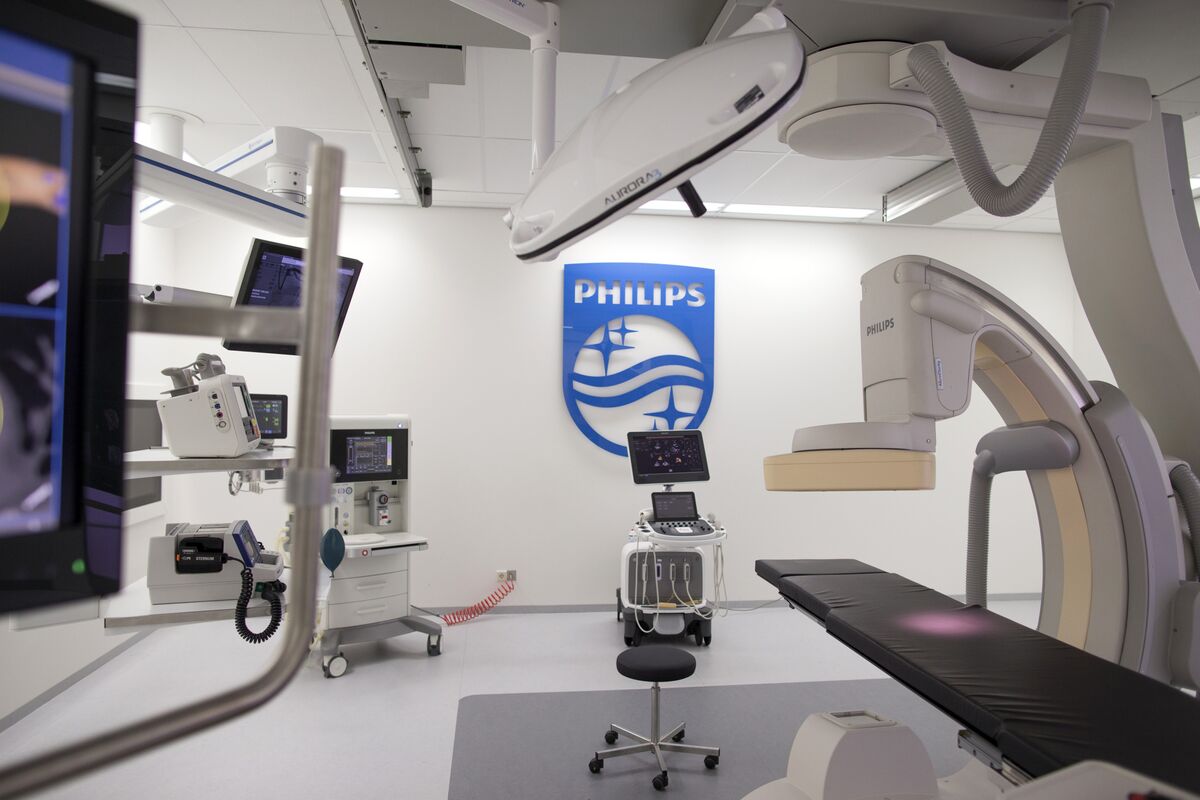
Philips said it has not issued an early 2026 guidance after its shares fell following remarks by CEO Roy Jakobs at a Citi health care conference. The company reiterated that it expects sequential acceleration toward mid-single-digit growth, and the CEO clarified this does not imply annual doubling of growth in its multi-year trajectory. The statement appears aimed at calming investor concerns but contains no updated financial targets or detailed metrics, suggesting limited new information beyond the confirmation of continued moderate growth momentum.
Market structure: The immediate beneficiaries are high-quality, cash-generative US med-tech names (Medtronic MDT, GE Healthcare/GE) and defensive healthcare ETFs (XLV) as investor risk-aversion shifts away from execution-risk names like Royal Philips (PHIA/PHG). Losers are Philips suppliers and smaller European OEMs whose cost of capital and order visibility are more sensitive to guidance uncertainty; mid-single-digit organic growth guidance implies limited pricing power and slower revenue re-leveraging over 2025–2027. Cross-asset: expect modest widening in subordinated corporate credit spreads for European medtechs (+20–50bp potential) and a rise in implied equity volatility (VIX/individual options) for PHIA for 1–3 months; EUR may weaken modestly vs USD on allocation outflows.
Risk assessment: Tail risks include renewed product-liability or regulatory action (recall/class action) that could hit EBITDA 10–30% and trigger balance-sheet stress within 6–12 months, and management credibility erosion that lengthens recovery by multiple years. Near-term (days–weeks) volatility will be driven by sentiment and any clarifying management commentary; short-term (1–3 months) depends on order-book and backlog data; long-term (>1 year) hinges on execution and margin expansion beyond mid-single-digit revenue growth. Hidden dependencies: refinancing terms in euro-denominated debt and government procurement cycles in core markets; catalysts include Q4 earnings, a formal 2026 guidance release (target within 60 days), and any regulatory filings.
Trade implications: Direct: express conviction via a 1–3% tactical long in MDT or GE as relative safety; avoid outright longs in PHIA until a clear guidance print or buyable technical. Hedged PHIA plays: buy 3-month PHIA puts (5–10% OTM) sized 0.5–1% portfolio as event insurance, or implement a 3–6 month put spread to limit cost (buy 10% OTM / sell 25% OTM). Pair trade: short PHIA vs long MDT (1:1 notional) for 3–6 months to capture execution risk premium. Rotate 3–5% from European med-tech into US med-tech/healthcare defensives over next 4–8 weeks.
Contrarian angles: Market is likely over-pricing permanent deceleration — CEO said sequential acceleration to mid-single-digits, not multi-year collapses; a disciplined 8–12% pullback that coincides with stable backlog revisions would be a buying opportunity. Historical parallels: temporary sell-offs after cautious management commentary (e.g., past Philips/other medtech guidance resets) recovered within 6–12 months once bookings validated, so asymmetric payoff exists if guidance is formalized within 60 days. Unintended consequence: forced clarity from management could catalyze a rapid mean-reversion rally, making time-limited option hedges profitable.
AI-powered research, real-time alerts, and portfolio analytics for institutional investors.
Request DemoOverall Sentiment
neutral
Sentiment Score
-0.05
Ticker Sentiment
