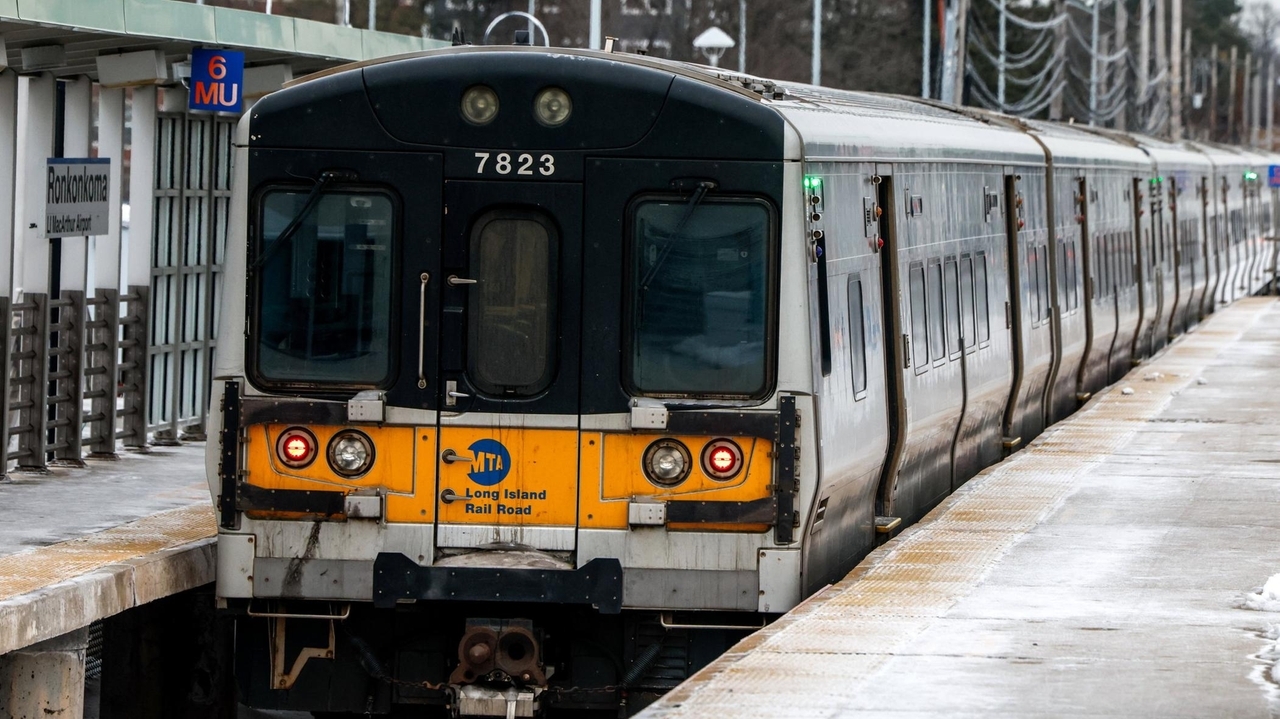
Five people were injured in a train fire at Penn Station, prompting widespread LIRR delays and cancellations across nearly all branches Friday morning and temporarily suspending Amtrak service between New York and New Jersey. Service resumed for LIRR at 5:15 a.m., but several branches still reported cancellations and delays into late morning, while Amtrak said southbound service remained suspended until at least noon and northbound trains faced lengthy delays. The incident disrupted regional rail operations and highlighted recurring infrastructure vulnerability at Penn Station.
This is less a one-off transit disruption than a reminder that the New York rail system has a high-convexity fragility profile: a single maintenance-related incident can propagate into multi-branch schedule failures because Penn Station is the system’s clearinghouse. The second-order effect is not just lost ridership revenue for MTA; it is incremental evidence that reliability risk is becoming a recurring operating variable, which tends to widen the valuation gap versus transit peers and increases political pressure on capital allocation toward hardening infrastructure rather than service expansion.
The immediate economic impact is concentrated in commuter-dependent labor and logistics flows, but the market implication is broader for infrastructure contractors, signaling vendors, and tunneling/track maintenance specialists. Repeated interruptions increase the odds of accelerated remediation spending, emergency procurements, and contract re-scoping over the next 1-3 quarters, which can be a tailwind for select civil/infrastructure names even if the headline reads negative. Conversely, any operator exposed to Northeast Corridor throughput could see near-term utilization noise, with the biggest sensitivity in adjacent mobility substitutes rather than rail itself.
The key risk is that investors treat this as a same-day event, when the real catalyst is whether regulators and agencies respond with budget reallocations or stricter operating constraints. If service interruptions cluster again over the next 30-60 days, the narrative shifts from “incident” to “systemic maintenance underinvestment,” which would be more damaging to sentiment and more durable in its effect on ridership elasticity. A rapid return to normal service and no further incidents would likely cap the downside, but the repetition risk is high enough that options structures may be preferable to outright directional exposure.
Consensus may be underestimating how much operational reliability now matters for capital markets perception in transportation. In an environment where workers have more flexibility and employers are pushing hybrid schedules, even transient service unreliability can create permanent ridership leakage at the margin, which is harder to recover than a single day’s revenue loss. That makes the event modestly bearish for the system operator but potentially constructive for businesses that sell resilience, monitoring, and maintenance technology into public infrastructure.
AI-powered research, real-time alerts, and portfolio analytics for institutional investors.
Request DemoOverall Sentiment
moderately negative
Sentiment Score
-0.35
Ticker Sentiment
