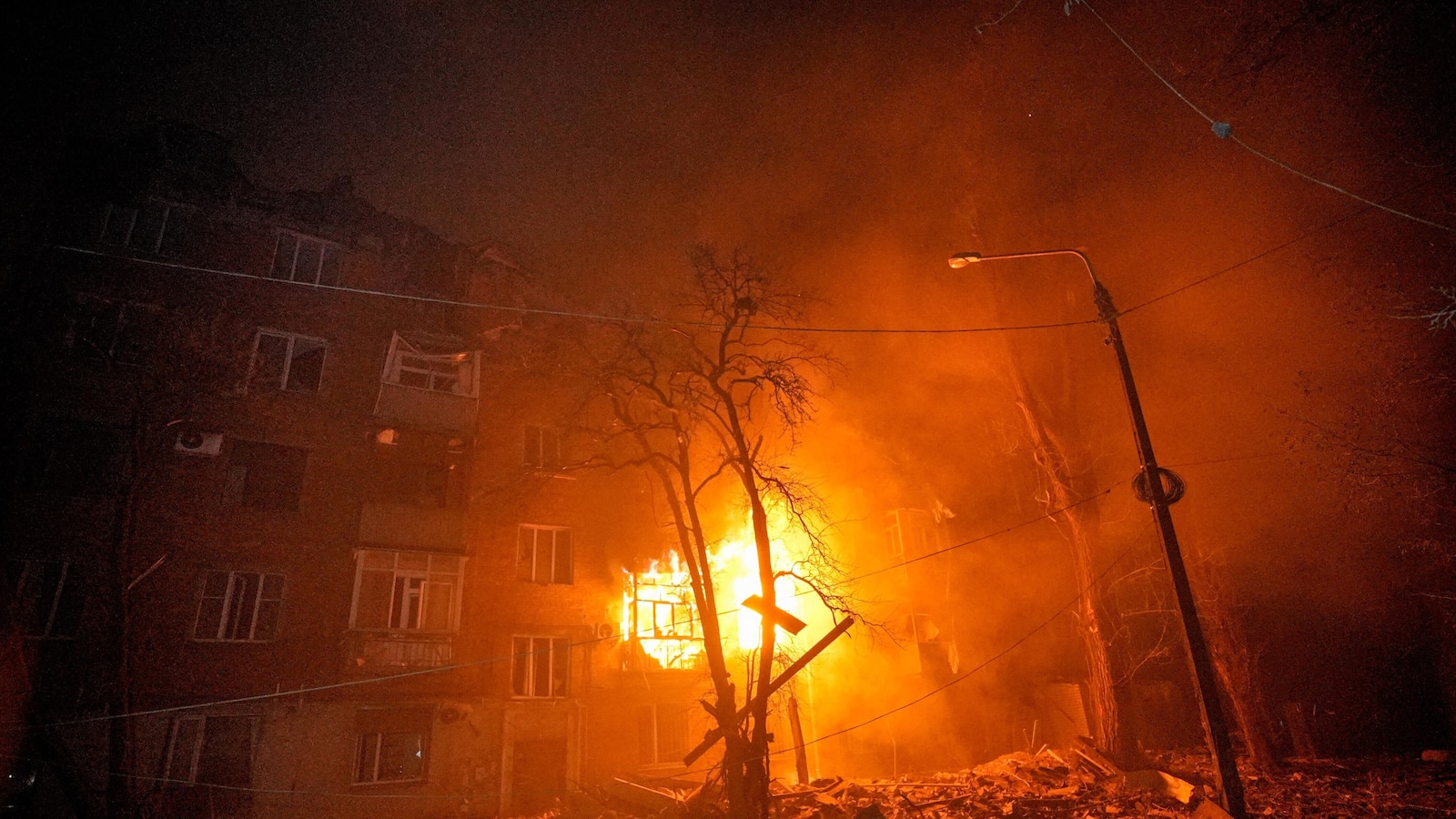
The United States condemned what it called a "dangerous and inexplicable escalation" after Russia launched a nuclear-capable Oreshnik ballistic missile near the Poland border and conducted large-scale drone and missile strikes that targeted Ukrainian energy and other infrastructure, prompting an emergency U.N. Security Council meeting. The strikes came as U.S.-led negotiations toward a peace framework reportedly advanced and amid heightened tensions following the U.S. seizure of an oil tanker; with the Trump administration backing a harsh sanctions package, these developments raise downside risk to energy markets, increase sanctions and NATO escalation risk, and favor defensive/safe‑haven positioning.
Market structure: Immediate winners are defense contractors and energy producers — expect sizing power for majors (XOM, CVX) and order-flow for defense primes (RTX, LMT, GD) as NATO/European procurement talk accelerates; losers are European energy-intensive sectors and regional banks exposed to sanction spillovers. Pricing power: crude could reprice +10–25% in 2–8 weeks if flows or insurance costs tighten (Brent >$100 pushes downstream margins and airline fuel hedges). Cross-asset: risk-off rallies Treasuries (yields down 10–25bp intraday), USD strengthens vs EM and EUR, gold and VIX +15–40% on hit-and-run escalations.
Risk assessment: Tail risks include NATO entanglement or direct strikes on NATO-border infrastructure (low-probability, high-impact) which would push oil >$120 and equities -15% in 1–4 weeks; secondary tail is systemic banking sanctions contagion affecting EUR funding and correspondent banking lines. Time horizons: immediate (days) for volatility and FX moves, short-term (weeks–3 months) for sanctions and energy re-routing, long-term (3–24 months) for defense capex and European energy capex reallocation. Hidden dependencies: winter LNG/deliverycalendar, shipping insurance costs, and sovereign reserve draws; catalyst set: sanctions votes, Russian energy cut-offs, NATO meeting outcomes.
Trade implications: Favor tactical longs in defense and energy and hedges in volatility/gold; implement size-limited, directional exposures with explicit stop-losses and policy-event triggers. Use pair trades to isolate energy vs travel exposure (long XLE, short JETS) and volatility to hedge timing risk (VXX call spreads). Options: buy 1–3 month call spreads on defense ETF ITA and 1–2 month VIX call spreads to capture headline shocks.
Contrarian angles: Consensus may overprice a permanent oil supply shock — spare capacity (OPEC+) and SPR releases cap worst-case spikes, so avoid full conviction long crude unless Brent sustains >$100 for 4+ weeks. A negotiated ceasefire within 1–3 months would cause rapid unwind: defense outperformance could reverse 10–30%. Historical parallels (2014/2015, 2022) show 4–12 week energy volatility followed by mean reversion; prefer nimble, catalyst-based sizing rather than buy-and-hold.
AI-powered research, real-time alerts, and portfolio analytics for institutional investors.
Request DemoOverall Sentiment
strongly negative
Sentiment Score
-0.60
