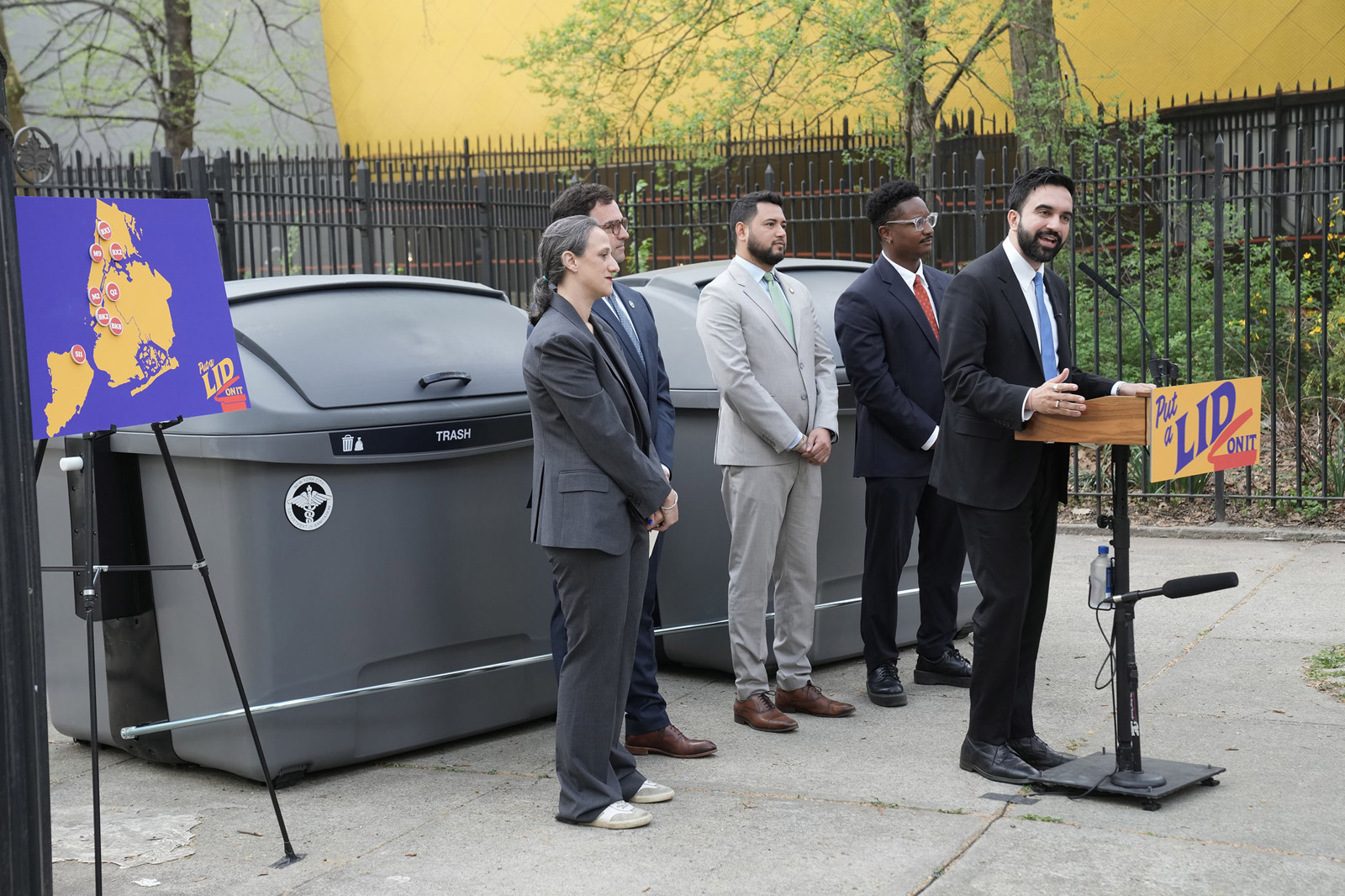
New York City will expand residential trash containerization to six additional community districts by end-2027, bringing eight of 59 districts to zero street trash bags by next fall and targeting full citywide rollout by end-2031. The plan covers higher-density residential buildings with more than 30 units via 6,500+ Empire Bins across 3,500+ buildings, serviced by automated side-loading trucks. The announcement is positive for sanitation and quality-of-life outcomes, but it is primarily a municipal policy update with limited direct market impact.
The investable read-through is not “cleaner streets” so much as a slow-burn cost-shift from decentralized hauling to municipally orchestrated logistics. That benefits the capital stack around sanitation automation: truck OEMs, container manufacturers, fleet maintenance, routing/software, and labor-light service models. The biggest second-order winner is likely any vendor exposed to municipal capex and recurring parts/service revenue, because once a district is converted, the operating model becomes sticky and replacement cycles extend over years rather than quarters.
The more interesting loser set is less obvious: private waste haulers, small building service contractors, and any real estate operator whose rent-up or asset-management thesis depends on premium neighborhood cleanliness without paying for it. Over time, better street conditions can modestly support retail foot traffic and multifamily pricing in the affected districts, but the bigger economic effect is likely on vacancy/friction costs and nuisance complaints rather than headline NOI. That makes the signal more favorable for urban multifamily and neighborhood retail sentiment than for any immediate rent re-rating.
Key risk is implementation slippage. The market should treat this as a multi-year procurement and rollout story, not a one-quarter catalyst: union work rules, truck maintenance downtime, container siting disputes, and resident pushback in dense blocks can all elongate timelines. If the city experiences even a few highly visible collection failures, the political path can bend toward exemptions or a slower cadence, which would impair the thesis for automation vendors and municipally linked logistics names.
Contrarian take: the consensus will likely over-index on rat/cleanliness optics and underweight budget durability. If the program is executed well, the second-order beneficiaries are not the headline sanitation names but industrials with exposure to custom fabrication, vehicle upfit, and service contracts. The best trade is to own the picks-and-shovels while fading any assumption that this creates an immediate citywide step-change in real estate fundamentals.
AI-powered research, real-time alerts, and portfolio analytics for institutional investors.
Request TrialOverall Sentiment
mildly positive
Sentiment Score
0.20
