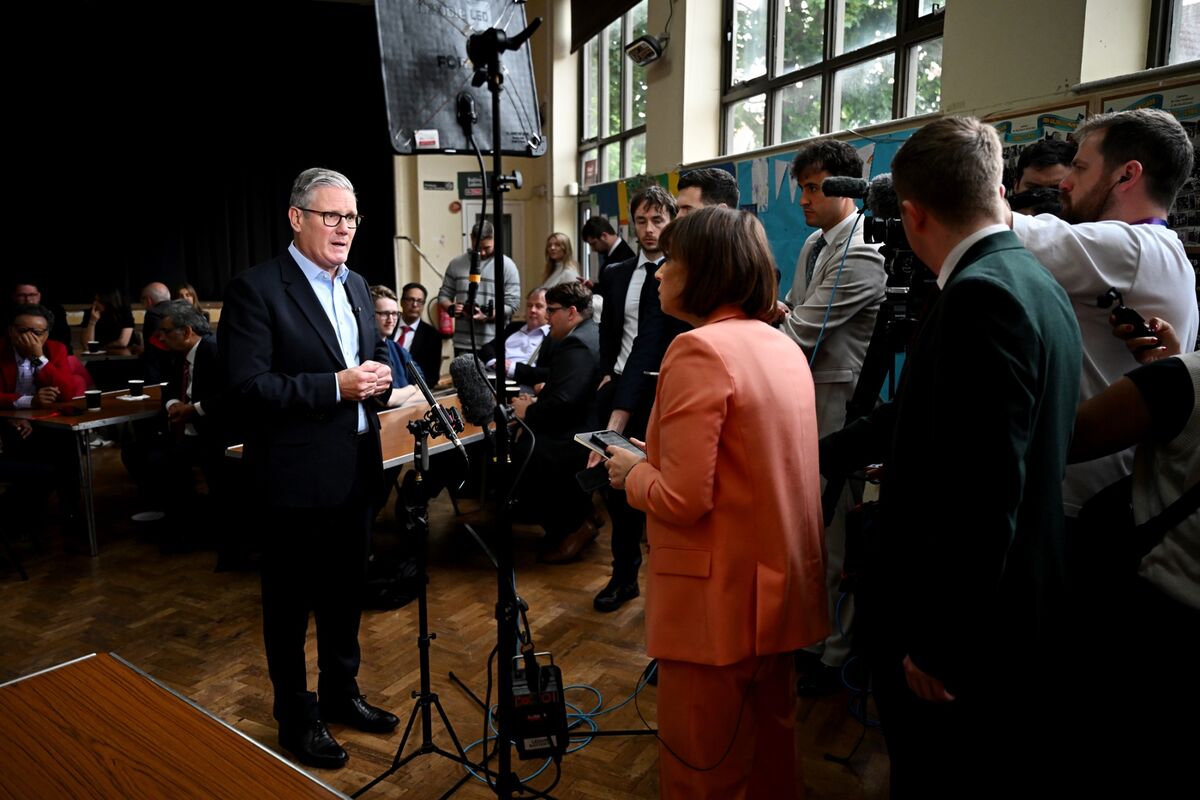
UK Prime Minister Keir Starmer said he has no plans to step down after Labour suffered heavy losses in local elections. With more than a third of English councils declared, Reform UK had a net gain of 417 seats while Labour was down 268, and Labour has lost around half of the seats it was defending. The results pressure Starmer politically, but the immediate market impact is likely limited.
The market implication is less about one council cycle and more about regime risk: a credible populist challenge can force the governing party to lean harder into fiscal giveaways, tighter migration rhetoric, and more interventionist policy, all of which tend to pressure UK domestically oriented equities and sterling sentiment. The second-order effect is a widening of the “policy discount” on sectors that depend on stable planning, labor availability, and consumer confidence — especially UK banks, homebuilders, transport, and UK retail — because investors price in higher volatility in budget assumptions and regulation rather than the election headline itself.
The bigger signal is that a fragmented right/centre-right vote can create a persistent hangover for governance, even if national power does not change immediately. That raises the odds of mid-cycle cabinet reshuffles, fiscal loosening into a soft economy, and slower implementation on housing, infrastructure, and labor-market reforms. For markets, that tends to mean lower relative multiple support for UK cyclicals versus European peers until polling stabilizes, while multinational UK-listed names with dollar revenue should outperform domestic pure-plays.
Catalyst-wise, the next 4-12 weeks matter most: polling confirmation, any resignation chatter, and policy repositioning ahead of the next budget or party conference can extend the move. The contrarian view is that the initial reaction may be overdone if investors assume local-election anger maps linearly into a general election outcome; if the opposition cannot consolidate a broad coalition, the trade can fade quickly. Still, the near-term asymmetry favors caution because political uncertainty tends to hit sentiment faster than fundamentals recover.
The cleanest setup is relative value rather than outright macro direction: short UK domestic beta versus global earners, and fade sterling rallies if policy uncertainty rises further. If the government responds with looser fiscal policy, that can support select consumer-facing names at the margin but is usually negative for long-duration assets and the currency because it lowers confidence in medium-term discipline.
AI-powered research, real-time alerts, and portfolio analytics for institutional investors.
Request DemoOverall Sentiment
mildly negative
Sentiment Score
-0.35
