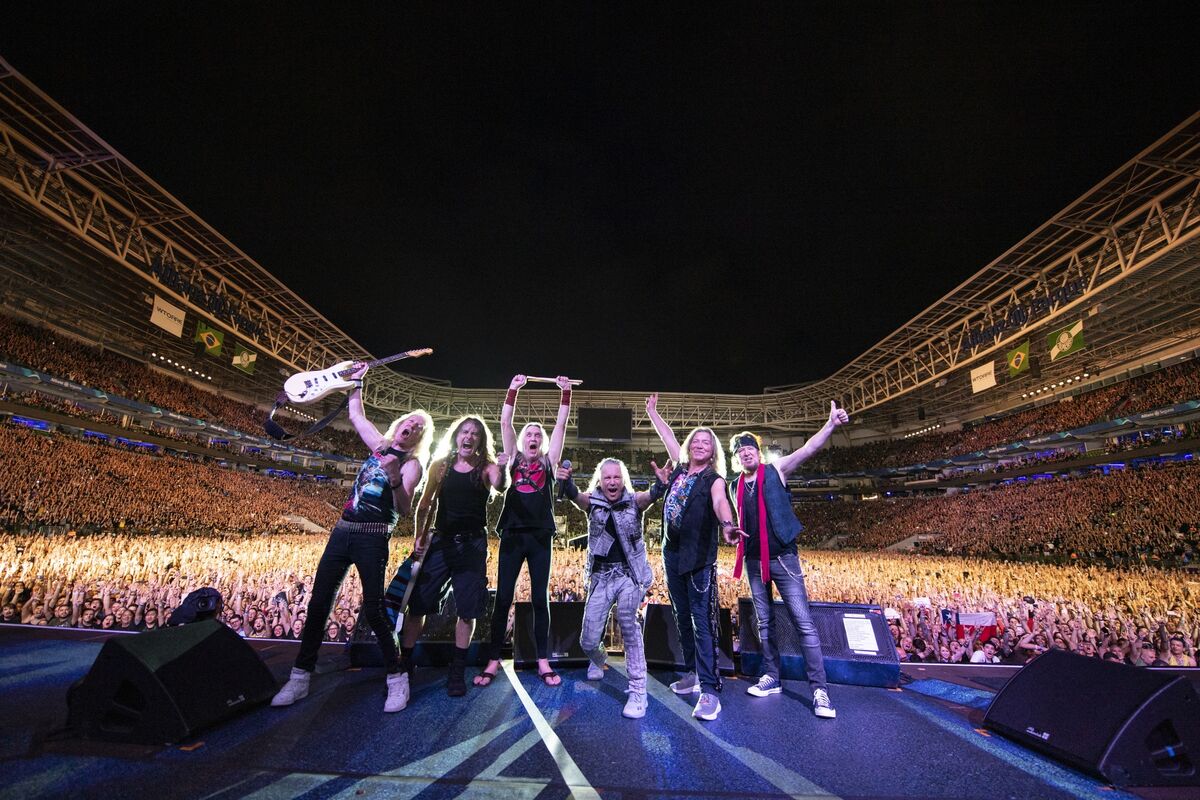
Sweden’s Pophouse Entertainment Group AB is acquiring a stake in Iron Maiden’s publishing and music rights, adding a new high-profile catalog to its portfolio. The article frames the move as a strategic expansion rather than citing financial performance or a specific valuation, so near-term market impact is likely limited.
This is marginally constructive for the music-rights complex, but the main implication is not near-term earnings impact; it is that institutional capital still wants long-duration IP with recession-resistant cash flows. That supports the valuation floor for catalog owners and royalty aggregators like WMG, UMG, RSVR, and any private-market buyers competing for legacy catalogs, especially if rates continue easing and discount rates fall. The second-order effect is tighter screening: investors may favor assets with monetization optionality beyond passive royalties, such as sync, branding, and live-experience extensions, which benefits platforms rather than pure yield buyers.
The underappreciated risk is that more supply of legacy catalogs hits the market as founders age and artists de-risk, while the number of credible buyers remains limited. That can compress returns for recent acquirers if auction prices stay bid but forward growth slows, particularly for mature rock catalogs where streaming growth is incremental rather than explosive. In that scenario, private-market marks may hold up short term, but public proxies could lag if the market starts to question whether acquisition multiples embed too much low-risk growth.
Time horizon matters: over days, this is likely a no-trade headline; over 1-3 months, it modestly supports sentiment for music-rights platforms and record companies with large owned catalogs; over 6-18 months, the real catalyst is the rate path and any disclosed transaction economics from comparable catalog sales. The thesis would be falsified if music-IP transaction pricing starts to deteriorate in subsequent deals, if rates back up materially, or if streaming growth weakens enough to challenge the duration premium these assets trade on.
AI-powered research, real-time alerts, and portfolio analytics for institutional investors.
Request TrialOverall Sentiment
mildly positive
Sentiment Score
0.10
