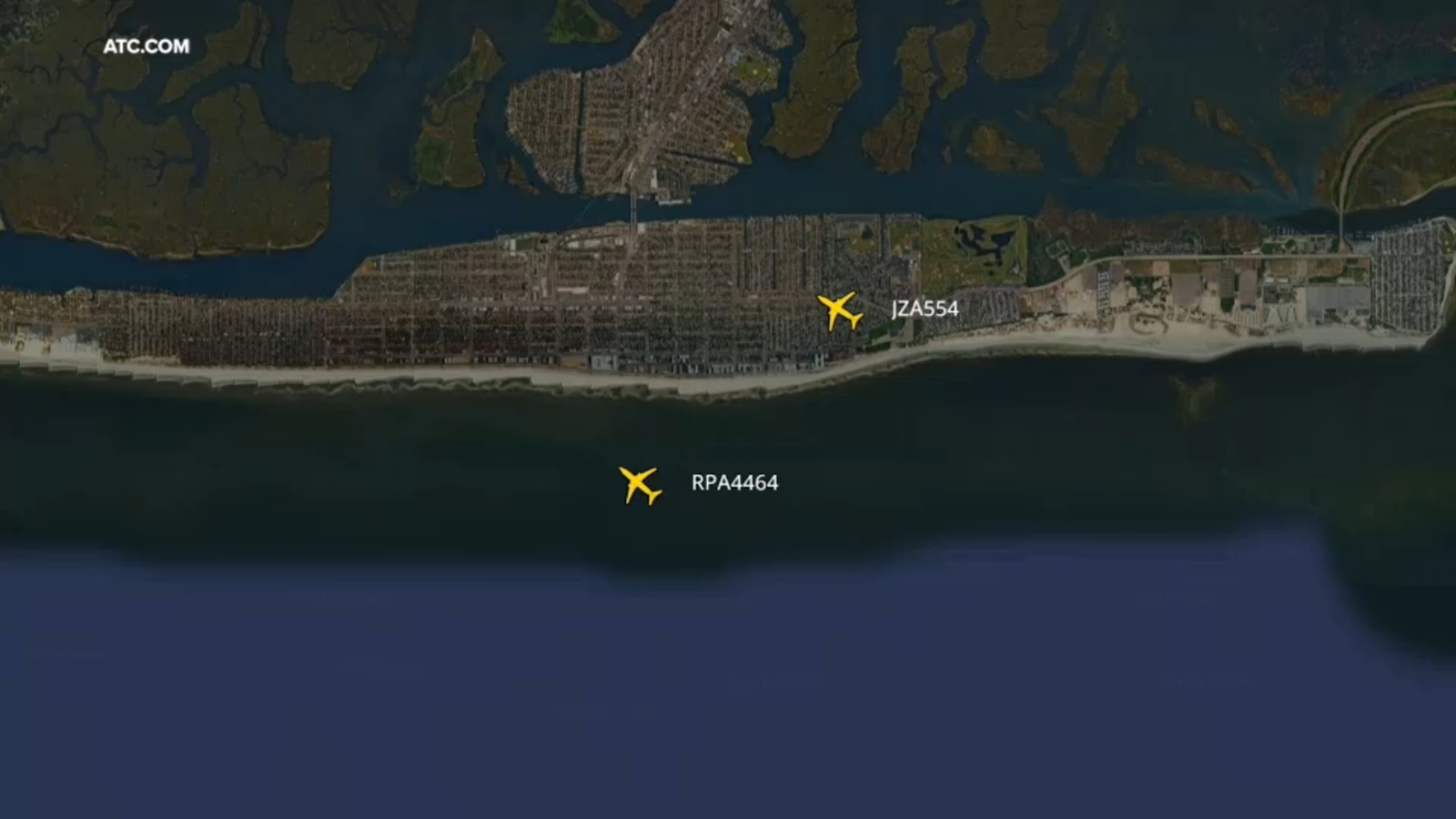
Four commercial flights narrowly avoided collisions within 48 hours, including a JFK near miss between an American Airlines jet and an Air Canada flight that both landed safely. The FAA is investigating why the American Airlines aircraft deviated from its assigned course, while the Department of Transportation reiterated air traffic control modernization efforts after recent incidents in New York and Nashville. The story underscores operational and safety risks in aviation, but it is unlikely to have immediate broad market impact.
The immediate equity read-through is less about one incident and more about the probability distribution of operational disruption now shifting higher for the entire U.S. commercial aviation complex. In the near term, this raises the odds of a knee-jerk premium on airlines with weaker operational buffers and more exposed East Coast networks, while strengthening the case for vendors tied to surveillance, ATC automation, and onboard safety systems. The market usually underprices how quickly a string of incidents can translate into regulatory friction: not because one event changes earnings, but because it can tighten scheduling, raise training and compliance spend, and increase scrutiny around slot utilization and approach procedures.
Second-order, the more important beneficiaries may be infrastructure and avionics suppliers rather than airlines themselves. If modernization spending accelerates, the winners are the companies selling redundancy, surveillance, and digital tower/communications upgrades; those revenues are higher quality than cyclical passenger demand and can compound over multiple budget cycles. For airlines, the hidden risk is not a one-off fine, but a step-up in dispatch conservatism and controller-driven spacing that can subtly reduce asset utilization at the margin, especially in congested Northeast hubs.
The contrarian view is that the market may overreact to headline risk in the weakest names while underestimating how much of this is already being absorbed by existing safety layers. A single deviation event rarely changes long-term demand, and the revenue impact from added caution is usually measured in basis points, not percentage points, unless regulators impose structural restrictions. The bigger catalyst is political: if this becomes a recurring theme, Congress and DOT may fast-track funding, which would be positive for the modernization supply chain and negative only for airlines that rely on maximum throughput.
AI-powered research, real-time alerts, and portfolio analytics for institutional investors.
Request DemoOverall Sentiment
mildly negative
Sentiment Score
-0.20
Ticker Sentiment
