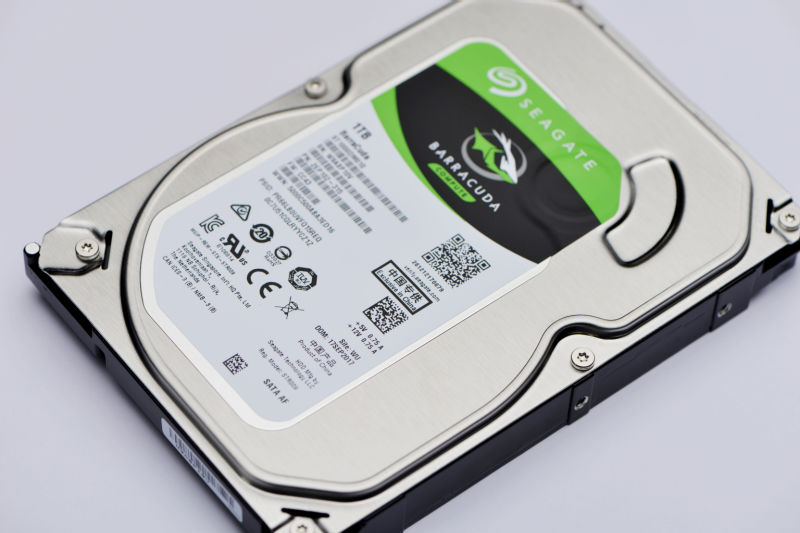
Seagate guided Q4 revenue to $3.45 billion, above the $3.16 billion consensus, and EPS to $5.00 versus $3.97 expected, signaling robust AI-driven storage demand. The upbeat outlook lifted storage peers in premarket trading, with Western Digital up 9.7%, SanDisk up 6%, and Micron up nearly 3%. Rising enterprise spending on AI infrastructure and tighter memory supply are supporting demand for hard drives and related storage hardware.
This read-through is less about one storage vendor and more about a potential regime shift in the AI hardware stack: the market is admitting that not all AI capex goes to GPUs, and that persistence layers are now a bottleneck with pricing power. If enterprises are forced to spend more on capacity retention, data movement, and backup architectures, the beneficiaries extend beyond the obvious disk names to controllers, power, networking, and select analog suppliers tied to enterprise infrastructure refreshes.
The second-order implication is that memory scarcity may actually accelerate demand for legacy storage rather than displace it. When HBM and SSD supply tighten, customers tend to redesign around mixed architectures, which supports near-term order strength for hard disk exposure but also creates a lagging upgrade cycle in adjacent flash names as buyers delay premium storage purchases. That sets up a bifurcated market: near-term multiple expansion for the most leveraged beneficiaries, but a medium-term risk that supply catch-up and inventory restocking normalize margins faster than current price action implies.
From a trading perspective, the move looks strongest in the lowest-quality names with the most operating leverage, which usually means the first leg is sharp and the second leg is more fragile. The key catalyst window is the next 2-6 weeks of large-cap tech earnings and capex commentary: if hyperscalers reaffirm elevated AI spend, storage names can re-rate again; if capex guidance is merely maintained rather than raised, this becomes a classic sell-the-news setup. MS is not the direct beneficiary, but its read-through matters because financing conditions for capex-heavy customers can tighten faster than demand can, turning a fundamental tailwind into a balance-sheet story.
The contrarian risk is that the market may be extrapolating a short-term supply squeeze into a durable end-demand narrative. Storage is usually a cyclical procurement line with high inventory sensitivity, so a few strong quarters do not necessarily justify a new structural multiple unless enterprise retention requirements keep compounding. If AI inference efficiency improves or model architectures become less storage-intensive, the current enthusiasm could fade within 1-2 quarters.
AI-powered research, real-time alerts, and portfolio analytics for institutional investors.
Request DemoOverall Sentiment
moderately positive
Sentiment Score
0.62
Ticker Sentiment
