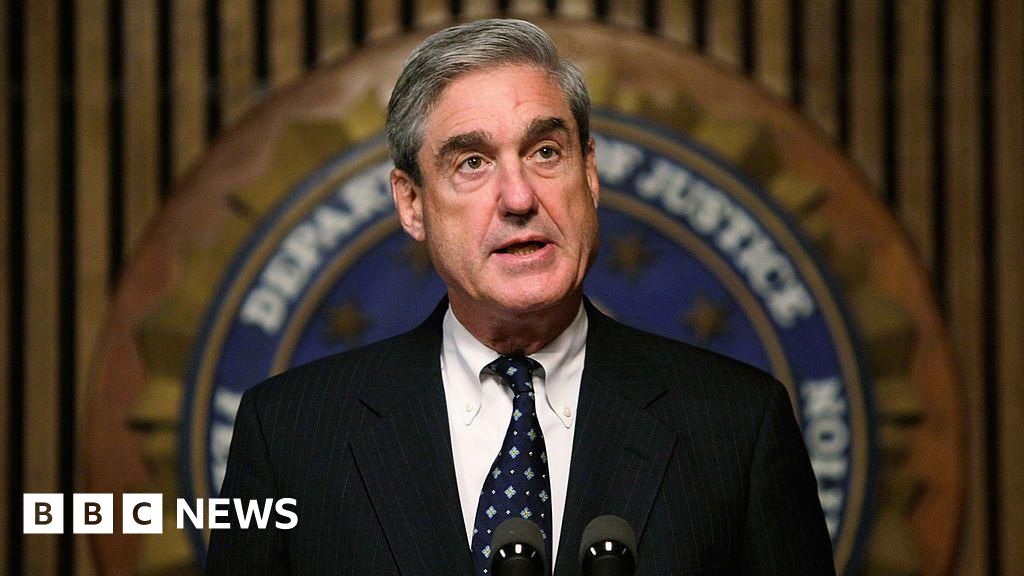
Robert Mueller, former FBI director (2001-2013) and special counsel, has died at 81. His May 2017–Mar 2019 Russia probe produced a 448‑page report finding sweeping Russian election interference but did not establish conspiracy by Trump’s campaign and "did not exonerate" the president. Mueller was credited with reshaping the FBI into a counterterrorism agency after 9/11; reactions were strongly political (including hostile comments from the former president) but the event has negligible direct market impact.
Market impact will likely be headline-driven and short-lived: expect a 1–3 trading‑day bump in realized equity volatility (VIX +5–20% intraday depending on amplification by political actors), concentrated in politically sensitive media and small caps that lean on ad dollars. The mechanism is attention flows: spikes in search and engagement cause repricing of near-term ad revenue and sentiment-sensitive names, not fundamentals. Positioning that believes this becomes a multi-week macro regime shift is likely overstated.
Second-order political effects matter more for flows than for fundamentals. A high-profile partisan flashpoint can drive concentrated donor and small‑donor fundraising surges and intensify legal‑narrative risk for key political figures over weeks–months; that can alter campaign ad cadence and state polling dynamics, which in turn changes targeted ad buying and microcap volatility in battleground states. Monitor donation platforms and small‑donor metrics as a real‑time barometer — a sustained 10–30% uplift there precedes durable polling swings.
Institutional and governance knock‑on effects play out over quarters to years. The removal of a senior, credibility‑anchoring figure raises the bar for DOJ special counsel credibility and could increase politicization headline risk, nudging governance‑sensitive spreads (e.g., insurers for D&O, governance‑tilted ETFs) wider if more politically charged investigations follow. For investors, the clearest actionable window is the 3–14 day volatility spike and the 3–9 month re‑pricing of defense/governance exposures if narratives harden or funding priorities are debated.
AI-powered research, real-time alerts, and portfolio analytics for institutional investors.
Request DemoOverall Sentiment
neutral
Sentiment Score
0.00
