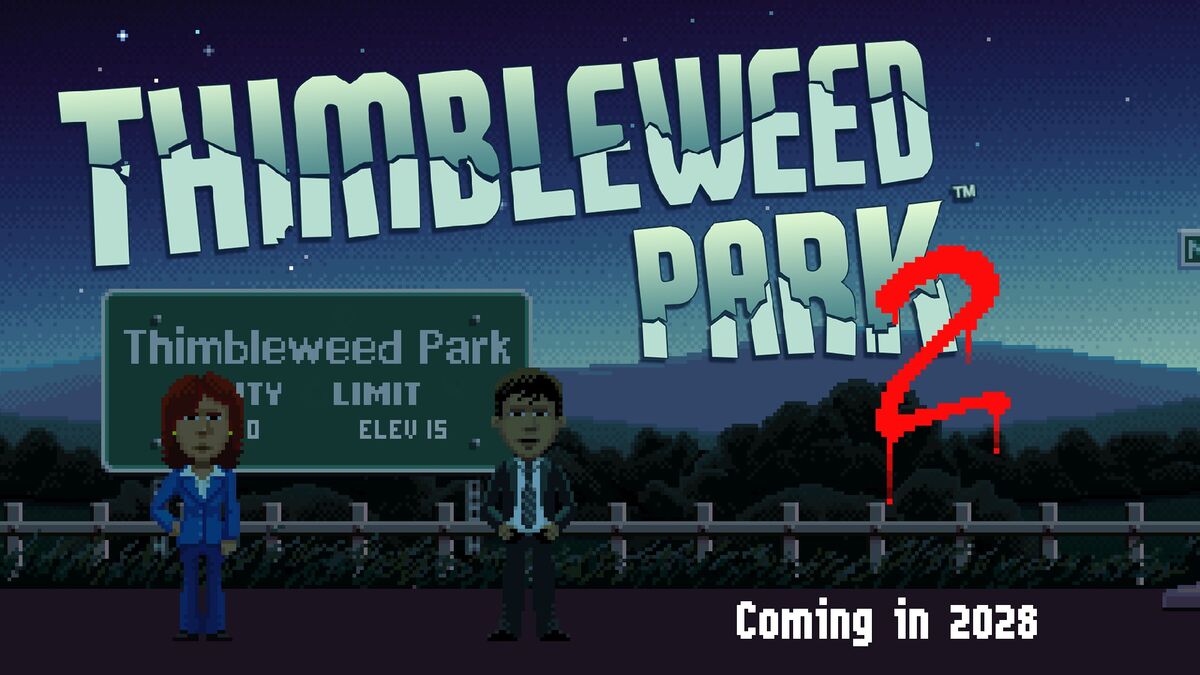
Ron Gilbert announced “Thimbleweed Park 2” and said he avoided a traditional publisher, instead securing a wealthy investor to back the project. The piece frames the news as an unorthodox funding approach rather than providing financial terms or performance metrics. Overall, this appears more like a creative/business-arrangement update than a near-term market-moving event.
This is less a content event than a financing signal: high-quality niche IP can now bypass the traditional publisher tax, which keeps more economics with creators and removes the risk that a publisher’s marketing gatekeeping strands a cult product. That is structurally negative for mid-sized publishers whose edge comes from portfolio financing and distribution leverage, but the effect is mostly on the margin unless this becomes a repeatable funding model across the indie segment.
The second-order winner is the private-capital and platform layer, not the game itself. If wealthy individuals and small funds can back recognizable creators directly, the bargaining power of publishers weakens in the same way label advances weakened as artists monetize through direct-to-fan channels; over 6-18 months that can compress take rates and force publishers to compete on service quality, not just capital access.
Near term, there is no obvious market catalyst because one funded sequel does not move public earnings. The relevant watch item is whether this turns into a pattern of creator-led financing that reduces publisher slate share and raises acquisition prices for proven IP; absent that, the tradeable impact is likely overstated. Falsifier: if the game underperforms commercially despite independent funding, the market will view this as a curiosity rather than a template, and any “publisher disintermediation” thesis fades quickly.
Contrarian view: the consensus may overestimate the sign of the move. Eliminating a publisher does not eliminate marketing, QA, localization, or platform negotiation costs; it simply shifts those burdens to someone else, often with worse execution risk. For public markets, the more durable implication is that premium IP remains scarce and creator reputation matters more than distribution structure, which is a reminder to focus on incumbent franchises rather than boutique financing headlines.
AI-powered research, real-time alerts, and portfolio analytics for institutional investors.
Request DemoOverall Sentiment
neutral
Sentiment Score
0.05
