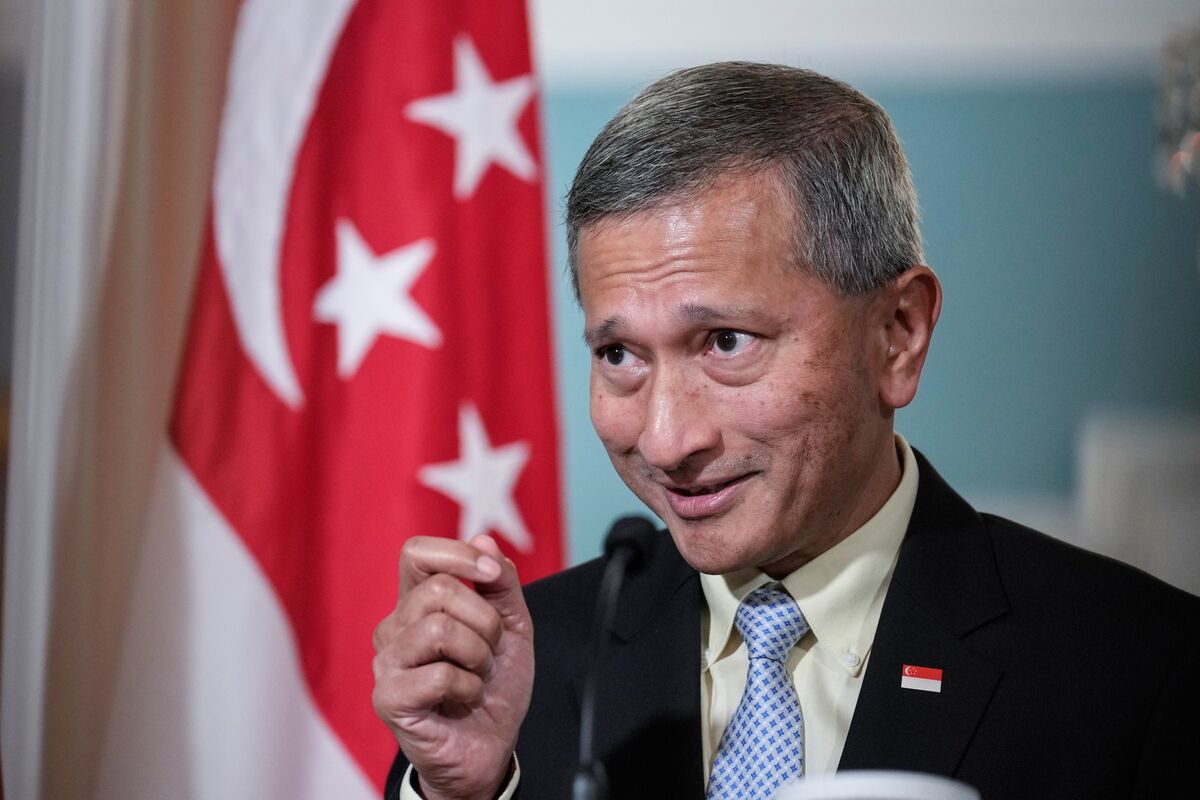
Singapore's Foreign Minister Vivian Balakrishnan warned that the U.S. tariff approach risks transforming global trade into a 'bilateral arm-wrestling match,' potentially replacing the established rules-based system with an escalatory spiral of reciprocal tariffs. This shift threatens the predictability and stability of international trade relations, prompting concerns among global policymakers.
Singapore's Foreign Minister has articulated a significant risk to the global economic order, characterizing the U.S. tariff strategy as a move away from a predictable, rules-based system toward a series of "bilateral arm-wrestling matches." This shift is seen as creating a high probability of an "escalatory spiral" of reciprocal tariffs, fundamentally increasing uncertainty in international trade. The strongly negative sentiment (-0.7) and pessimistic tone associated with this development underscore the market's concern. The core issue for investors is the erosion of the established framework that has historically facilitated global commerce, replacing it with a more volatile, power-based dynamic. This transition directly threatens the stability of global supply chains and introduces a new layer of geopolitical risk into investment theses, as indicated by the themes of Trade Policy and Geopolitics.
AI-powered research, real-time alerts, and portfolio analytics for institutional investors.
Request DemoOverall Sentiment
strongly negative
Sentiment Score
-0.70
