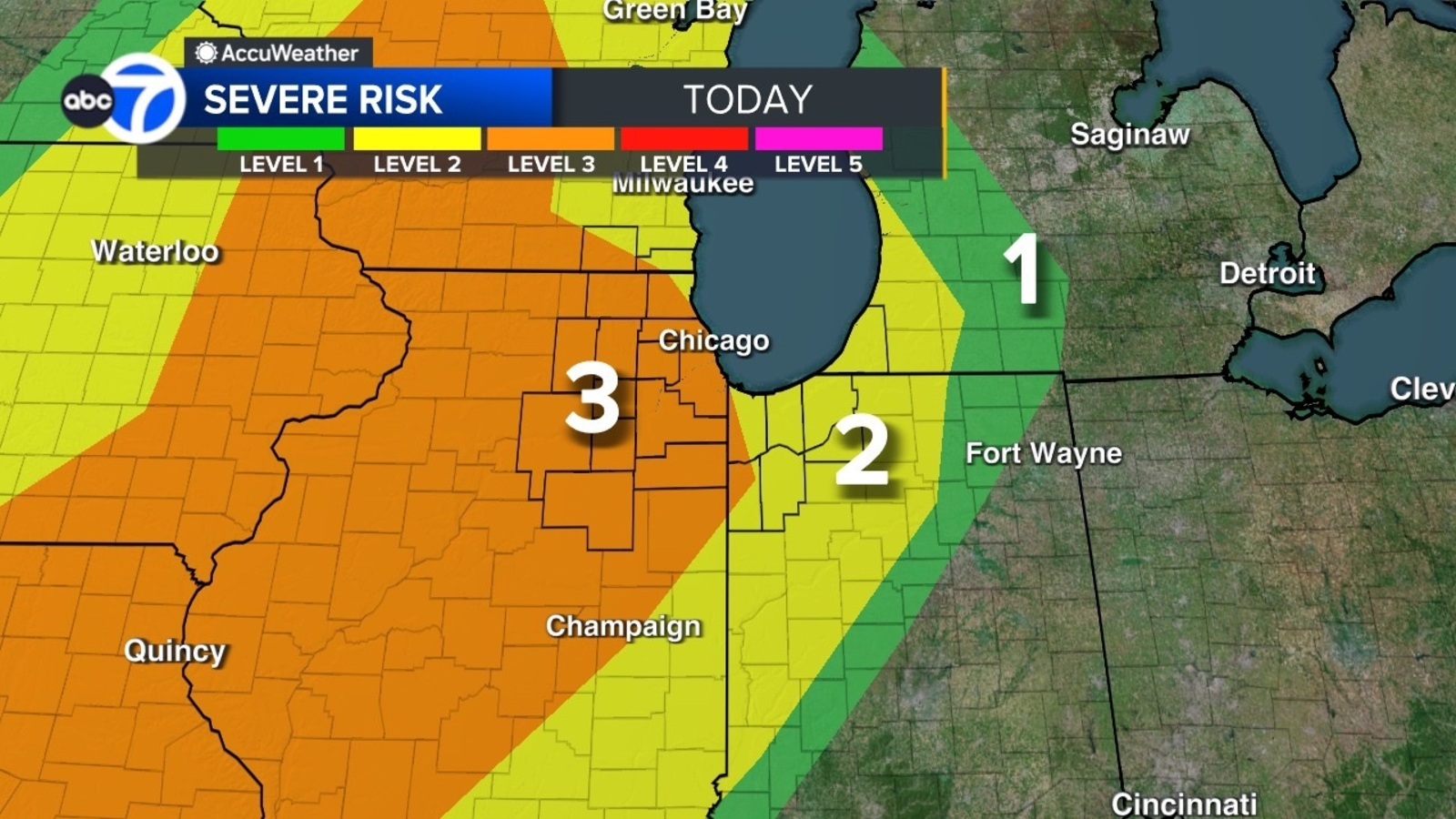
Severe storms, tornado warnings, and flash flood warnings hit the Chicago area, with a Ground Stop at O'Hare starting at 8:16 p.m. and Flood Warnings lasting until early Saturday. The Des Plaines River is swelling toward flood stage, prompting sandbag distribution and flooding precautions in neighborhoods and businesses. The event is disruptive for transportation and local property conditions, but the article is primarily a weather and safety update rather than a direct market catalyst.
This is a short-duration but high-convexity disruption event: the first-order hit is not to local retail demand, but to movement of goods, labor, and time-sensitive services across the Chicago hub. The bigger second-order effect is on regional logistics reliability — once the airport pushes into ground delay and roads begin to flood, delivery networks tend to reprioritize around the city, which can create temporary pricing power for carriers with flexible routing and meaningful deadhead avoidance. In practice, that means the winners are the assets and operators that can absorb volatility without missing service-level commitments.
The more interesting trade is in housing and municipal resilience rather than the obvious storm headline. Repeated flooding episodes tend to accelerate insurer repricing, deductible escalation, and mortgage underwriting scrutiny in the most exposed pockets; that pressure shows up with a lag over quarters, not days. The market often underestimates how quickly localized nuisance flooding becomes a cap-rate and turnover issue for multifamily and single-family rental assets in flood-prone suburbs, even when headline river levels fall short of major stage.
Near-term tail risk is follow-on precipitation on already saturated ground, which can extend disruption beyond the storm window and turn a one-night event into a multi-day operational issue. The reversal catalyst is simple: if the next 24-48 hours are drier than feared, freight and airport operations normalize quickly, and most of the immediate macro impact evaporates. The market is likely overpricing the permanence of the weather shock for transport but underpricing the cumulative damage to insurance loss ratios and municipal infrastructure budgets over the next 1-2 quarters.
AI-powered research, real-time alerts, and portfolio analytics for institutional investors.
Request TrialOverall Sentiment
mildly negative
Sentiment Score
-0.30
