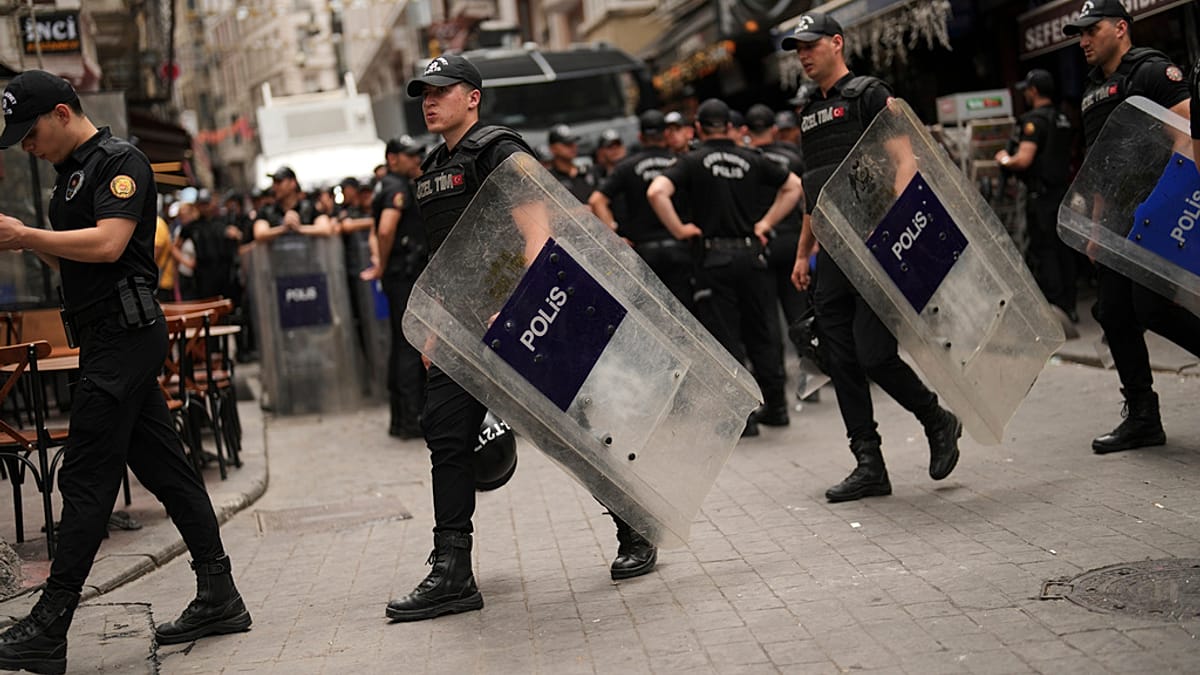
Turkish authorities detained 357 suspected Islamic State members in simultaneous raids across 21 provinces after a deadly clash in Yalova that killed three police officers and six militants; eight officers and a security guard were wounded. Authorities say some detainees were linked to the Yalova shootout, others suspected of planning Christmas/New Year’s attacks, and several alleged to be fundraising for IS networks and connected to foreign fighters. The operation underscores persistent domestic security risks in Turkey—highlighted by past IS attacks in 2015 and 2017—which could weigh on sectors sensitive to public-safety concerns such as travel, leisure and local investor sentiment.
Market structure: immediate winners are security/defence suppliers and FX safe-haven instruments; losers are Turkey-centric travel, hospitality and short-dated Turkish sovereign and local-currency assets as holiday-season attack risk lifts EM risk premia. Expect short-term tourism revenue compression of 5–15% for exposed operators over 2–8 weeks around New Year, and a measurable widening of Turkey CDS (local 3–7 percentage points) if arrests escalate or violence persists.
Risk assessment: tail scenarios include a coordinated IS-inspired strike (low-probability, high-impact) that triggers sustained decline in Turkish tourism and triggers capital controls or central bank intervention; timeline: immediate shock (days), elevated volatility (weeks), policy shifting (quarters). Hidden dependencies: Turkey’s geopolitics can prompt NATO/US diplomatic responses affecting defence procurement and sanctions dynamics; second-order effect is re-pricing of regional supply chains and insurance costs for shipping/airlines.
Trade implications: tactical risk-off favours short exposure to Turkey (FX and equities) and long-duration safe havens (USD, gold, USTs) for 1–3 months; medium-term (6–12 months) tilt to global defense primes as governments increase spending. Options: volatility spikes create opportunities for defined-risk long-call spreads on USD/TRY and put spreads on Turkey equity ETF (TUR).
Contrarian: consensus may over-penalize all Turkish assets; selective long in domestically exposed defence names (ASELS) could outperform if government increases counterterror budgets — asymmetric payoff if you size positions small (1–2% NAV) while using short-term hedges. Also, once arrests subside, rapid rebound in tourism could produce a mean-reversion trade in beaten-up Turkish hospitality names within 2–3 months.
AI-powered research, real-time alerts, and portfolio analytics for institutional investors.
Request DemoOverall Sentiment
moderately negative
Sentiment Score
-0.40
