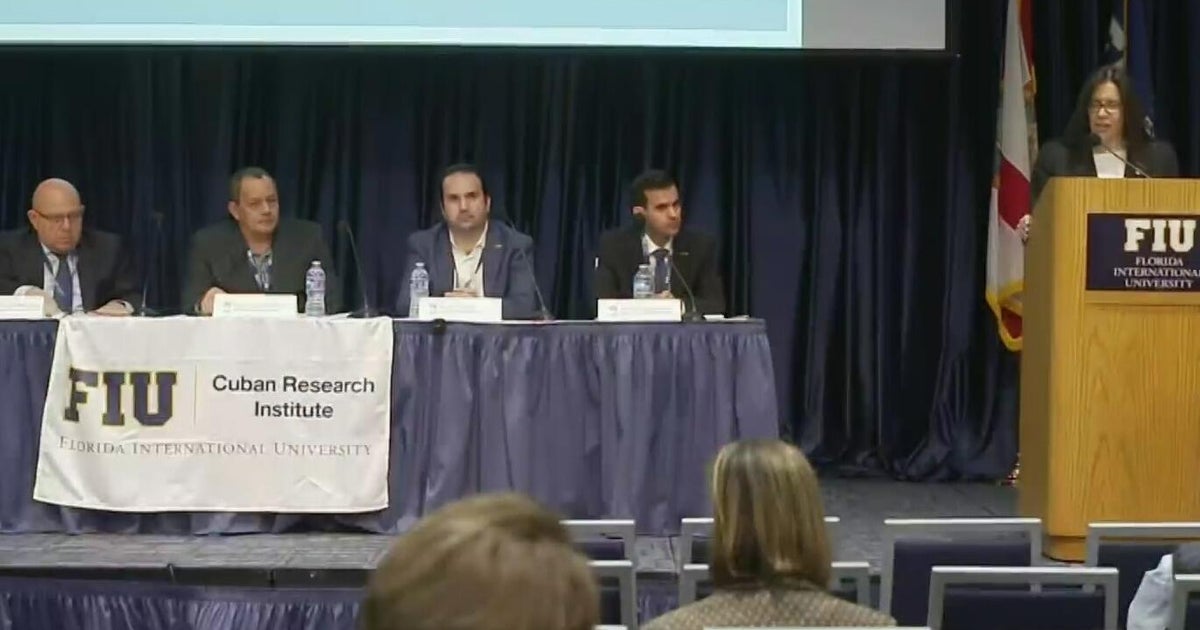
Speakers at FIU's Cuban Research Institute warn Cuba faces a deepening economic and fuel crisis amid a recent deadly boat confrontation that could be politicized by Havana. Washington has authorized limited oil access from Venezuela to Cuba's private sector, but experts note Cuba needs over 100,000 barrels per day and that the small licensed shipments are insufficient and likely to benefit regime-aligned actors rather than public transport or power generation, leaving the situation unsustainable and politically fraught.
Market structure: The immediate winners are upstream oil producers and traders (XOM, CVX, XLE) and tanker owners that capture higher freight premia (FRO, EURN); losers are Cuba's private sector, regional transport/tourism firms and informal remittance channels. Limited OFAC licenses for Venezuelan oil create a bifurcated market where small legal flows trade at a premium and create outsized margins for intermediaries and shipping for every incremental 100k+ barrel cargo. Cross-asset: expect upward pressure on crude prices and dirty-tanker freight, a modest USD safe-haven bid, widening EM sovereign/credit spreads in the Caribbean/Latin America and a hedging bid into gold and sovereign CDS.
Risk assessment: Tail risks include a naval escalation or expanded sanctions that would spike tanker rates >50% and freeze insurance capacity, or conversely, a diplomatic thaw that collapses premia; probability low-medium but impact high. Timeline: days — volatility in freight and front-month crude; weeks-months — freight rate normalization or material step-up if routing becomes permanent; quarters — structural redirection of Venezuelan exports if sanctions persist. Hidden dependencies: ship-to-ship transfers, P&I insurance availability, and opaque intermediaries that amplify sanction risk. Key catalysts: OFAC license changes, Maduro tactical moves, Cuban domestic unrest within 30–90 days.
Trade implications: Direct plays — size crude exposure (XLE/XOM) and tactical exposure to tanker equity FRO/EURN; prefer 1–3 month to 6-month horizons for freight-driven upside. Options — buy 3–6 month XOM calls 10–15% OTM as asymmetric oil-upside; alternatively, buy BDTI-linked exposure or long-dated freight derivatives where available. Pair trades — long tanker (FRO) vs short tourism/cruise (CCL) to capture divergence if geopolitics depress regional travel while shipping tightens.
Contrarian angles: Consensus underestimates arbitrage value from heavy-sour crude routes — small sanctioned flows can sustain outsized margins for months; tanker equities may be underpriced because investors ignore insurance/route opacity that actually raises dayrates. Historical parallels: 2010–2013 sanction-era tanker spikes where dayrates doubled on routing and STOs; unintended consequence — greater illicit routing creates higher default/claims risk for counterparties, raising counterparty and operational credit premia.
AI-powered research, real-time alerts, and portfolio analytics for institutional investors.
Request TrialOverall Sentiment
moderately negative
Sentiment Score
-0.50
