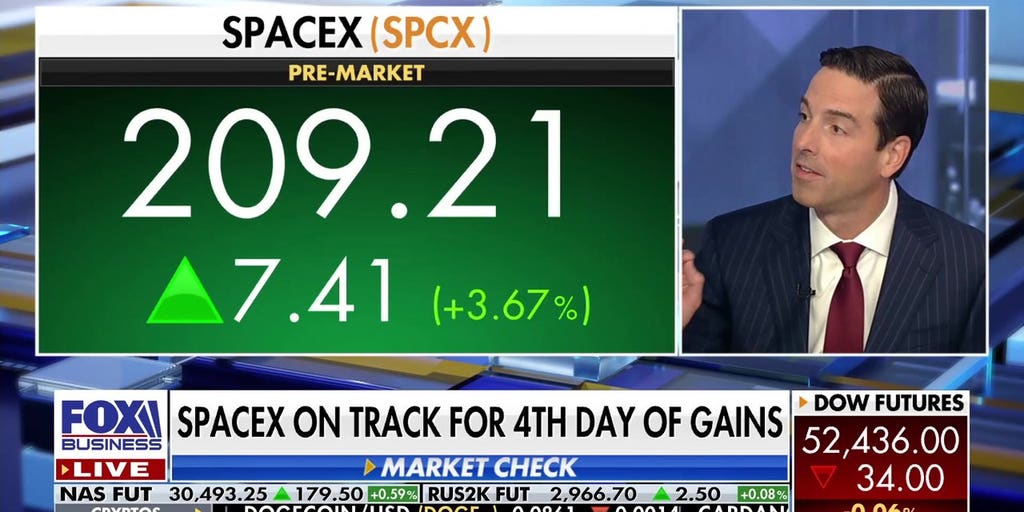
The provided text contains only Fox Business/Fox News programming listings and no financial news content, company developments, or market-moving information.
This is effectively a liquidity/attention event, not a fundamental one. In the short run, the main asset class at risk is broadcast-adjacent ad inventory and the small universe of names that trade on media sentiment rather than earnings; when the tape lacks macro catalysts, these programming blocks can amplify narrative risk into temporary factor flows. The second-order effect is that any high-profile guest segment can move thinly traded “story stocks” for a few hours, but those moves usually decay unless reinforced by a macro datapoint or corporate filing.
From a positioning standpoint, the edge is in fading reflexive moves, not chasing them. These windows often create short-lived volatility in sectors with retail participation—single-name momentum, crypto proxies, speculative software, and headline-sensitive financials—because viewers overfit to simplified narratives and react within minutes, while institutional rebalancing catches up later. If there is no concrete catalyst attached, the expected half-life of any move is measured in intraday sessions, not days.
The contrarian view is that “live now” TV schedules can be more useful as a sentiment barometer than as alpha in themselves. When the market is waiting for a real catalyst, media airtime tends to concentrate disagreement rather than resolve it, which can make consensus positioning look more confident than it is. The opportunity is to use the broadcast window to identify overextended names and monetize mean reversion once the segment ends and attention shifts back to hard data.
AI-powered research, real-time alerts, and portfolio analytics for institutional investors.
Request DemoOverall Sentiment
neutral
Sentiment Score
0.00
