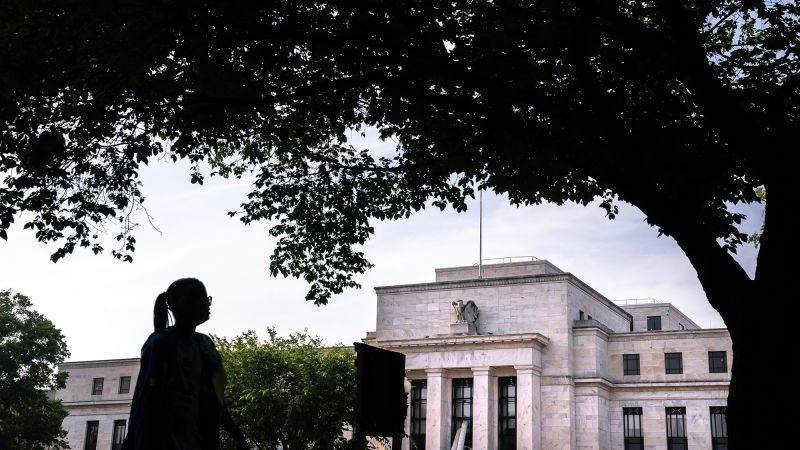
The Federal Reserve is navigating a highly uncertain economic environment, marked by mounting signs of labor market weakness and internal debate over whether tariff-induced inflation is transitory. This complex outlook is stressing the Fed's dual mandate, leading to divergent views among policymakers on the trajectory of future rate cuts, despite an initial reduction being widely expected. The ambiguity surrounding post-initial-cut policy, coupled with upcoming critical labor and inflation data, creates significant uncertainty for investors regarding the Fed's monetary policy path.
The Federal Reserve is navigating a period of significant policy uncertainty, driven by conflicting economic signals that are stressing its dual mandate of stable prices and maximum employment. While an initial rate cut is widely anticipated, a deep divergence among policymakers clouds the path forward. Fed Governor Waller is advocating for multiple cuts, whereas Atlanta Fed President Bostic has signaled only one additional cut may be appropriate this year. This internal debate is rooted in two primary areas of contention. First, the impact of tariffs on inflation remains unresolved; while several officials, including Chair Powell, view tariff-related price pressures as a transitory, "one-off" event, others like Cleveland Fed President Hammack see inflation as "too high and rising." Second, the labor market is presenting a bifurcated picture. While the headline unemployment rate remains low at 4.2%, leading indicators are showing weakness, including anemic job growth, rising unemployment for vulnerable demographics, and survey data from the Fed's Beige Book indicating reduced hours and a pause in wage growth. The market is therefore positioned for a period of heightened data dependency, with the forthcoming August jobs report and key inflation data set to be critical inputs for the Fed's September meeting and its subsequent monetary policy trajectory.
AI-powered research, real-time alerts, and portfolio analytics for institutional investors.
Overall Sentiment
moderately negative
Sentiment Score
-0.50
