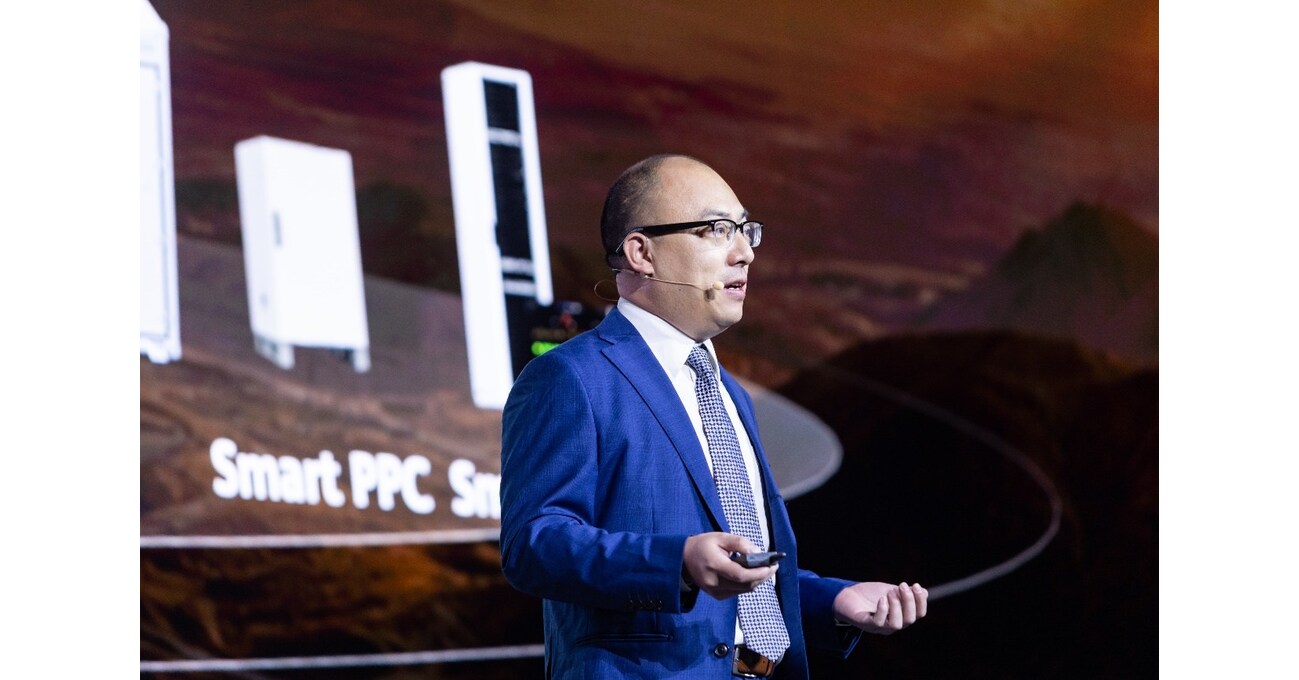
Huawei stellte auf der Intersolar Europe die LUTERRA „Smart-String-Grid-Forming“-ESS-Plattform vor, die GFM-Funktionen auf Anlagenebene ermöglicht. Für eine Umgebung von 25°C nennt Huawei einen Round-Trip-Wirkungsgrad von 93,1% (PCS-Niederspannungsseite) sowie SOC-Genauigkeit von 2,5% an beiden Enden und 3% im Plateau; zudem soll die Lösung den Durchsatz um >10% gegenüber herkömmlichen Systemen steigern. Bei einer 1-GWh-BESS-Anlage werden im Vergleich zu konventionellen Lösungen mindestens 30% kürzere Lieferzeit, mindestens 20% niedrigere BOP-Nebenanlagenkosten und ~1 m² weniger Platzbedarf pro installierter MWh genannt. Die Technologie wird bereits im Red-Sea-Mikronetzprojekt (400-MW PV, 1,3-GWh BESS) in Saudi-Arabien seit über zwei Jahren als stabil beschrieben.
This is less a single-product launch than a signal that the low-end of the utility-scale storage market is moving toward full-stack, bankable systems where efficiency, controls, and grid services are sold as one bundle. If the claims hold in third-party field data, pricing power shifts away from standalone PCS/container vendors and toward OEMs that can guarantee dispatch, ride-through, and ancillary-service revenue capture; that is margin-negative for commoditized integrators and positive for project developers that can win tighter IRRs and faster CODs.
The second-order effect is competitive pressure on Western names whose differentiation depends on enclosure-level optimization rather than system-level performance. The likely near-term losers are global storage hardware vendors with exposed gross margins and weaker balance sheets, while utilities and IPPs with large storage pipelines gain from lower BOP and faster deployment. The biggest spillover may be in Europe and the Middle East, where grid-forming specs can become a procurement filter and reduce the advantage of legacy inverter vendors that are slower on software-defined stability features.
Timing matters: the immediate market reaction should be muted because bankability, certifications, and geopolitics are the real bottlenecks, not demo performance. Over 1-3 months, the key catalyst is whether this wins repeat projects outside Huawei-friendly markets; over 6-18 months, the risk is that grid-forming becomes table stakes and compresses ASPs across the sector. The thesis is falsified if third-party validation stalls, procurement rules exclude the platform, or competitors match the performance without the geopolitical overhang.
The contrarian view is that the market may still be underestimating how quickly storage procurement can shift from "battery box" evaluation to "grid services engine" evaluation; that would accelerate price deflation for hardware but expand total addressable demand for storage-heavy grids. In that scenario, the clearest winners are developers/asset owners with cheap balance sheets, not the equipment vendors selling the picks and shovels.
AI-powered research, real-time alerts, and portfolio analytics for institutional investors.
Request TrialOverall Sentiment
mildly positive
Sentiment Score
0.25
