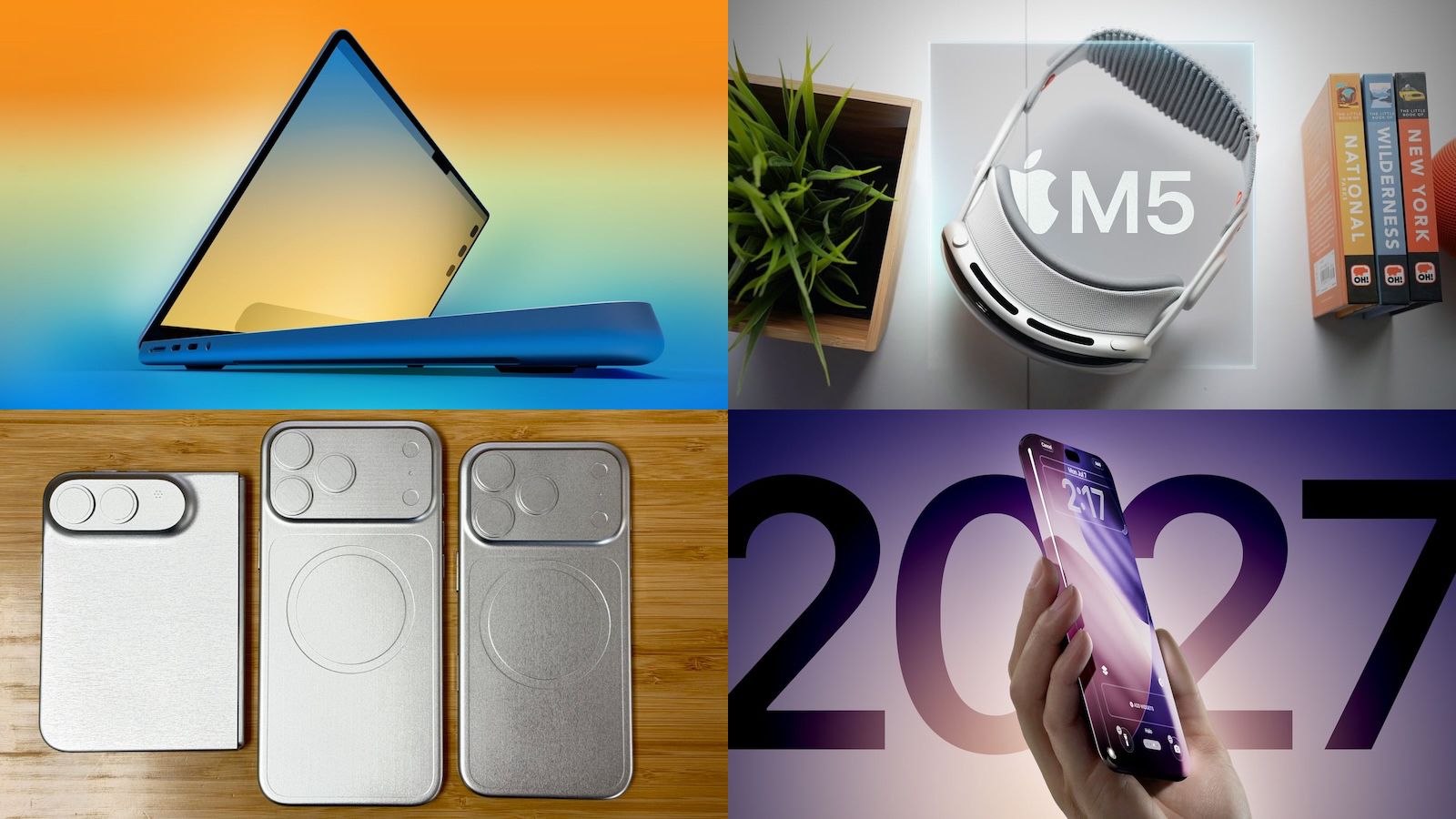
Apple’s news flow was mostly product- and roadmap-focused, including rumored 2027 MacBook Pro redesigns potentially branded as "MacBook Ultra," a foldable "iPhone Ultra" that may lack features like MagSafe and Action Button, and a custom micro-curved OLED panel for the 20th-anniversary iPhone. Separately, Apple has reportedly deprioritized the Vision Pro after the M5 refresh failed to revive demand, while it also introduced a new App Store monthly subscription option with a 12-month commitment. The article is largely speculative and informational, with limited near-term market impact.
The strategic signal is not the rumored products themselves; it’s Apple re-allocating design and silicon ambition toward a few high-ASP form factors while stepping back from capital-intensive categories that do not appear to have a clear upgrade cadence. That increases the probability that the next major Apple cycle is less about unit growth and more about mix expansion, with premium Macs and iPhones doing the heavy lifting on gross margin even if installed-base growth remains mature. The supply-chain implication is that the winners are the highest-leverage component vendors tied to leading-edge logic and display content, not broad Apple suppliers that depend on volume breadth.
The most important second-order effect is on TSM: if Apple really pulls forward 2nm adoption for top-tier Macs and later the flagship iPhone, Apple becomes an anchor customer for early-node wafer demand just as the foundry industry needs proof that pricing power survives the cost step-up. That is structurally supportive for TSM over a 6-18 month horizon, but the trade needs to respect execution risk: any delay in Apple’s redesign cadence would hit valuation sentiment because the market is already paying for node leadership and AI-related capex monetization. The more asymmetric read-through is that Apple is effectively telling the market it still wants differentiated hardware, but only where it can command premium pricing and tighter ecosystem lock-in.
For competitors, a higher-priced foldable with feature omissions is a double-edged sword: it validates the category but also leaves room for Samsung and Chinese Android flagships to attack on functionality-per-dollar. In consumer hardware, missing “must-have” features at a $2,000 sticker can cap upgrade urgency, so the near-term revenue impact is more likely a halo effect than a demand inflection. The bigger risk is that Apple is testing the ceiling of price elasticity; if the market accepts the premium without a usage breakthrough, the opportunity may remain cosmetic rather than category-expanding.
AI-powered research, real-time alerts, and portfolio analytics for institutional investors.
Request DemoOverall Sentiment
neutral
Sentiment Score
0.08
Ticker Sentiment
