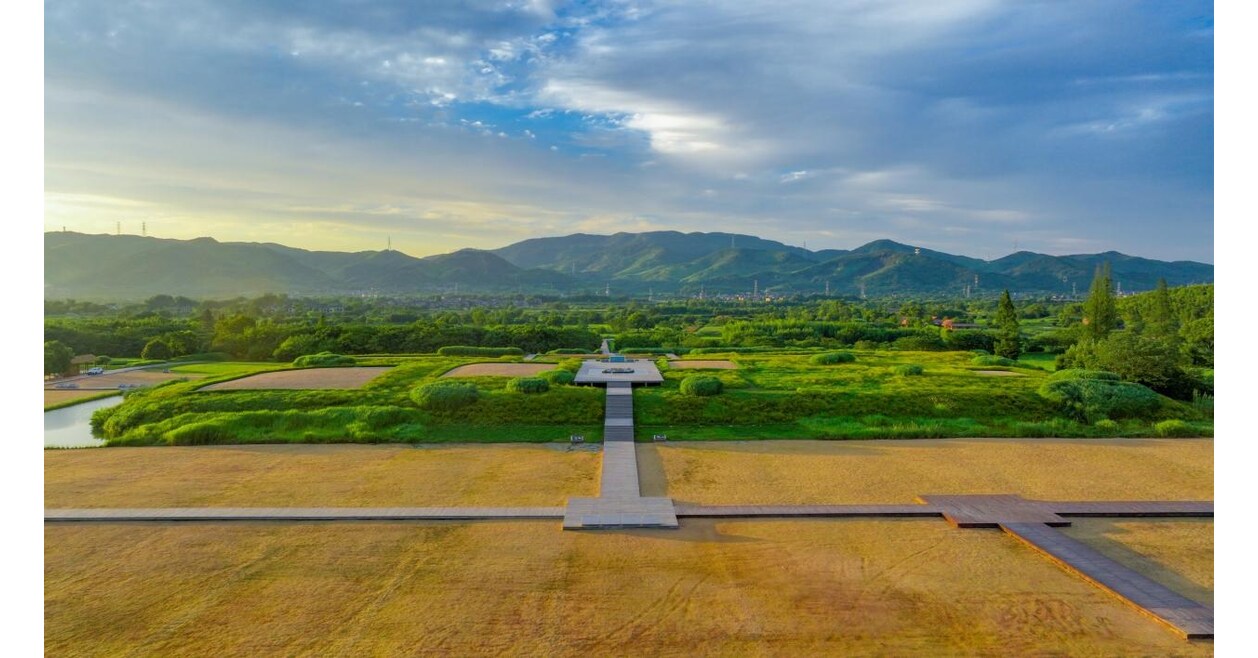
Am 6. Juli fand ein Dialog zwischen den Welterbestätten Liangzhu (Hangzhou, UNESCO seit 2019) und Samarkand (UNESCO seit 2001) statt, an dem über 100 Teilnehmende aus China und Usbekistan teilnahmen. Der Austausch konzentrierte sich auf Wiederbelebung und Erhaltung von Kulturerbe, inklusive Einsatz digitaler Technologien wie KI-gestützter Smart-Brillen, sowie die Integration von Kultur und Tourismus. Das Ereignis markierte die erste Zusammenarbeit des Programms „Liangzhu und die Welt“ mit einer asiatischen Welterbestätte; es wurden Kooperationspläne (u. a. Ausstellungen und Jugendaustausch) zur Stärkung der chinesisch-usbekischen Zusammenarbeit in der archäologischen Forschung angekündigt.
This is a soft-power signal, not an earnings event. The investable read-through is less about heritage itself and more about whether China is building a repeatable export model for conservation technology, public-sector digital monitoring, and culture-linked tourism packaging. If that pattern spreads, the beneficiaries are likely municipal tech vendors, AR/AI interpretation tools, and travel platforms that can aggregate niche cross-border itineraries; the cash flow impact, however, is likely to show up only after procurement cycles and route/visa changes, not on a headline basis.
The market should be careful not to extrapolate a ceremonial forum into meaningful demand uplift for airlines, hotels, or tour operators. For Central Asia, travel conversion is constrained by seat capacity, consumer spending power, and policy friction; those variables matter far more than cultural exchange branding. In that sense, the immediate reaction is probably noise, while the 1-3 month catalyst would need follow-on MOUs, budget line items, or transport liberalization to become tradable.
Contrarian view: consensus may miss the procurement angle. If Liangzhu’s digital-preservation toolkit becomes a template, Chinese heritage-tech suppliers could gain incremental overseas orders and reference sites in Belt-and-Road markets over 6-18 months. The thesis is falsified if there is no visible follow-through in city budgets, no expansion of tourism capacity, and no measurable improvement in inbound/outbound travel data.
AI-powered research, real-time alerts, and portfolio analytics for institutional investors.
Request DemoOverall Sentiment
neutral
Sentiment Score
0.10
