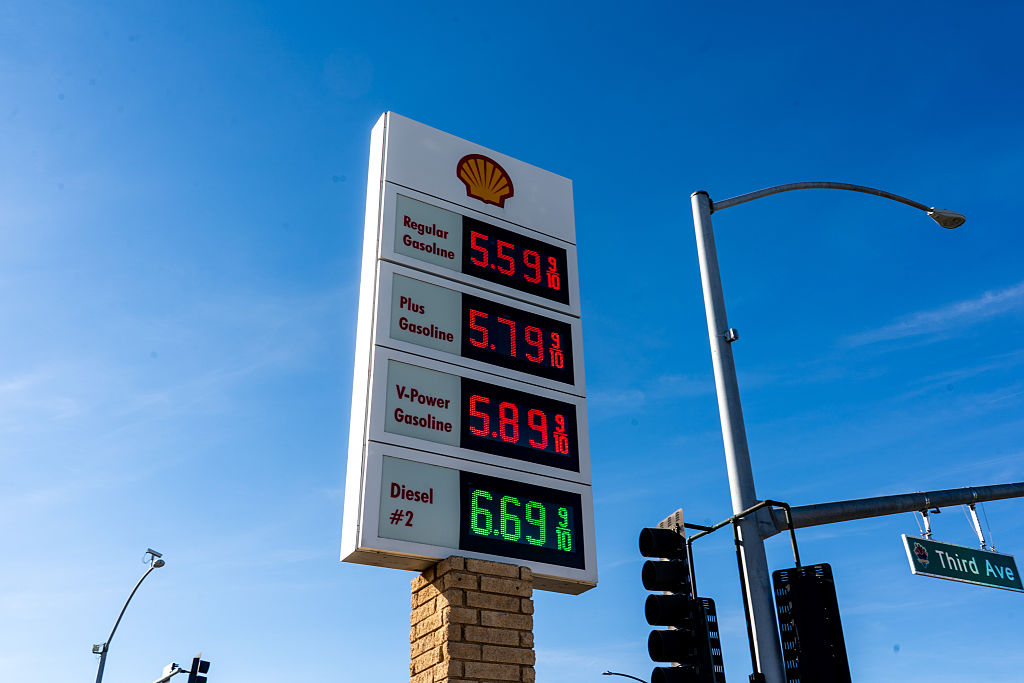
Brent crude has surged ~50% (from $67 to >$100/bbl) after the Strait of Hormuz was effectively closed, pushing U.S. pump prices up roughly $0.80/gal (to ~$3.70) and jet fuel up ~85%. The disruption constrains global supply (Strait previously carried ~20% of world oil/gas), prompting a coordinated 400 million-barrel IEA release and policy waivers that only partially and temporarily address shortages. Even if the Strait reopens, restart timelines for regional production and 'rockets-and-feathers' retail pricing mean elevated energy costs and persistent inflationary pressure for months, increasing downside risk to consumer spending ahead of the 2026 U.S. midterms.
The market is behaving like a transit-time shock rather than a pure production shortfall: longer voyage times for seaborne crude increase effective days-in-transit by roughly 7–12 days per voyage, which mechanically removes barrels from the spot market and bids up both crude and freight. That creates a self-reinforcing technical shortage (higher contango, more floating storage demand) that can persist even if marginal production is available elsewhere, because the bottleneck is throughput and logistics, not just wellhead output.
Refining and downstream economics will bifurcate: simple refiners and retail rack owners will see squeezed input/output dynamics while complex refiners capture outsized crack spreads where product yield matches demand (diesel, jet). Retail pump asymmetries — oligopolistic rack pricing, regional distribution frictions, and seasonal blending constraints — mean retail fuel prices will fall much slower than crude, keeping real consumer energy inflation sticky across months.
Policy or geopolitical reversals are the clearest near-term catalysts, but market rebalancing without that requires multiple sequential steps (tankers re-normalizing, refineries ramping, inventories rebuilding), so expect intermittent relief rallies that fade. Tail risks that would blow the trade wider include escalation to regional strikes on export infrastructure or a rapid surge in insurance/piracy premiums that keeps vessels out of preferred lanes; these would extend the timeline from months into quarters for normalization.
AI-powered research, real-time alerts, and portfolio analytics for institutional investors.
Request DemoOverall Sentiment
strongly negative
Sentiment Score
-0.75
