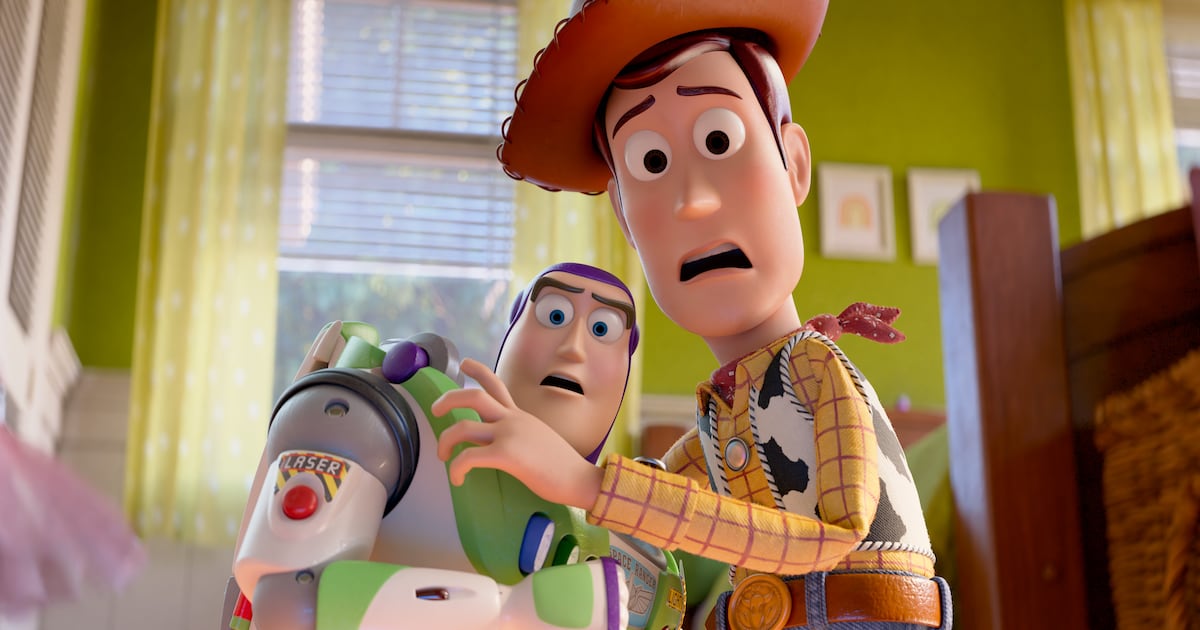
Toy Story 5 opened to $160 million domestically across 4,425 North American theaters and $152 million overseas, delivering a $312 million global debut and the biggest domestic opening of 2026. It also surpassed Toy Story 4’s $120 million opening and became the second-largest animated opening in history behind Incredibles 2 at $182.7 million. Strong Rotten Tomatoes and audience scores suggest robust consumer demand and favorable reception for Disney/Pixar's franchise.
This is less a one-off box office beat than evidence that premium family IP still has unusually high pricing power and low elasticity in a crowded entertainment market. The second-order implication is that studios with large, durable franchises can keep extracting theatrical value even as streaming has trained consumers to wait, which should support higher confidence in tentpole-heavy release calendars and more aggressive windowing strategies over the next 6-12 months.
The key beneficiary is the owner/operator of the franchise ecosystem: not just theatrical revenue, but downstream monetization through licensing, consumer products, parks, and streaming retention. A strong launch also lowers perceived risk for adjacent animated and legacy-sequel releases, which can improve greenlight economics across a slate and reduce the discount rate investors assign to future content pipelines. Competitively, smaller family films and mid-budget originals are the likely losers, because they will struggle to get premium screens and marketing oxygen when one title proves it can dominate both kids and adults.
The contrarian risk is that opening-weekend strength may not translate into long-tail cash flow if front-loaded demand is driven by nostalgia and review momentum rather than repeat viewings. Over the next 2-8 weeks, the market will care more about domestic multiplier and overseas legs than the headline debut; if those normalize quickly, the earnings uplift could be smaller than the sentiment reaction suggests. Another hidden risk is that a blockbuster like this can increase distribution leverage for exhibitors in the short term, but also reinforce concentration around a few must-see events, pressuring smaller chains and non-event programming economics.
From a trading standpoint, the cleanest expression is to own the content owner or diversified media platform with the strongest franchise library versus weaker linear-adjacent peers. The move is bullish for the theme, but likely not enough alone to justify chasing broad media beta after an already-strong pop; the better risk/reward is in pairs that isolate IP durability and merchandising optionality. If family entertainment demand remains strong into the next holiday slate, expect a positive read-through to studio estimates and consumer-products guidance over the next quarter.
AI-powered research, real-time alerts, and portfolio analytics for institutional investors.
Request DemoOverall Sentiment
strongly positive
Sentiment Score
0.78
