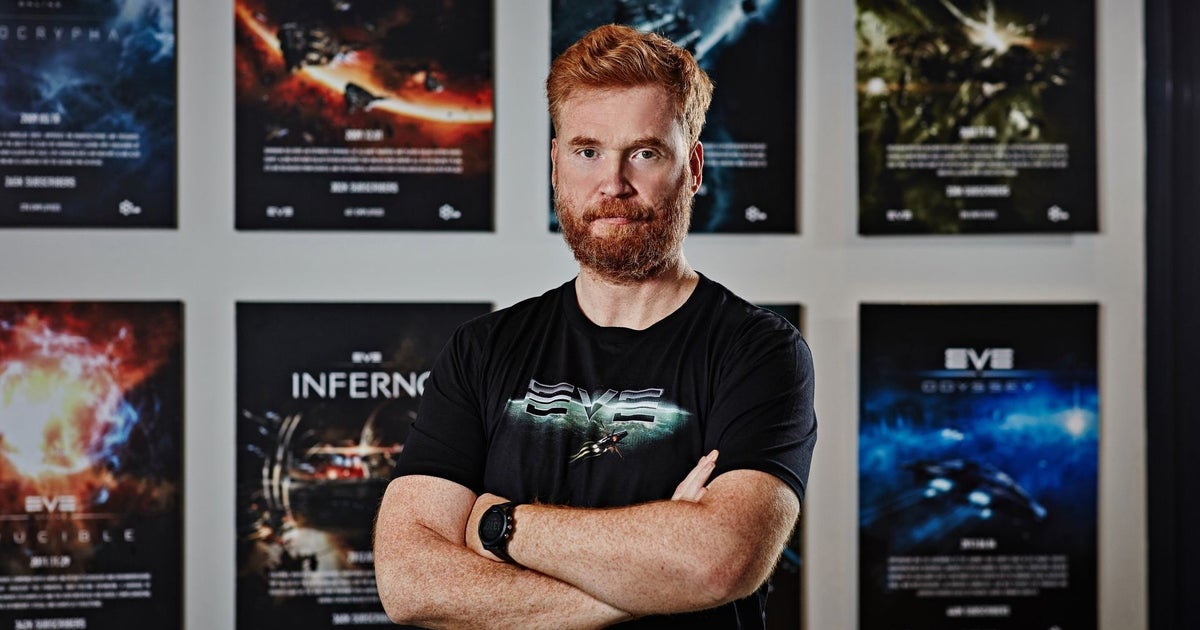
CCP Games completed an independence reset and rebrand to Fenris Creations in a $120 million management buyout, versus Pearl Abyss’s 2018 purchase for $425 million including performance payouts. The company also announced a research partnership and investment from Google DeepMind, while reaffirming a multi-year roadmap centered on Eve Online, Eve Frontier, and Vanguard. The news is strategically positive but likely has limited near-term market impact given the niche gaming exposure.
This is less a game-company story than a signal that the economics of mid-cap interactive IP are being reset by a mix of identity, distribution, and AI leverage. The rebrand and buyback effectively remove a strategic distraction while re-centering the business around a single durable franchise; that usually improves decision speed, but it also concentrates execution risk into one operating pillar. The lower change-of-control value versus the prior transaction likely matters more as a reflection of capital scarcity and tougher public-market comps than as a read-through on franchise quality.
The deeper second-order effect is that the company is trying to turn a decades-old MMO into a platform with multiple monetization vectors: live service, creator tooling, and AI-assisted operations. If that works, the real upside is not in headline player growth but in lower marginal content costs and higher retention from a more self-sustaining ecosystem. The partnership with DeepMind is strategically valuable even if near-term product impact is minimal, because it increases credibility with developers and investors around enterprise AI use cases in complex simulation and code-heavy workflows.
The main risk is that this is a long-dated transformation story with multiple binary gates: user response to modernization, regulatory friction around crypto-like mechanics, and the perennial challenge of multiplayer launches under-delivering on physics and feel. Near term, the rebrand itself is mostly cosmetic, but over 6-18 months the key catalyst is whether the new expansion arc and shooter integration translate into measurable concurrency and ARPU lift. If either the frontier product or the shooter misses, the market will likely reprice this as a niche legacy-IP operator rather than a platform builder.
Contrarianly, the consensus may be underestimating how much AI can matter in a game like this, not for NPC behavior but for internal production velocity and live-ops experimentation. The right comp is not a pure game studio; it is a software-enabled media platform with embedded tooling advantages. That said, the market usually pays for AI optionality only after evidence, so the setup is more about owning the proof point than the narrative.
AI-powered research, real-time alerts, and portfolio analytics for institutional investors.
Request DemoOverall Sentiment
mildly positive
Sentiment Score
0.25
