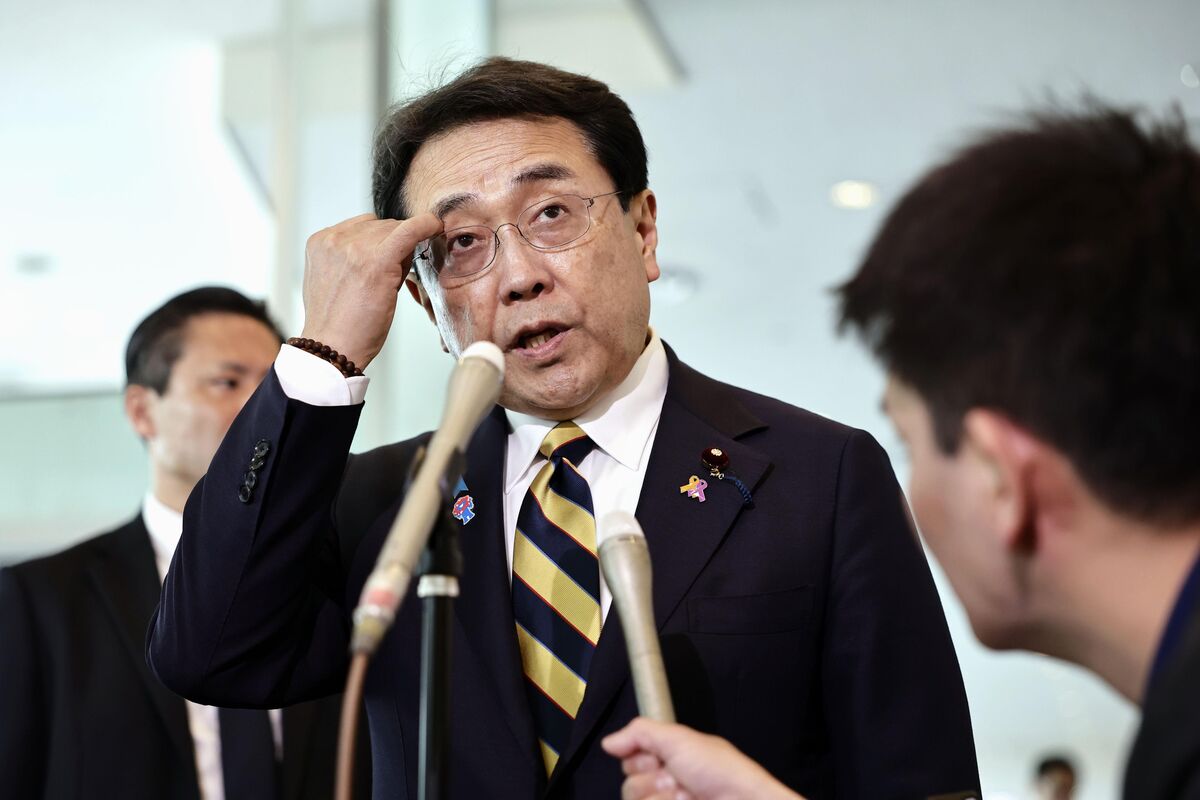
Japan's chief trade negotiator Ryosei Akazawa signaled the country's intention to reach a tariff agreement with the U.S. by the time of the G-7 meeting in June, spurred by President Trump's recent decision to allow a partnership between two steelmakers from the respective countries. Akazawa's comments, made after meetings with U.S. officials, suggest a renewed push to resolve trade tensions ahead of the leaders' summit.
Japan's chief trade negotiator, Ryosei Akazawa, has signaled a clear intent to resolve ongoing tariff negotiations with the United States ahead of the G-7 meeting scheduled for June. This diplomatic initiative follows a notable development where US President Donald Trump permitted a partnership between US and Japanese steelmakers, potentially easing a point of friction. Akazawa's statement, made after discussions with US Secretary of Commerce Howard Lutnick and USTR Jamieson Greer, emphasized that leaders of both nations anticipate their upcoming meeting, indicating a mutual desire to find common ground. This development, carrying a 'moderately positive' sentiment and an 'optimistic' tone, suggests a potential thawing in trade tensions, which primarily fall under the themes of 'Trade Policy & Supply Chain' and 'Tax & Tariffs'. While the market impact score of 0.35 indicates a measured reaction, the move towards a resolution by a key deadline is a significant step in bilateral economic relations.
AI-powered research, real-time alerts, and portfolio analytics for institutional investors.
Request DemoOverall Sentiment
moderately positive
Sentiment Score
0.50
