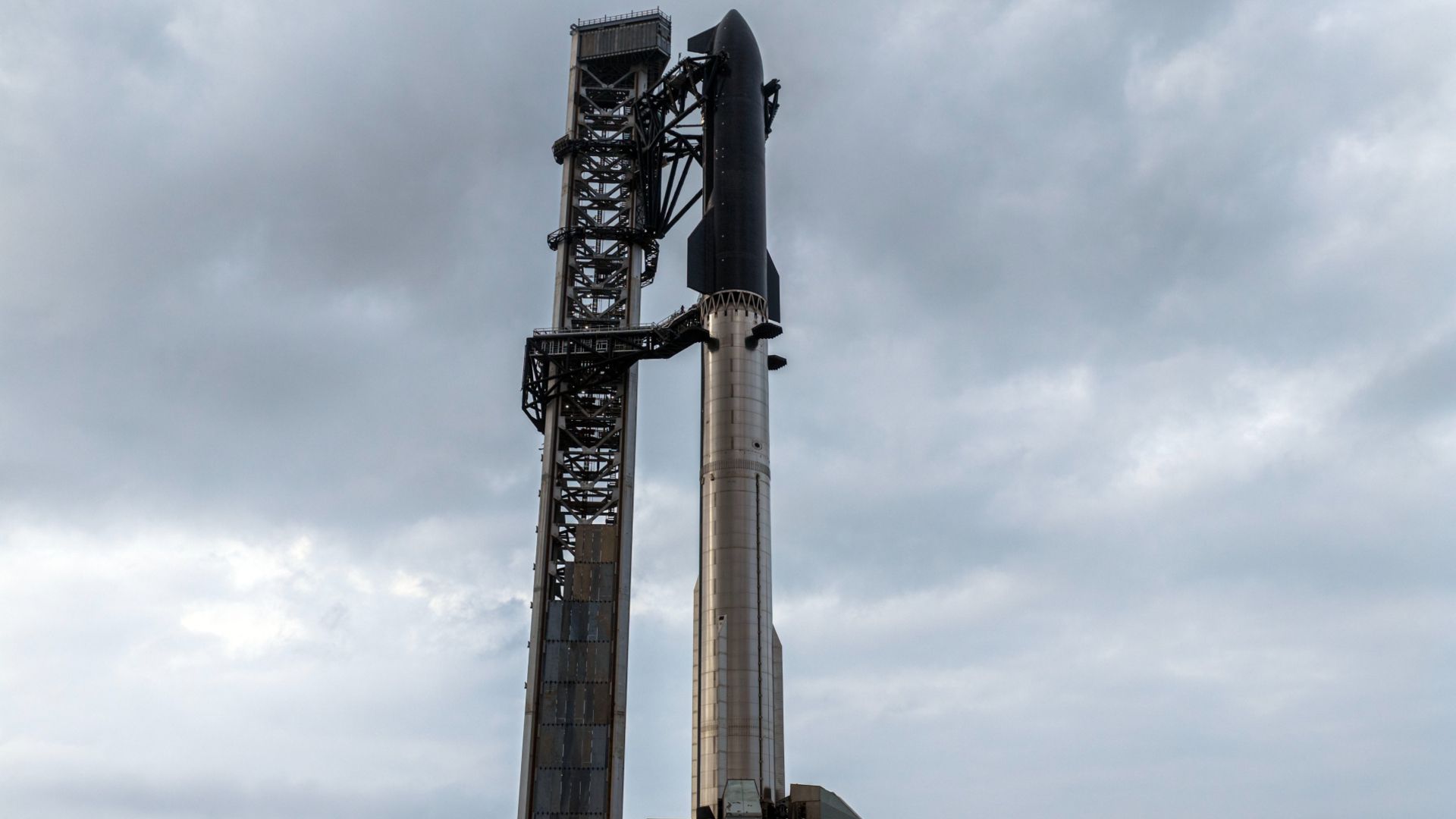
SpaceX is launching its first Starship V3 megarocket today, a 408-foot vehicle with redesigned Raptor engines, a reusable hot-stage ring, improved payload deployment, and in-space refueling hardware. The test flight will deploy 20 dummy Starlink satellites plus 2 instrumented Starlinks, while also debuting Starbase Pad 2 and its faster propellant system. The article frames the mission as strategically important for NASA’s Artemis timeline and notes that a failure could create short-term valuation pressure ahead of SpaceX’s expected IPO next month.
This launch is less about a single flight and more about de-risking the industrialization curve for a reusable super-heavy platform. The market should focus on whether SpaceX can compress the time between test flights, because cadence—not one-off success—determines whether the company can credibly support a 2027-2028 lunar timeline and later monetize satellite deployment at scale. If V3 materially improves turnaround, the real equity value uplift is in the option value of launch frequency and in-space logistics, not the headline success rate of a suborbital test.
The second-order beneficiary set is broader than the obvious launch ecosystem. A cleaner path to rapid reuse and propellant transfer increases the strategic moat around downstream satellite operators, launch-adjacent suppliers, and payload integrators that can secure manifest access early; the losers are smaller launch providers that compete on cost per kilogram but lack a comparable reuse roadmap. For AMZN specifically, the direct line is not space hype but network economics: if a lower-cost launch regime raises the probability of a denser orbital infrastructure buildout, that modestly improves the long-dated optionality around logistics, connectivity, and compute delivery, though this remains a low-conviction call at current valuation.
The key near-term risk is not technical failure alone; it is a failure mode that forces redesign of a core propulsion or thermal system, which would push the timeline by quarters and increase the probability of NASA schedule slippage. That matters because the market is likely underestimating how much of SpaceX’s pre-IPO narrative is tied to Starship being the bridge between launch revenue and a Mars/transportation platform. A clean flight likely supports the IPO story more than it changes near-term fundamentals; a bad one would mainly hit sentiment and force a reset of execution expectations.
Contrarian view: the crowd may be overpricing the idea that one successful test meaningfully moves the space race. The more important signal is whether SpaceX can sustain a manufacturing-and-launch cadence after the debut, and whether NASA or commercial customers start committing real dollars to a V3-based manifest. Until that happens, the trade is mostly a volatility event around the launch window, not a durable re-rating of the sector.
AI-powered research, real-time alerts, and portfolio analytics for institutional investors.
Request DemoOverall Sentiment
neutral
Sentiment Score
0.15
Ticker Sentiment
