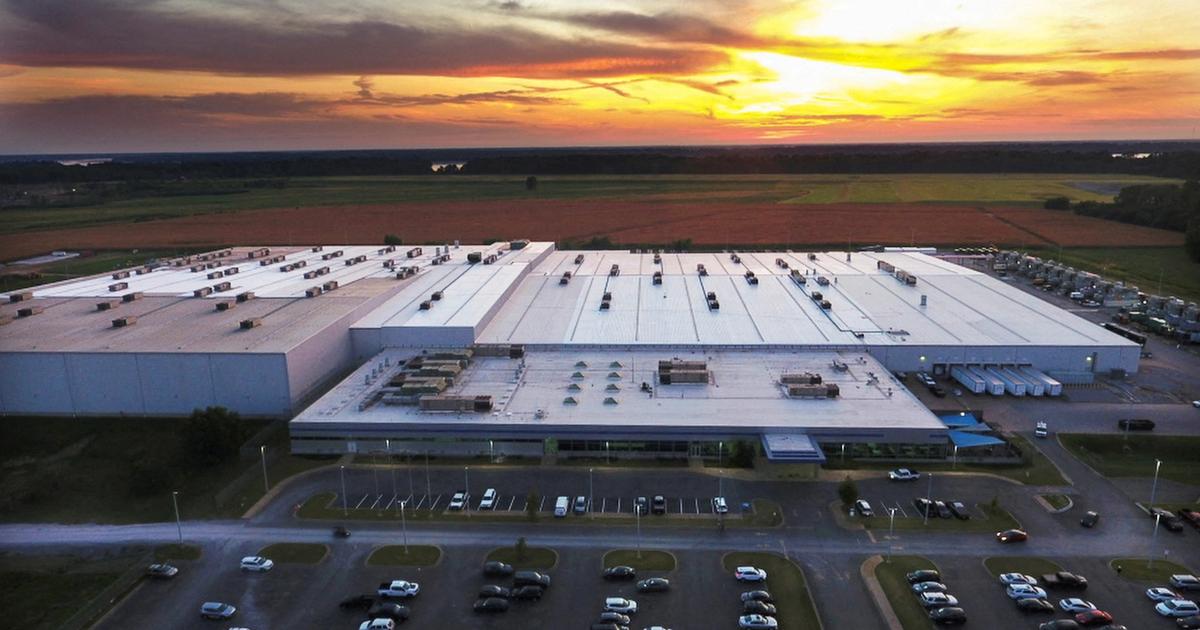
AI compute demand is rising fast enough that xAI’s sale of compute power to Anthropic is framed as a sign of a scarce, high-value resource becoming economically central. The piece highlights the rapid expansion of agentic AI tools, which is increasing token consumption and exposing Anthropic’s need for more capacity. Goldman Sachs estimates about $7.6 trillion of capital will be deployed across compute, data centers, and power infrastructure from 2026 to 2031.
The strategic value transfer here is not “AI demand is strong” — it’s that scarcity is migrating one layer up the stack. Compute owners who can dynamically re-route capacity into the highest-token-intensity workloads gain pricing power, but the real margin pool will likely accrue to harness/orchestration software that turns raw model access into durable workflow lock-in. That means the next leg of the AI capex cycle should favor infrastructure enablers with exposure to power, networking, and data-center buildout more than pure model vendors, because the bottleneck shifts from inference capacity to industrial throughput and integration.
Second-order, the article is a warning that agentic workloads can become a volume shock to the entire ecosystem. If tokens are now the “currency,” then every successful automation product becomes a multiplier on GPU demand, API spend, and cloud bills; that is bullish for infrastructure less so for end-user margins. Over 6-18 months, enterprises may discover that agentic pilots look compelling on labor replacement but quietly expand opex through usage-based pricing, which should create a lagged correction in demand discipline and a rotation toward in-house orchestration and private deployments.
The Goldman capital-spend estimate implies the market may still be underpricing the duration of the buildout, especially in power and grid interconnects where lead times are measured in years. The underappreciated risk is that compute commoditizes faster than power access, making electricity and permitting the true choke points. If so, AI winners will increasingly look like regulated utilities, power equipment, and select digital infrastructure names rather than the headline model companies.
For GAP, the article is directionally irrelevant to near-term fundamentals, but it does reinforce a broader framework: firms with weak demand visibility and poor inventory flexibility will be punished if they fail to translate AI into planning and merchandising gains quickly. The clearest contrarian read is that the market is still extrapolating AI as a software-margin story, when the more durable alpha may come from picks-and-shovels and balance-sheet-backed infrastructure capacity.
AI-powered research, real-time alerts, and portfolio analytics for institutional investors.
Request DemoOverall Sentiment
mildly positive
Sentiment Score
0.35
Ticker Sentiment
