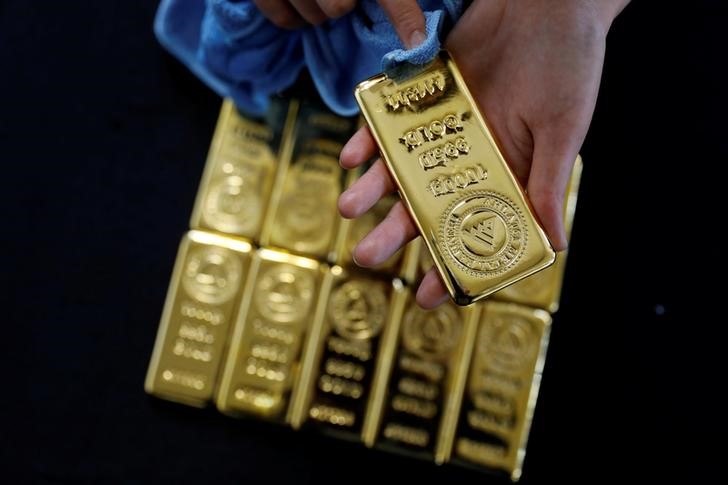
Hot U.S. CPI data showed April consumer prices up 0.6% month over month and 3.8% year over year, with core inflation also above expectations, pushing Treasury yields and the dollar higher. Gold was little changed but under pressure from firmer rates and a stronger greenback, while fading hopes for a U.S.-Iran peace deal kept geopolitical and energy-driven inflation risks elevated. Markets now await U.S. PPI data for more evidence on inflation persistence and the Fed’s rate path.
The immediate market read-through is not just “higher rates hurt growth,” but that the inflation impulse is now becoming self-reinforcing via energy, which raises the odds that long-duration winners de-rate again even if the macro data cools later. That matters most for the high-beta AI complex: names like SMCI and APP are still positioned as secular growth stories, but their multiples are now more vulnerable to any further rise in real yields than to incremental revisions to near-term demand. In a tape where the market is repricing policy as sticky rather than easing, the first-order loser is valuation-sensitive growth, while the second-order winner is cash-generative quality.
The geopolitical overlay is more important for cross-asset dispersion than for a broad index call. If Middle East risk keeps shipping insurance and energy inputs elevated, the likely short-term beneficiaries are upstream energy, defense, and select commodity-linked industrials; the losers are semiconductor hardware, consumer discretionary, and any business with tight gross margins and inventory risk. The bigger second-order effect is on supply chains: higher freight, higher power costs, and longer lead times can squeeze hardware makers twice — through COGS and through weaker enterprise capex sentiment if CFOs start treating AI spend as deferrable.
Contrarian angle: the market may be too quick to extrapolate one hot CPI print into a durable inflation regime. If the inflation impulse is mostly energy-driven and geopolitical, it can reverse faster than core-services inflation, which means the policy shock may be more cyclical than structural. That creates a window where duration-sensitive names overshoot to the downside for 1-3 weeks, then rebound sharply if PPI or subsequent CPI components fail to confirm broadening price pressure.
For SMCI and APP specifically, the key risk is not demand collapse, but multiple compression: both can stay fundamentally intact while the stock underperforms 10-20% if rates keep backing up. In other words, this is a positioning problem before it is an earnings problem. The best setups here are tactical, not strategic, until the market gets a clean read on whether inflation is broadening beyond energy.
AI-powered research, real-time alerts, and portfolio analytics for institutional investors.
Request DemoOverall Sentiment
moderately negative
Sentiment Score
-0.20
Ticker Sentiment
