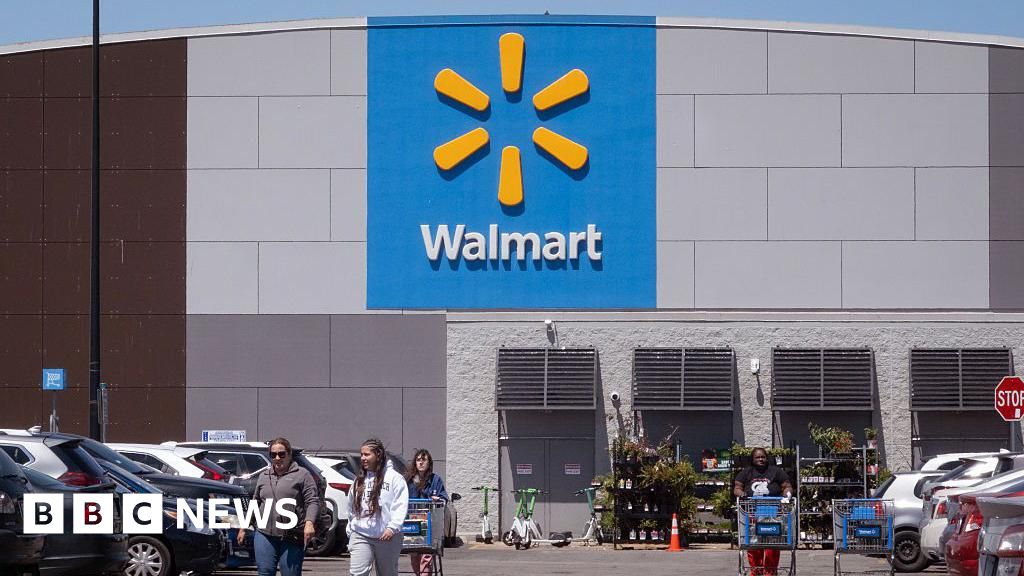
Walmart said first-quarter sales rose 7.3% to $177.8B and profit increased 18.8% to $5.3B, but it guided May-July sales growth down to 4%-5% from the prior three months as higher gas prices pressure consumers. Management warned that elevated fuel costs and weaker tax-refund support are starting to squeeze household budgets, and that prolonged Strait of Hormuz disruption could force food price increases. Shares fell 7% on the weaker outlook.
This is not just a near-term Walmart miss; it is a signal that energy is starting to act like a tax on lower- and middle-income consumption baskets, with a lag. The key second-order effect is mix deterioration: when fuel rises, discretionary dollars get reallocated away from general merchandise and into essentials, which tends to compress basket size and margin mix even if units hold up. That dynamic is more damaging for mass retail peers than for premium grocers or businesses with stronger membership/loyalty overlays.
The bigger risk is that the pressure propagates through the supply chain if elevated fuel persists for another 1-2 quarters. Freight, last-mile delivery, and agricultural input costs can all reprice higher with a delay, so the eventual hit could show up not only in demand but in cost of goods sold across packaged food, household products, and apparel. If Strait-related energy stress remains sticky, the market may be underestimating the probability of broad-based earnings revisions in consumer staples and retail rather than just one retailer warning.
The stock move looks directionally right, but the broader setup is more interesting than a simple short-WMT. WMT can still gain share in a weak consumer environment, so the relative winner/loser spread may widen: discount grocers and value channels should outperform while mid-tier discretionary retailers face the steepest volume risk. The contrarian takeaway is that consensus may be over-focusing on demand weakness and under-focusing on margin protection at the retailer level; if Walmart leans harder on private label and vendor funding, earnings can hold up better than sales, limiting downside after the guidance reset.
Catalyst-wise, the next 4-8 weeks matter more than the next quarter because gas prices feed consumer sentiment and weekly traffic data quickly. A reversal would likely require either a meaningful pullback in crude, policy action to cap fuel prices, or a tax-refund/fiscal offset that re-primes spending. Absent that, the setup favors a prolonged downgrade cycle in consumer beta names rather than a one-day selloff and recovery.
AI-powered research, real-time alerts, and portfolio analytics for institutional investors.
Request DemoOverall Sentiment
moderately negative
Sentiment Score
-0.45
Ticker Sentiment
