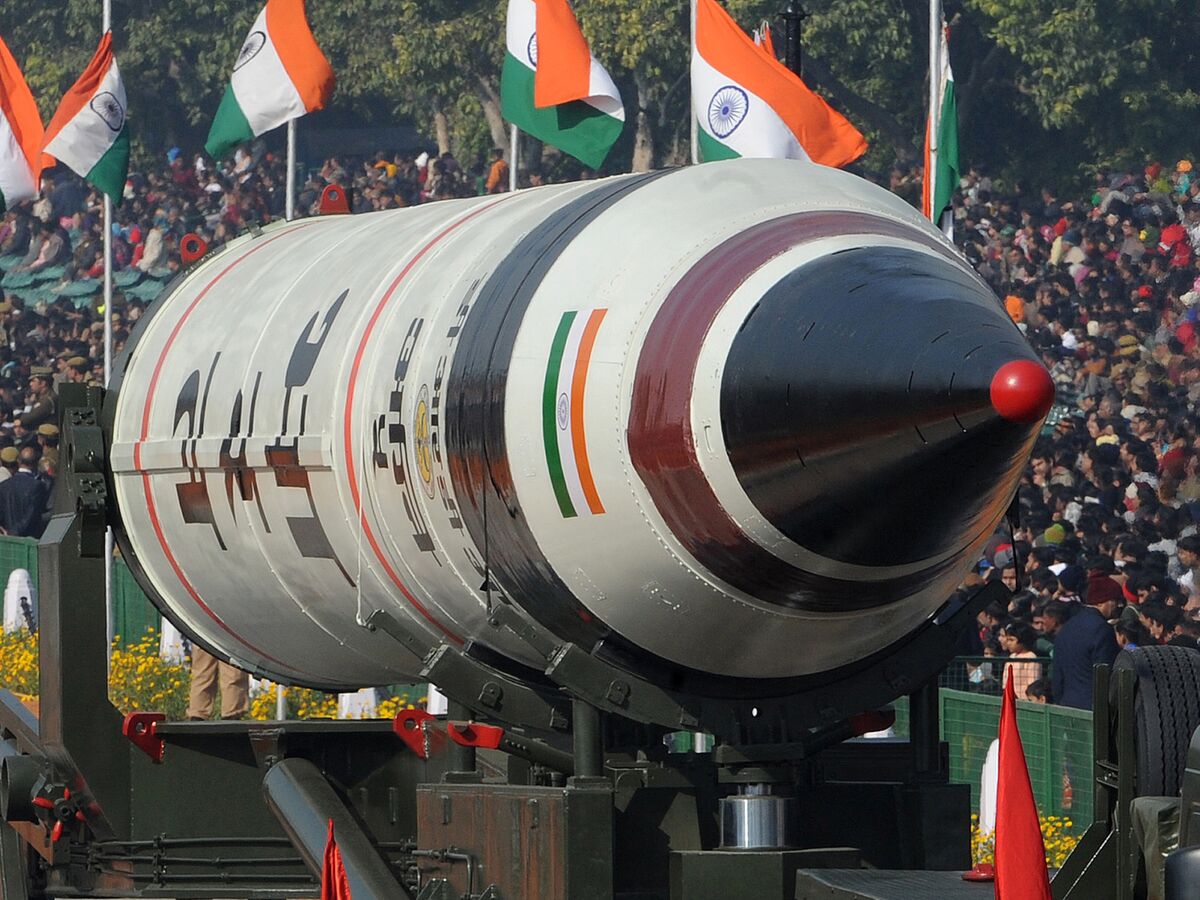
A new report from the Stockholm International Peace Research Institute indicates that India has slightly increased its nuclear arsenal and modernized its delivery systems. The report also suggests a change in India's nuclear strategy, as it now appears to be mating warheads to missiles in firing canisters, a departure from the long-assumed practice of storing warheads separately from deployed launchers during peacetime.
A recent report from the Stockholm International Peace Research Institute (SIPRI) indicates a marginal increase in India's nuclear arsenal and an ongoing modernization of its delivery systems. More significantly, the report highlights a potential shift in India's nuclear warhead deployment strategy. Contrary to the long-held assumption that India stores its nuclear warheads separately from deployed launchers during peacetime, SIPRI's findings suggest that India now appears to be mating warheads directly to missiles within their firing canisters. This development implies a move towards a higher state of operational readiness for its nuclear forces, potentially shortening response times and signaling an evolution in its deterrent posture. While the provided signals indicate a neutral sentiment and a low market impact score of 0.1, this strategic adjustment carries geopolitical significance, particularly within the context of regional security dynamics.
AI-powered research, real-time alerts, and portfolio analytics for institutional investors.
Request DemoOverall Sentiment
neutral
Sentiment Score
0.00
