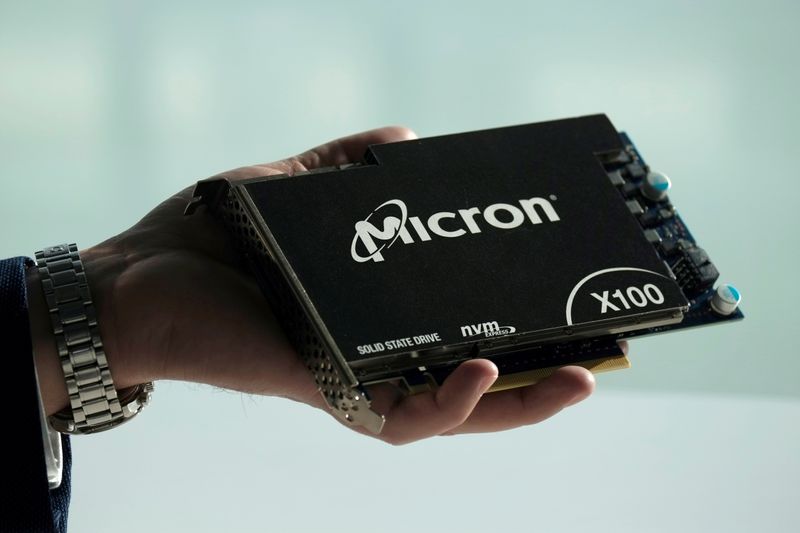
Multiple brokers raised Micron price targets (Barclays $675, KeyBanc $600, TD Cowen $550, BofA $500, Baird $500) while Goldman Sachs kept a Neutral $400 target; MU trades at $461.73 and is up ~354% over the past year. Micron reported stronger-than-expected guidance including $19 EPS for the May quarter versus the Street $11.70, cited robust AI-led DRAM/NAND demand and signed its first five-year strategic customer agreement with purchase commitments. Management flagged supply constraints (cleanroom capacity) limiting bit growth to just over 20% in 2026, supporting tighter market pricing and sustained margin upside if industry supply discipline continues.
The market is pricing a multi-year supply discipline narrative into memory equities; that narrative implies a multi-quarter mismatch between demand growth (AI + cloud) and physical cleanroom/reticle throughput that supports elevated ASPs. The key second-order beneficiary is the capital equipment chain — prolonged tightness accelerates replacement and conversion purchases, concentrating incremental free cash flow at dominant foundry-like memory producers and their tool suppliers.
Tail risks are concentrated and time-staggered: an enterprise/AI spending pause can erode pricing power inside 3–9 months, while industry capex re-acceleration can swamp the market after ~12–24 months once additional cleanroom capacity and mature-node bit growth come online. Geopolitical export controls or a single large buyer (hyperscaler) destocking are event risks that can trigger >30% swings in sentiment and inventory-driven price collapses.
From a positioning perspective, there’s asymmetric payoff in owning optionality on the supply-discipline outcome while hedging the cyclical inventory risk. The highest-conviction implementation is to express a multi-quarter bullish view with limited outright capital at risk (call spreads or LEAPs) and finance that exposure by selling short-dated dispersion if quarterlies surprise to the upside. Monitor leading indicators — fab utilization, new tool orders, and spot contract pricing — on a weekly cadence; a persistent move in either direction should trigger rebalancing within 6–12 weeks.
The consensus misses the timing friction between announced strategic supply agreements and realized volume growth: agreements can support price floors without materially increasing bits for 4–8 quarters, which creates a window for outsized margin expansion but also concentrates downside if demand normalizes. That window is tradable, not permanent — treat near-term tightness as a convex bet, not a permanent structural shift, and size accordingly.
AI-powered research, real-time alerts, and portfolio analytics for institutional investors.
Request DemoOverall Sentiment
strongly positive
Sentiment Score
0.65
Ticker Sentiment
