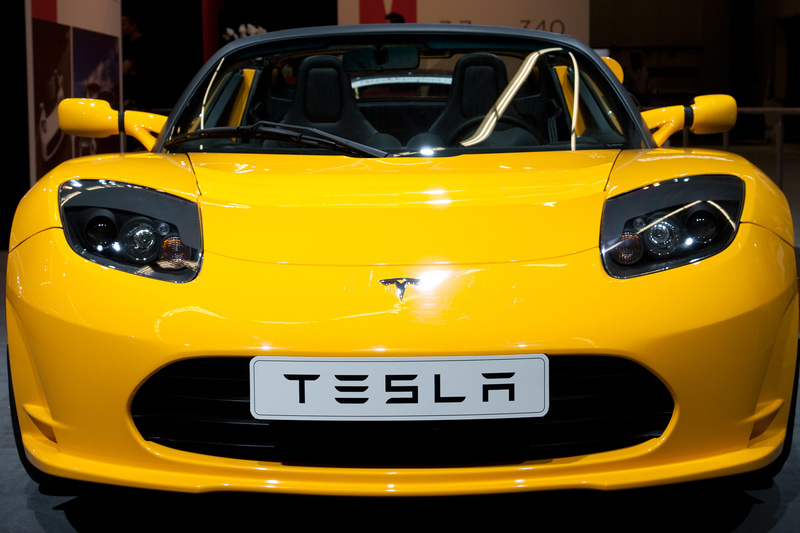
Uber is being reassessed around autonomous vehicle competition, with analysts split between a long-term threat from Waymo and Tesla and an opportunity from Uber’s asset-light partnership strategy. FY2026 estimates call for revenue of $61.6B and EBITDA of $11.2B, while LTM revenue was $53.7B with 18% growth and $9.8B in free cash flow. Analyst targets remain wide, ranging from $73 to $130, underscoring uncertainty rather than a clear near-term catalyst.
The market is treating autonomous vehicles as a binary threat to UBER, but the more important second-order effect is margin dispersion by geography. If autonomy gets commercial traction first in high-labor-cost markets, UBER can actually see take-rate stability or even margin expansion before it loses share, because the platform still owns demand discovery, dispatch, and payments even if it no longer owns the driver relationship. That means the near-term winner is less the robotaxi OEM and more the software/orchestration layer; NVDA benefits indirectly as the capital tollbooth enabling the fleet rollout, while GOOGL benefits if AV supply remains fragmented and partner-dependent.
The biggest bear risk is not that autonomy arrives, but that a few operators bypass the marketplace entirely and use UBER only as a reference dataset before launching their own consumer brands. That risk plays out over 12-36 months, not weeks, which means the stock can re-rate upward on earnings momentum well before the existential question is answered. TSLA remains the clearest relative loser in this frame: if the market starts assigning higher probability to third-party deployment via partners, Tesla’s closed-stack model loses some optionality versus an ecosystem approach.
Consensus appears to be underestimating how much UBER’s multi-product funnel cushions mobility disruption. If rides soften, delivery, grocery, and convenience can keep app engagement high, which preserves customer acquisition efficiency and lowers the odds of a sudden multiple collapse. The real catalyst path is sequential: beat-and-raise execution into 2026, followed by proof that AVs are accretive in selected cities rather than dilutive to the core network. That should force shorts to cover before any broad autonomy substitution becomes economically meaningful.
The contrarian takeaway is that the current selloff likely discounts a slower, less clean competitive transition than the market headline suggests. Investors are pricing a near-term share loss event, but the more probable outcome is a long period of coexistence where UBER captures flow, partners fund capex, and unit economics improve in premium geographies. If that proves right, the stock deserves to trade less like a disrupted transport asset and more like a diversified consumer platform with embedded infrastructure optionality.
AI-powered research, real-time alerts, and portfolio analytics for institutional investors.
Request DemoOverall Sentiment
neutral
Sentiment Score
0.10
Ticker Sentiment
