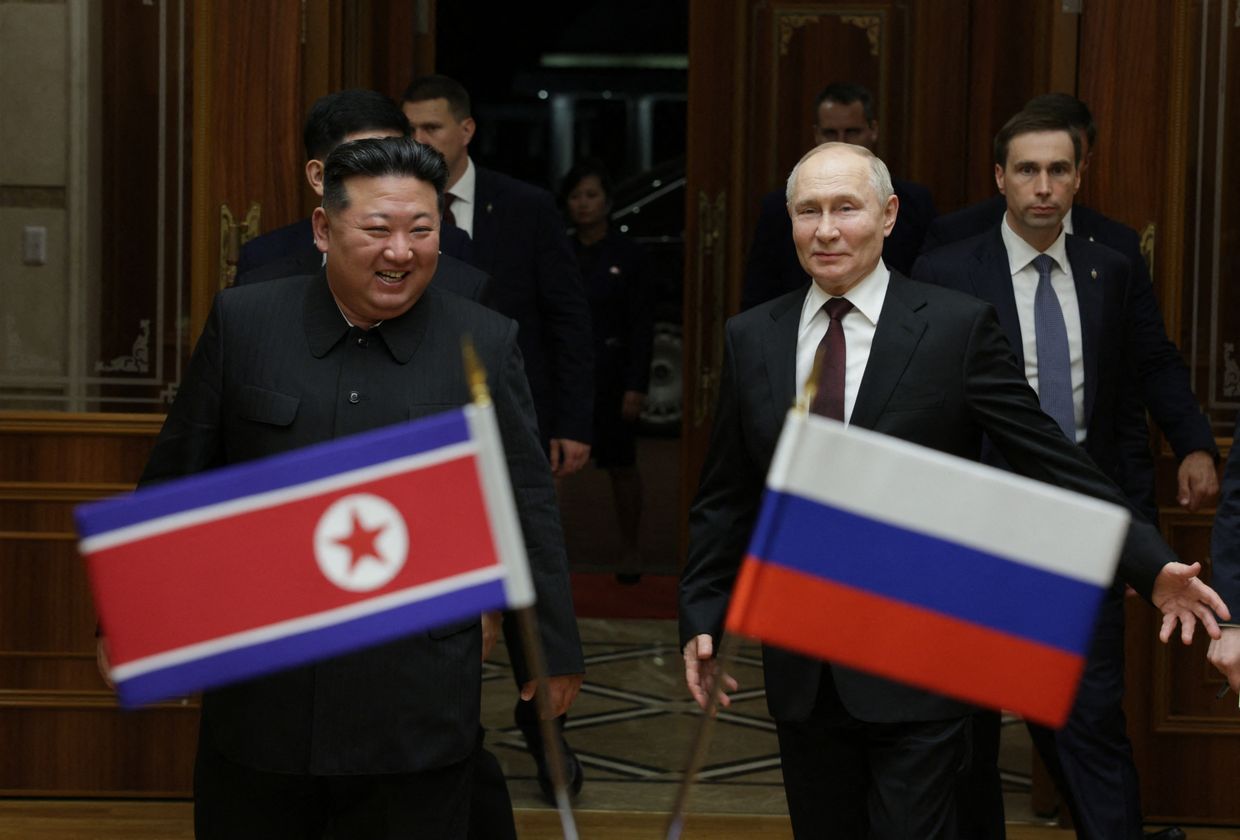
South Korean intelligence estimates North Korea has received $7 billion to $13.8 billion in weapons support from Russia for aiding the war in Ukraine, including artillery shells, KN-23 missiles, special forces and engineers. The report also says Russia may send an additional 30,000 North Korean troops, with estimated North Korean casualties reaching 6,000 killed or wounded by February. The developments underscore deeper Russia-North Korea military cooperation and could intensify geopolitical and sanctions risk.
This reinforces a long-duration war-economy thesis: the marginal constraint for Russia is no longer just domestic industrial capacity, but access to low-cost external munitions, labor, and expendable platforms. That matters because it extends the conflict without requiring a proportional draw on Russia’s own workforce, which lowers near-term political pain and increases the odds of a grinding stalemate rather than a negotiated pause.
The second-order winner is the entire non-Western defense production stack that can sell sanctioned inputs, dual-use components, and drone-adjacent subsystems through gray channels. The real bottleneck is not headline spending, but the ability to move precision guidance, electronics, propellants, and machine tools through intermediaries; that should keep pressure elevated on brokers, transshipment hubs, and anything touching sanctions compliance. Expect a higher probability of episodic export-control actions rather than one clean, broad regime shift.
For markets, the underappreciated effect is on European defense procurement timing. If battlefield attrition can be sustained at this scale into 2025, NATO buyers have less incentive to slow-walk replenishment and more incentive to pre-buy ammunition, air defense, counter-drone systems, and hardened infrastructure. That argues for persistent demand rather than a one-off spike, but also means procurement is likely to rotate toward munitions producers and electronic warfare before large-platform winners fully rerate.
The contrarian risk is that investors overestimate the immediate earnings impact on defense primes and underestimate the policy response. If sanctions tighten on third-country suppliers or if battlefield losses become politically costly in Moscow or Pyongyang, the supply pipeline could kink within weeks, pressuring any trade built purely on escalation. The more durable trade is through capacity scarcity and replenishment, not headline geopolitics.
AI-powered research, real-time alerts, and portfolio analytics for institutional investors.
Request DemoOverall Sentiment
moderately negative
Sentiment Score
-0.35
