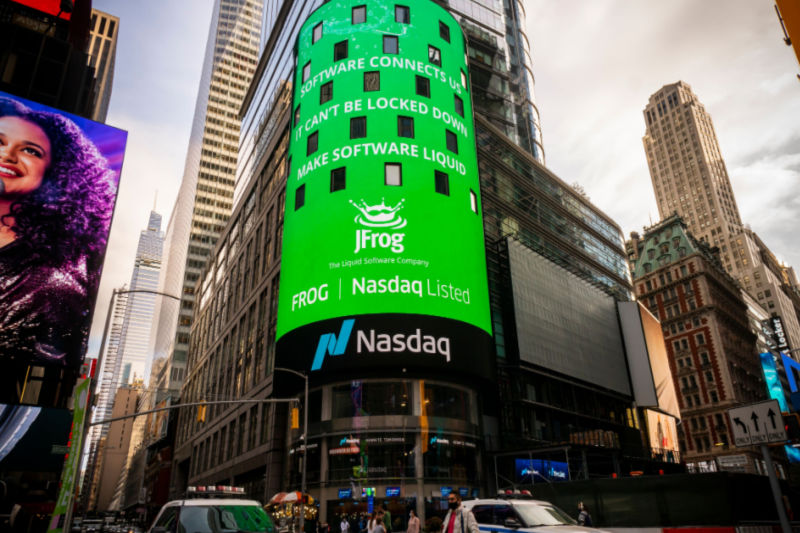
Insider Shlomi Ben Haim sold 25,000 JFrog shares on April 7 for approximately $1.22M at prices ranging $48.17–$49.89, leaving him with 4,740,249 shares. Analysts expect a strong Q1 — KeyBanc projects revenue roughly $152M–$153M (about $5M–$6M above the $147M Street estimate, implying 24%–25% y/y growth vs 20.3% consensus) — and multiple firms (UBS, Truist, TD Cowen, Guggenheim) maintain Buy ratings with price targets between $60 and $80, supporting a moderately positive outlook despite a 25.3% YTD share decline.
Recent supply-chain attacks are creating a durable, not transitory, procurement shift: buyers will favor vendors that can demonstrably reduce blast radius and speed artifact remediation, raising the value of trusted binary-repo and distribution tooling over the next 6–18 months. That structural demand should support multiple years of above-market ARR growth for vendors that combine telemetry, provenance, and policy controls, but it also attracts rapid competitive responses from cloud incumbents and open-source projects that can undercut pricing.
Insider activity executed under a pre-set plan removes headline signaling but increases share float turnover; combine that with divergent sell‑side views and you get higher dispersion in short-term outcomes. Expect elevated post-earnings volatility even if results are good—a beat could shift sentiment quickly, but it will also compress implied volatility and hand back some gains to option sellers within days.
Key asymmetries: the upside is concentrated in execution of enterprise sales and sustained net retention improvements (6–24 months), while downside is concentrated in quick commoditization of tooling and customer migration to cloud-native alternatives (3–12 months). Monitor billings, ARR retention, and any change in concentration among the top 20 customers as leading indicators.
Tactically, prefer structures that capture a 30–50% directional move with defined risk rather than straight long gamma into the print. Use pair trades to isolate company-specific security tailwinds from broader software beta, and plan exits around two discrete windows: the earnings print and the 90-day post-incident remediation cycle when customers decide long-term vendor changes.
AI-powered research, real-time alerts, and portfolio analytics for institutional investors.
Request DemoOverall Sentiment
moderately positive
Sentiment Score
0.35
Ticker Sentiment
