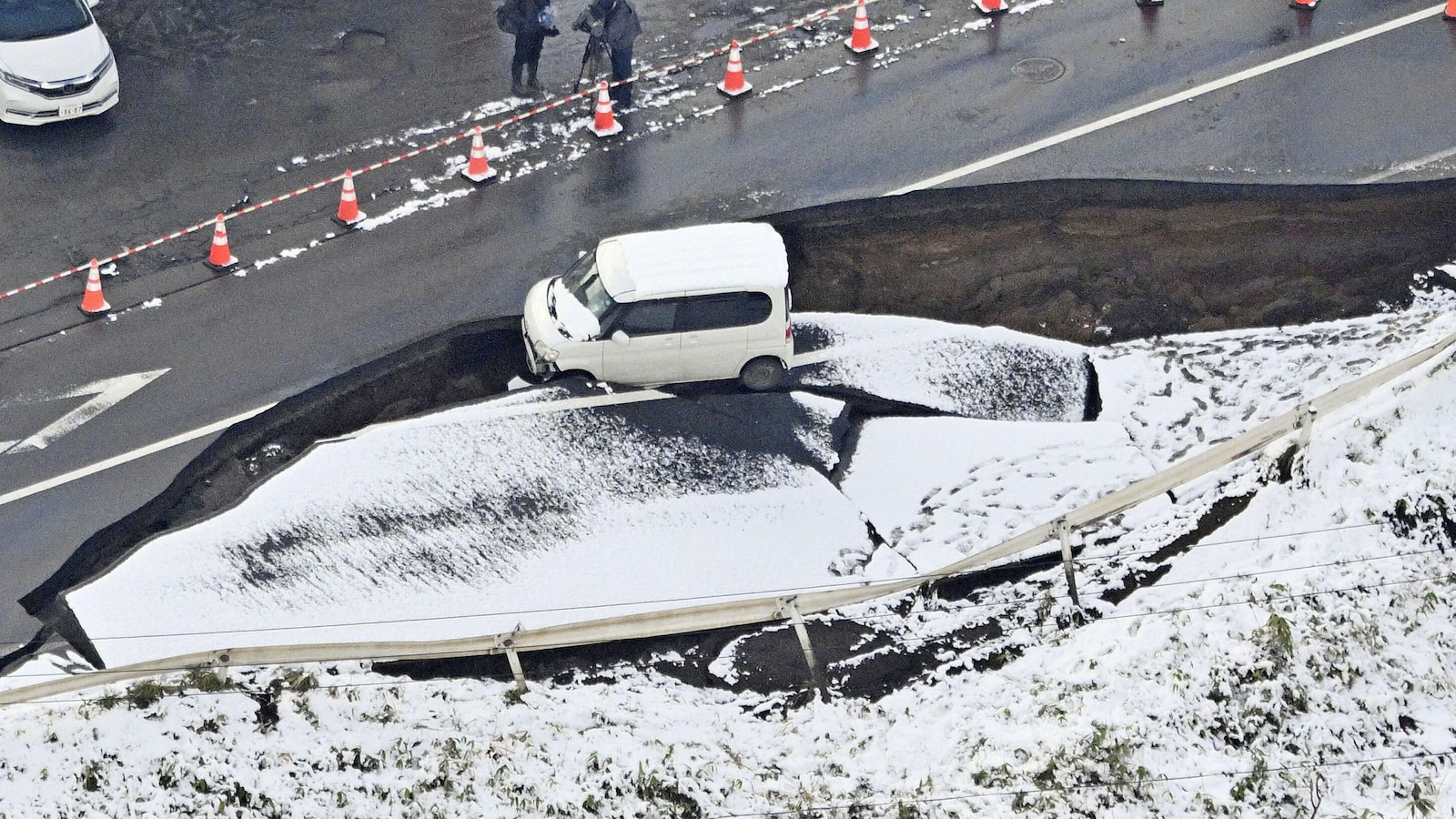
Japan lifted a week-old megaquake advisory for its northeastern coast after a magnitude-7.5 quake off Aomori, which had prompted warnings of an elevated chance of a subsequent magnitude-8-plus event; the lift means residents are no longer asked to sleep ready with helmets and grab bags. Authorities from the Japan Meteorological Agency and Cabinet Office said the probability of a megaquake has eased somewhat but the risk remains, noting the temblor caused more than 40 mostly mild injuries, damaged dozens of homes and triggered tsunami alerts with recorded waves up to 70 cm though no tsunami damage; municipalities reportedly responded calmly, in contrast to panic-linked effects from a 2024 Nankai Trough advisory. The advisory mechanism, introduced in 2022 as a lesson from the 2011 disaster, underscores continued emphasis on preparedness despite the reduced immediate threat.
Japan lifted a week-old megaquake advisory for the northeastern coast after a magnitude-7.5 earthquake struck off Aomori, removing the specific public instruction to sleep with helmets, shoes and grab bags ready. Officials from the Japan Meteorological Agency and Cabinet Office said the probability of a magnitude-8-plus event has “somewhat decreased,” but explicitly warned the risk has not disappeared and urged continued vigilance.
The tremor resulted in more than 40 mostly mild injuries and damaged dozens of homes, and triggered tsunami alerts with recorded waves up to 70 centimeters though no tsunami damage was reported; municipalities reportedly responded calmly. The article contrasts this episode with the summer 2024 Nankai Trough advisory, which produced panic buying, event cancellations and business closures, highlighting how advisory messaging can materially affect consumer and business behavior.
Practical market implications are limited in the near term: the provided market impact score is low (0.15) and no equity tickers are identified, suggesting no immediate systemic market shock. Investors should nonetheless monitor insurance loss reports, local reconstruction activity and any renewed advisories because ongoing preparedness messaging and localized property damage could affect regional tourism, small-business operations and short-term consumer spending.
AI-powered research, real-time alerts, and portfolio analytics for institutional investors.
Request DemoOverall Sentiment
mixed
Sentiment Score
0.00
