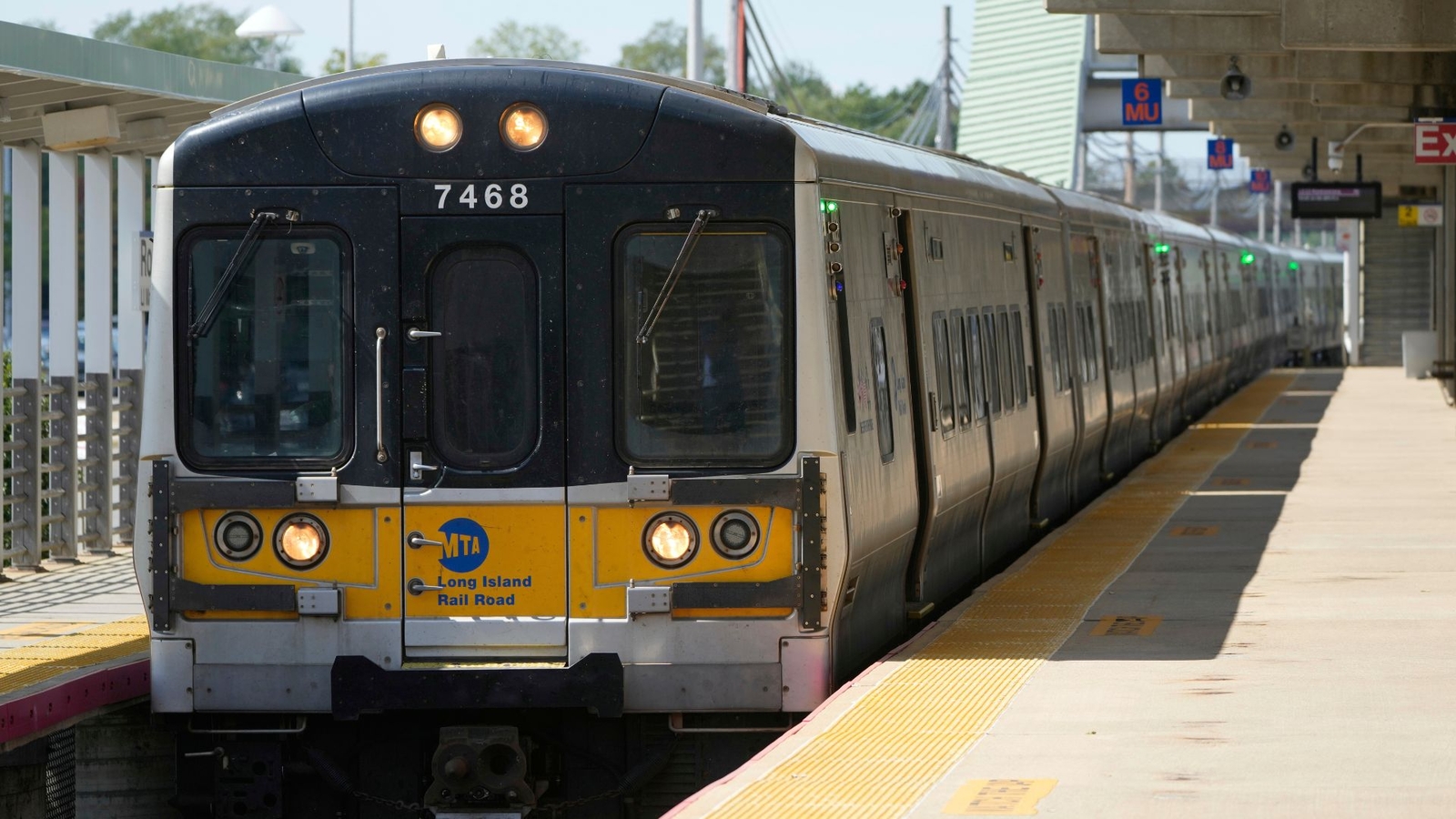
Negotiations between the MTA and LIRR unions ended for the day on Monday, with the next face-to-face talks scheduled for Wednesday. The article provides no agreement, concessions, or timetable change beyond the continued negotiations involving five rail unions. The update is factual and appears unlikely to move markets materially.
This is less a fundamental earnings event than a near-term optionality reset: each day of unresolved labor talks raises the probability of a service-disruption tail that the market usually underprices until the last 48-72 hours. The first-order beneficiaries are not the rail operators themselves but adjacent modes that can absorb stranded commuters and freight re-routing, especially buses, rideshare, parking operators, and any toll-road exposure; those names tend to see a very short-duration volume spike but can re-rate if the dispute bleeds into a broader governance narrative.
The bigger second-order risk is operational confidence. Even without a strike, prolonged negotiations can trigger schedule conservatism, higher overtime, and lower on-time performance, which quietly erodes ridership and increases cost per passenger over weeks, not days. That matters because once commuters re-optimize to cars, hybrid work, or alternative transit, the recovery in revenue is slower than the headline resolution, creating a lagging downside for the entire urban mobility ecosystem.
The contrarian angle is that the market may be too focused on the binary strike/no-strike outcome and not enough on the asymmetry of a last-minute framework agreement. If management and unions converge Wednesday, relief can be sharp but fleeting; if talks break down, the move is likely nonlinear and concentrated in the next 24-48 hours. For multi-strategy positioning, this is a classic event-risk setup where the distribution is fat-tailed but the duration is short, so the best expression is through cheap optionality rather than outright directional risk.
AI-powered research, real-time alerts, and portfolio analytics for institutional investors.
Overall Sentiment
neutral
Sentiment Score
0.00
Ticker Sentiment
