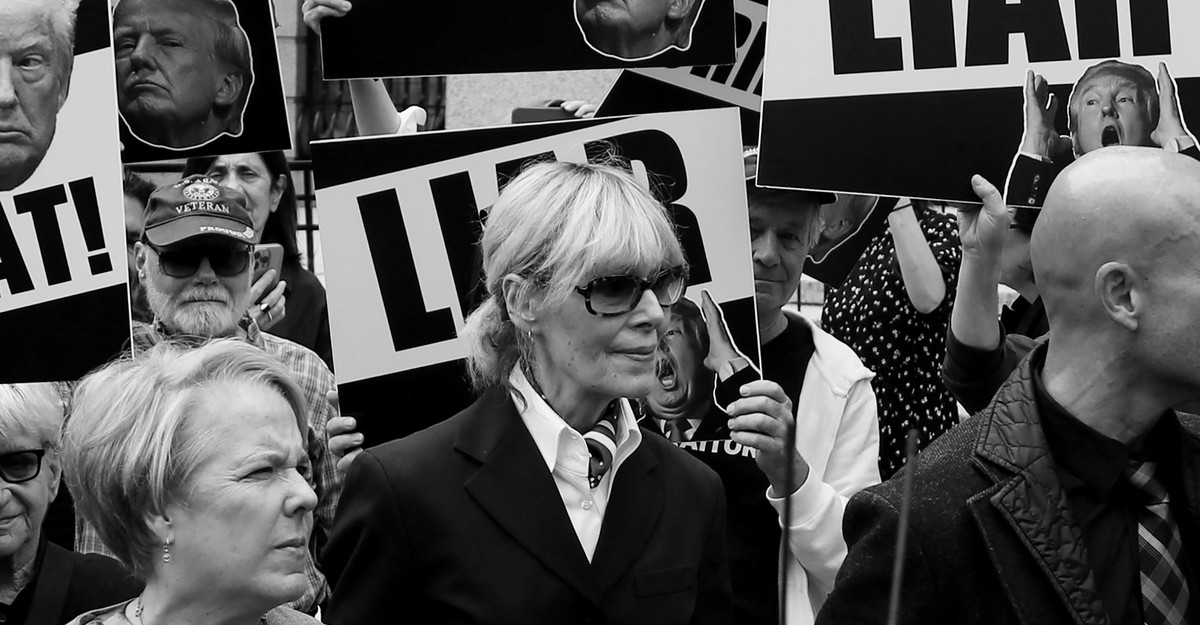
The article reports that the DOJ is pursuing a criminal investigation into E. Jean Carroll, reportedly focused on possible perjury in her civil cases against Donald Trump, after she won nearly $90 million in judgments. It argues the probe reflects politicized justice and highlights related DOJ conduct in other Trump-linked cases, including the Broadview prosecutions. The piece also notes Trump’s recent $1.8 billion settlement deal with the DOJ and a separate refiled $10 billion defamation suit against The Wall Street Journal.
This is less a single-news headline than a signal that DOJ is now functioning as a political risk amplifier for any target adjacent to Trump antagonists. The immediate market effect is not on Carroll herself, but on the legal-services, media, and political-donor ecosystems: elevated uncertainty raises defense spend, slows settlement cycles, and increases the probability of reputational overhangs morphing into financial haircuts for institutions perceived to be in the crosshairs.
The second-order issue is normalization. Once investors believe federal enforcement can be selectively deployed, the discount rate applied to governance-sensitive assets rises: donors, university endowments, nonprofits, and media companies all face higher tail risk of subpoenas, investigations, or payment-channel disruption. That tends to widen bid/ask spreads in politically exposed names and can temporarily benefit large-cap incumbents with stronger compliance infrastructure while hurting smaller entities with less legal firepower.
From a timing standpoint, the real catalyst window is days to weeks, not years. Headlines can retrace if the investigation is quietly dropped or narrowed, but the damage is already done once banks, insurers, and counterparties start treating an entity as non-standard risk. The more durable bearish read is that this increases the probability of future retaliatory escalations during election-sensitive periods, which is bad for risk appetite in sectors with weak governance narratives.
Consensus may be underestimating how broad the spillover can be beyond politics. The market often treats these episodes as noise, but the practical consequence is a tax on organizational bandwidth and financing access, especially for NGOs and advocacy groups that rely on steady donation flows and payment rails. The contrast between performative investigations and real economic sanction risk is exactly where second-order dislocations emerge.
AI-powered research, real-time alerts, and portfolio analytics for institutional investors.
Request DemoOverall Sentiment
strongly negative
Sentiment Score
-0.55
Ticker Sentiment
