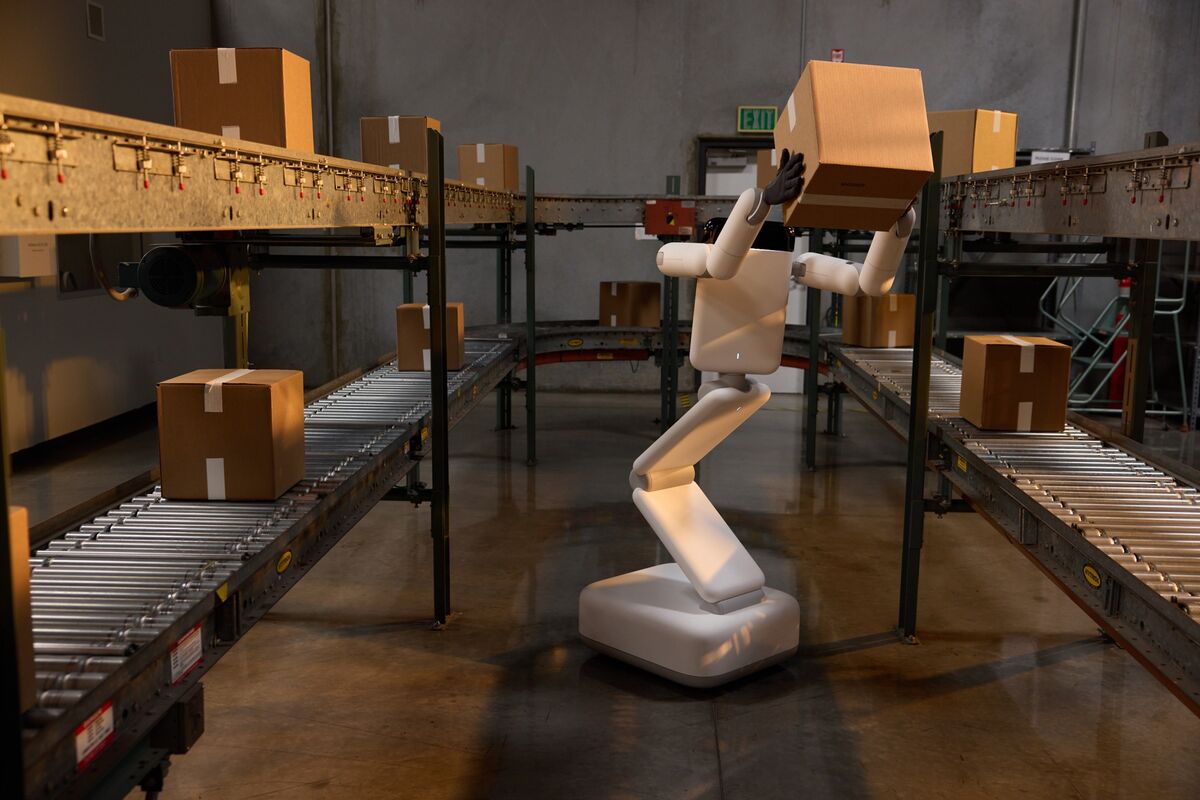
Genesis AI unveiled Eno, an AI-powered industrial robot developed with LG Group, highlighting a push into general-purpose humanoids. The company says the robot can reason, adapt, and own outcomes beyond predefined tasks, with Schmidt pointing to its piano-playing dexterity as evidence of faster decision-making. The news underscores investor enthusiasm for AI robotics, but it is still early-stage and unlikely to move broader markets materially.
This is less a single product launch than a signal that humanoid/industrial robotics is moving from demo-stage to platform competition. The key second-order effect is that AI model differentiation is migrating into embodied execution: whoever controls the robot operating stack, perception data, and deployment channel can create a compounding moat that is harder to replicate than pure software. That favors the ecosystem builders around compute, sensors, actuators, and factory integration more than any one prototype maker.
For public markets, the near-term beneficiaries are not obvious robot names but the industrial supply chain: motion control, machine vision, precision gearing, and edge compute vendors should see order-book optionality if this class of robot reaches pilot scale over the next 6–18 months. LG’s involvement also matters because it can compress commercialization time by providing manufacturing credibility and customer access; if that accelerates validation, the competitive pressure rises on incumbent factory automation players that are still selling task-specific systems. The losers are companies whose valuation assumes static automation demand, because embodied AI can shift spend from incremental cobots toward higher-value, integrated systems.
The main risk is that enthusiasm runs ahead of unit economics. Humanoids tend to look impressive in controlled demos but face a long path to uptime, safety certification, maintenance cost, and ROI thresholds in real industrial settings; that means the stock market may be discounting a 3–5 year adoption curve into the next few quarters. A contrarian read is that the biggest near-term winner may actually be the platform owners training the models, not the hardware builders, because the data flywheel from real-world manipulation is scarce and defensible.
For GOOGL specifically, there is no direct read-through today, but the broader implication is that foundation-model incumbents with robotics adjacency may gain strategic value if embodied AI becomes a new distribution layer. The market may be underestimating how much this compresses the timeline for enterprise AI spend to move from copilots into physical workflows, even if revenue contribution remains small initially.
AI-powered research, real-time alerts, and portfolio analytics for institutional investors.
Request DemoOverall Sentiment
mildly positive
Sentiment Score
0.40
Ticker Sentiment
