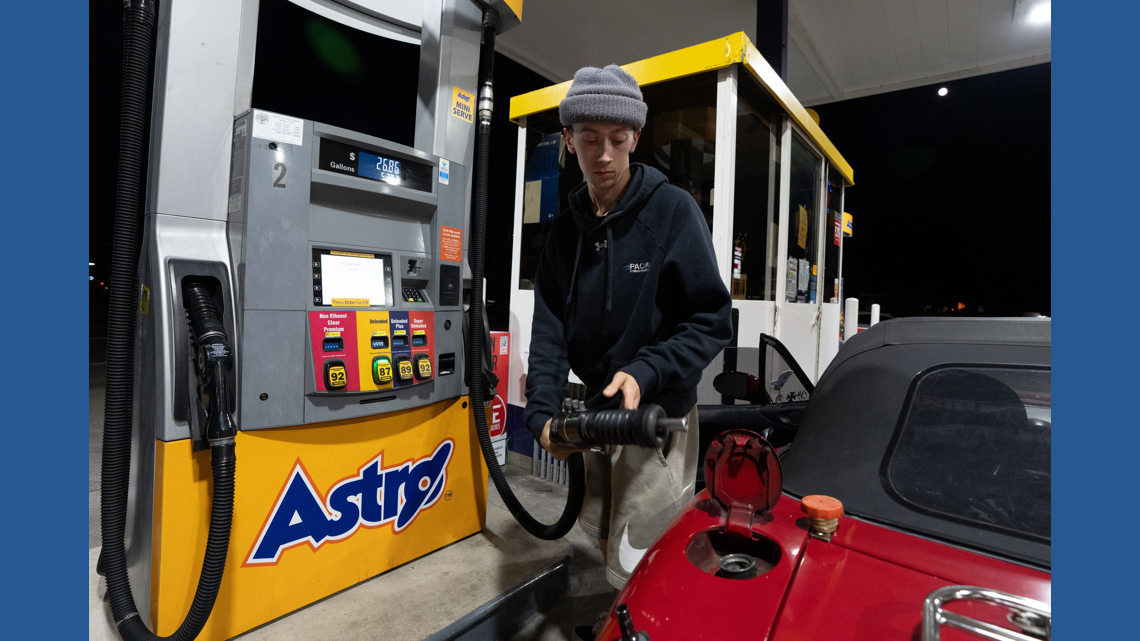
U.S. regular gasoline prices jumped 31 cents in a week to $4.54 per gallon, now 52% above pre-war levels, as conflict around the Strait of Hormuz continues to constrain oil flows. Brent/WTI-linked crude dynamics remain the main driver, with oil prices previously reaching $112 a barrel and still under pressure from shipment disruptions and supply risk premiums. The article points to sustained upward pressure on fuel and broader inflation via energy costs, with market-wide implications if the strait stays constrained.
The market is still underpricing the lagged pass-through from crude to consumer inflation. Gasoline is the visible transmission channel, but the second-order effect is a broader re-acceleration in inflation expectations just as consumer-sensitive assets had begun to price a relief trade; that creates a headwind for cyclicals, discretionary retail, and anything levered to falling fuel costs. The key nuance is that the shock is not just price level, but availability risk: if shippers and insurers demand a persistent war premium, the curve can stay backwardated even without new physical damage, keeping near-dated energy tight.
For equities, the immediate winners are not simply upstream producers, but the infrastructure names with pricing power and volume stability—pipelines, storage, and refined-product logistics can monetize volatility without needing perfect directional oil calls. Conversely, refiners may look superficially like beneficiaries, but their margin support is likely capped if gasoline spikes trigger demand rationing or government scrutiny; the cleaner short is exposed transport and consumer names with weak fuel surcharges, especially airlines and parcel/logistics operators that cannot reprice fast enough. The fastest second-order loser is probably lower-income discretionary consumption, where every 25-50 cent move at the pump has an outsized hit to weekly budgets and foot traffic.
The critical catalyst window is days to weeks, not quarters: if the Strait narrative de-escalates, front-month crude can unwind sharply before physical gasoline inventories normalize. But if disruption persists beyond 4-8 weeks, the market starts to shift from a risk-premium story to a true supply-shortage story, and that is when equity earnings revisions become durable rather than tactical. The contrarian view is that the move may be overextended in the front end relative to eventual replacement barrels, but underextended in the shipping/insurance complex where risk repricing can persist long after headline oil rolls over.
AI-powered research, real-time alerts, and portfolio analytics for institutional investors.
Request DemoOverall Sentiment
strongly negative
Sentiment Score
-0.62
Ticker Sentiment
