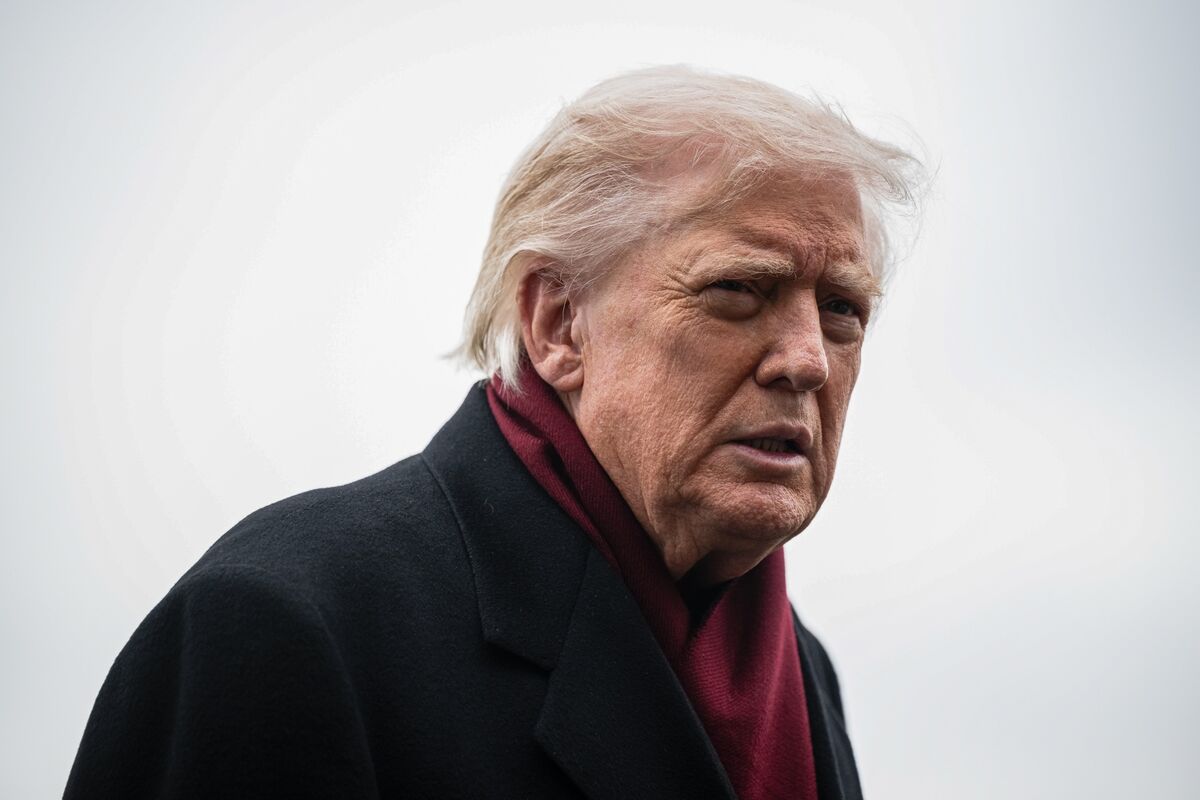
President Trump has sent negotiators to Moscow for additional talks on the Ukraine conflict, a development that could shift geopolitical risk perceptions and influence sanction-talks dynamics. Separately, early Black Friday patterns show consumers favoring lower-cost essentials over luxury items, signaling softness in discretionary spending while other lifestyle pieces (e.g., Napa cabernet features) are unlikely to move markets.
Market structure: A renewed round of US-linked talks with Moscow increases short-term event risk and keeps a bid under defense names (LMT, NOC, RTX) while simultaneously pressuring luxury discretionary and travel-exposed consumer stocks ahead of holiday spending. Separately, Black Friday data skew toward staples (pet food, discount retailers, grocery) vs high-end luxury, implying a near-term rotation into XLP, WOOF/CHWY and off-price players (TJX) at the expense of RH, TPR and LVMUY ADRs. Cross-asset: expect mild safe-haven flows—USD and 2s/10s rally, gold and oil sensitive to headline escalation; implied equity vols should re-price higher if talks stall.
Risk assessment: Tail risks include a breakdown in talks leading to renewed sanctions or kinetic escalation (20–30% move in oil/defense in days) or domestic political backlash that alters sanctions policy unpredictably; low-probability but high-impact over 1–3 months. Hidden dependencies include EU defense spending shifts and supply-chain exposures for defense contractors; consumer rotation could be ephemeral (Black Friday spike) and reverse within 4–8 weeks. Key catalysts: press releases from Moscow/Washington in next 7–14 days, November retail sales data, and oil inventory prints.
Trade implications: Tactical trades: overweight pet/consumer staples for 1–3 months, tactical long small-cap defense as insurance for 3–12 months, and short selective luxury retailers into earnings/holiday cadence. Use options to express asymmetry: buy 3-month calls on CHWY or WOOF and buy 2–3 month puts on RH/TPR 5–10% OTM to limit capital at risk. Rotate 2–4% portfolio weight from discretionary luxury into staples/defense with explicit stop-losses and trigger-based rebalancing (see decisions).
Contrarian angles: Consensus assumes talks reduce risk — that may be underdone politically; the mere optics of talks in Moscow could raise regulatory/backlash risk and keep sanctions dynamics volatile, meaning defense and energy may remain bid despite negotiation headlines. Luxury weakness may be overextended: a sub-5% pullback in RH or LVMUY could be a buying opportunity if December consumer read-throughs improve. Monitor VIX >18, Brent >$90/bbl or headline of failed talks as triggers to flip directional exposure.
AI-powered research, real-time alerts, and portfolio analytics for institutional investors.
Request DemoOverall Sentiment
mildly negative
Sentiment Score
-0.25
