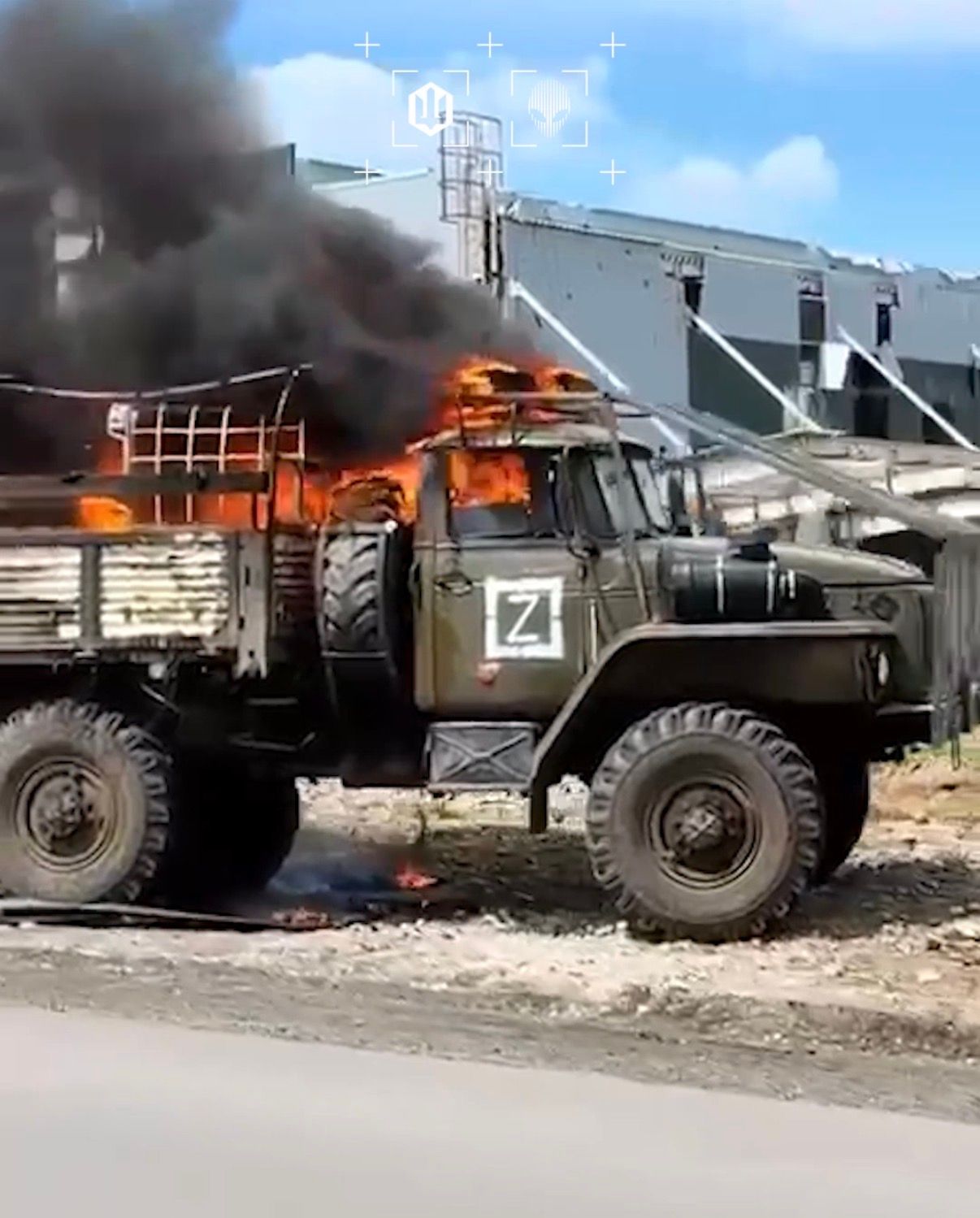
Ukraine's 412th Nemesis Brigade says strike drones have disrupted Russia's key R-280 "Novorossiya" logistics corridor, blocking heavy equipment movements along the highway linking Mariupol, Melitopol and Simferopol. The brigade claims its new drone system destroyed dozens of trucks and fuel tankers, forcing Russian forces to divert to dirt roads and field paths that are also being targeted. The development underscores Ukraine's expanding middle-strike campaign and adds pressure on Russian military logistics in occupied southern Ukraine.
The immediate market read-through is not about battlefield headlines; it is about the fragility of an underwritten logistics architecture. Repeated strikes on a constrained transport corridor raise the marginal cost of moving fuel, ammo, and heavy equipment in a way that compounds over weeks, not days, because rerouting through softer terrain forces slower convoys, higher vehicle attrition, and more exposure per ton-mile. That combination tends to inflate the “hidden tax” on occupied-area sustainment: more trucks, more diesel, more repair parts, and lower throughput for the same front-line output.
The second-order winner is the drone supply chain, especially low-cost UAV manufacturers, EO/IR component vendors, and electronic warfare countermeasure providers. Even without a direct public ticker mapping from this article, the strategic implication is clear: every successful deep strike validates cheap precision over expensive platform density, which should support premium multiples for companies selling attritable systems, mission software, and resilient comms. The loser set is conventional heavy logistics and any defense thesis built around static depots, fixed routes, or legacy vehicle fleets that assume rear-area sanctuaries.
Catalyst risk sits on a 1-3 month horizon rather than a one-day headline fade. The key reversal would be an effective counter-drone umbrella, better route dispersion, or Russian adaptation toward smaller, more frequent shipments that reduce vulnerability but lower operating efficiency; if that happens, the psychological impact fades faster than the physical damage. Until then, this is a persistent degradation story: not a singular breakout event, but a steady erosion of throughput and a proof point that operational depth is no longer safe.
Contrarianly, the market may be underpricing how nonlinear the logistics impairment becomes once heavy equipment movement is constrained. A 10-20% reduction in convoy efficiency can translate into a much larger reduction in combat readiness because fuel and maintenance inventories are interdependent; that amplifies shortages at the front even if total stockpiles are not immediately depleted. The bigger mistake would be to view this as purely tactical when it is really a systems-level stress test of the entire occupied-territory supply chain.
AI-powered research, real-time alerts, and portfolio analytics for institutional investors.
Request DemoOverall Sentiment
moderately negative
Sentiment Score
-0.45
