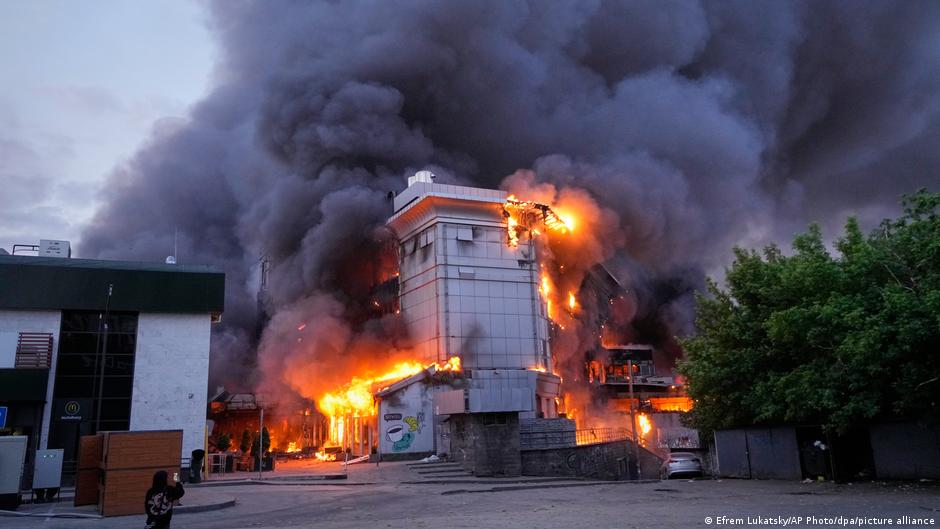
Russia launched a massive missile and drone strike on Kyiv, killing at least 1 person and wounding more than 20, with damage reported across multiple districts and residential buildings. The attack follows Moscow's pledge of retaliation after Ukrainian strikes in Russian-occupied eastern Ukraine, heightening escalation risk. This is a significant geopolitical shock with potential spillovers into regional defense, energy, and broader risk sentiment.
This is a classic escalation shock with the first-order market impact concentrated in energy, defense, and European risk premia, but the second-order effect is more important: it raises the probability distribution of infrastructure attrition becoming the dominant constraint on Ukraine trade and reconstruction. That shifts the market away from a clean “duration winner” framing for EM Europe and toward a higher-risk, higher-capex recovery path where grid hardening, air defense, and logistics replacement spend become recurring, not one-off, demand.
For defense, the move is less about headline missiles and more about inventory math. Each additional high-intensity salvo increases urgency around interceptors, radar, EW, and dispersed manufacturing capacity, which tends to re-rate the whole air-defense supply chain before prime contractors fully reflect it in backlog. The beneficiaries are not just the obvious platform names; niche electronics, guidance, propulsion, and reload bottlenecks can outperform because their scarcity value rises faster than unit demand.
The key risk is that markets underprice tail escalation until a single incident alters decision-making in Washington or Europe. If retaliation cycles broaden beyond Ukraine into cross-border energy, shipping, or cyber infrastructure, the drawdown in regional risk assets can happen in days, while the budgetary and procurement response plays out over quarters. Conversely, any credible ceasefire channel or visible constraint on long-range strike capability would quickly deflate the defense premium and re-open the EM rebound trade.
The contrarian angle is that the immediate selloff in European risk may be overdone if investors assume every escalation converts into a macro shock. In practice, the more durable trade is a dispersion trade: short the most levered regional cyclicals and fringe credit, while owning firms with direct exposure to rearmament, grid resilience, and logistics redundancy. The market often misprices the lag between battlefield news and procurement cash flows, which is where the highest Sharpe tends to sit.
AI-powered research, real-time alerts, and portfolio analytics for institutional investors.
Request DemoOverall Sentiment
strongly negative
Sentiment Score
-0.85
