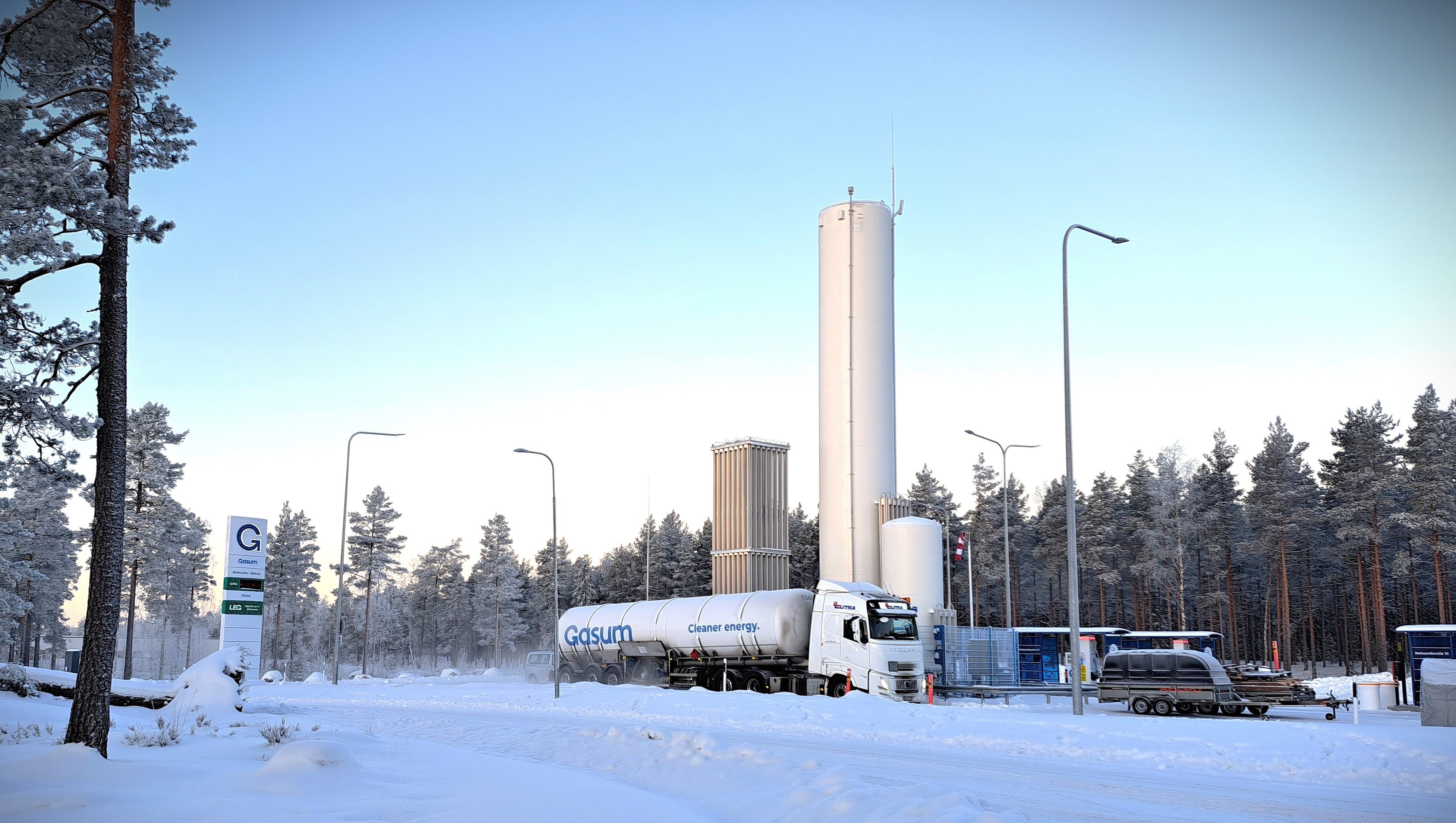
Gasum has opened a biogas filling station in Raseborg (Mekaanikontie 10) supplying both liquefied (LBG) and compressed (CBG) biogas to passenger and heavy-duty vehicles, aimed at serving the Port of Hanko's roughly 1,000 daily heavy-vehicle movements. The station bolsters Gasum's Nordic refuelling network, facilitates low-emission road and selected maritime freight corridors (biogas can cut lifecycle emissions by ~90% vs fossil fuels), and supports the Port of Hanko's carbon-neutral operations and regional logistics competitiveness.
Market structure: This station improves local logistics network density (Port of Hanko: ~1,000 heavy vehicles/day) and directly benefits Nordic biogas producers, port operators and gas-engine/refuelling equipment suppliers (e.g., Wärtsilä). Near-term pricing power is limited—incremental demand from a single port is low—but network effects (cross-border refuelling) raise long-run pricing optionality for biogas vs fossil diesel if adoption reaches ~5–10% of heavy fleets over 12–36 months.
Risk assessment: Key tail risks are feedstock scarcity (could push biomethane input costs +20–40%), regulatory reversals or subsidy cuts, and slower truck fleet conversion; operational risks include LBG supply interruptions. Immediate market impact is negligible (days); expect measurable effects in 6–24 months as station rollouts scale; catalyst set includes EU/Finland grants, CO2 price rises >€10/ton and large fleet procurement decisions.
Trade implications: Favor equities/ETFs exposed to biofuels/green infra and gas-engine suppliers over conventional diesel refiners and pure-play trucking operators without decarbonization plans. Tactical trades: 6–12 month overweight in NESTE (renewables leader) and renewable energy ETF exposure (ICLN), paired with underweight in diesel-centric refiners; use 6–12 month call spreads to lever upside while capping premium paid.
Contrarian angles: The market underestimates capex lead times and utilization risk—early refuelling networks historically reach profitable utilization only after 2–4 years (EV charging parallel). This creates mispricings: hardware/equipment vendors may outperform fuel sellers initially, while overbuilding risk can create stranded assets if feedstock economics worsen.
AI-powered research, real-time alerts, and portfolio analytics for institutional investors.
Request DemoOverall Sentiment
mildly positive
Sentiment Score
0.35
