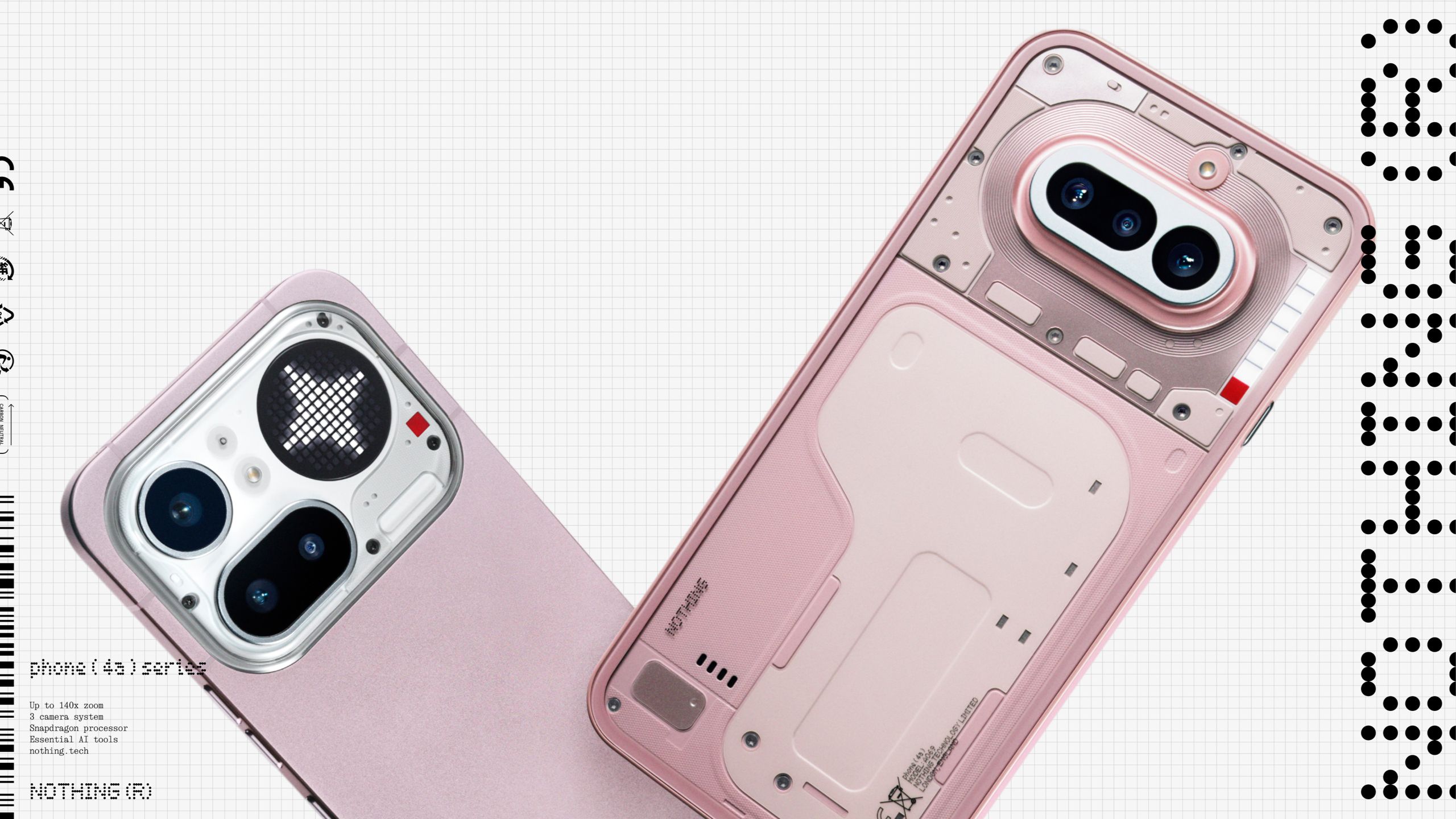
Nothing launched two mid‑range smartphones, the Phone 4a and Phone 4a Pro, signaling a 2026 strategy focused on mid‑range devices rather than a flagship. Key specs: 1.5K AMOLED displays (144Hz on Pro, 120Hz on standard), Snapdragon 7 Gen 4 (Pro) and 7s Gen 4 (standard), 5080mAh batteries with 50W charging, and a 50MP periscope telephoto (3.5x optical) on the Pro; both ship with Nothing OS 4.1/Android 16 and receive three major Android updates plus up to six years of security updates. Pricing starts at £349/€349/₹31,999 (8GB/128GB Phone 4a) and £499/$499/€479/₹39,999 (8GB/128GB Phone 4a Pro), with preorders open and sales from March 13 (4a) and March 27 (4a Pro).
Market structure: Nothing’s Phone 4a/4a Pro is a mid-range product that incrementally benefits component suppliers (Corning GLW for Gorilla Glass 7i, Qualcomm QCOM for Snapdragon 7-series, camera/battery suppliers) while exerting modest pricing pressure on other mid-tier OEMs. With base prices £349/£499 and features like periscope zoom and 3,500-nit mini‑LEDs, this signals durable mid-range demand and a willingness by consumers to pay a $150 premium for feature-rich mid-tier phones, compressing low‑end volume share but not dethroning incumbents in near term.
Risk assessment: Tail risks include poor post-launch reviews, supply constraints, or battery/claims litigation that could halt momentum; probability low‑medium but impact high within 0–3 months. Short term (weeks/months) outcomes hinge on pre-order conversion (watch mid‑March sell dates), while longer term (3–12 months) depends on measured component order cadence and carrier distribution. Hidden dependency: GLW/QCOM upside requires multiple OEMs adopting Gorilla Glass 7i/S7G4 designs — a single vendor design win is necessary but insufficient.
Trade implications: Favor component suppliers over OEMs: GLW and QCOM stand to see order flow upgrades if reviews and sell‑through are healthy; expect reaction window 0–3 months around March sales and first quarter reporting. Use defined‑risk options to express views (call spreads on QCOM/GLW) rather than outright high‑beta equity exposure; reduce cyclical exposure to low‑margin OEMs where mid‑range feature parity compresses ASPs.
Contrarian angles: The market may underprice supplier upside because coverage focuses on branded OEMs rather than glass/SoC design wins — if GLW 7i adoption accelerates across mid‑tier, modular revenue impact could be +3–5% incremental for GLW over 12 months. Conversely, don’t over-rotate: if Nothing fails to scale, early hype will reverse quickly; validate with 4–8 week sell‑through and replenishment orders before adding size.
AI-powered research, real-time alerts, and portfolio analytics for institutional investors.
Request TrialOverall Sentiment
mildly positive
Sentiment Score
0.25
Ticker Sentiment
