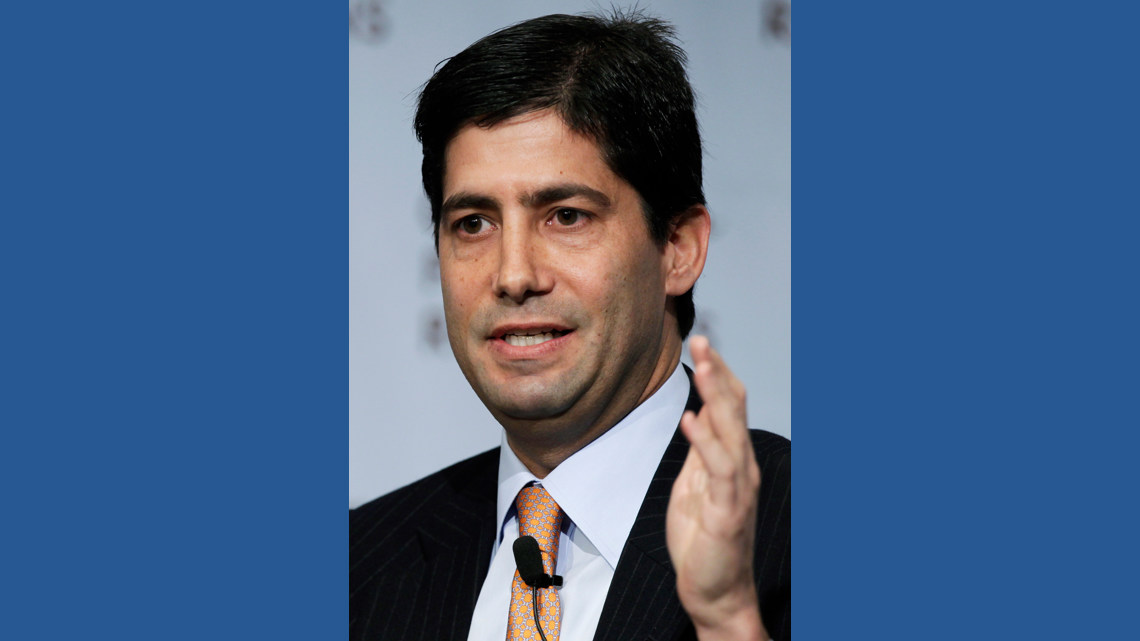
Kevin Warsh’s Fed chair confirmation is facing significant headwinds as Senate Democrats press for fuller disclosure of his $100M+ financial holdings and Republicans delay action amid a DOJ probe into Fed Chair Powell. The standoff could push confirmation past Powell’s May 15 term end and prolong uncertainty over Fed leadership, interest-rate policy, and the central bank’s independence. Rising inflation pressures from the Iran war add another complication, increasing the risk of prolonged hawkish debate around rate cuts.
The immediate market issue is not Warsh himself but the growing probability of a prolonged Fed decision vacuum. When confirmation becomes entangled with asset disclosures and parallel investigations, the practical effect is a higher-for-longer bias at the front end: the committee is less likely to deliver a clean leadership transition, and that usually compresses the odds of near-term easing. In rates, that means the 2Y is more exposed than the 10Y, because the market has to price both delayed policy normalization and a stronger political risk premium around the Fed’s reaction function.
A second-order consequence is that independence risk can become inflationary even if no policy actually changes. If the White House keeps pressing for cuts while energy-driven inflation is still unsettled, breakevens can stay bid and real yields can rise in a stop-start pattern, which is typically negative for long-duration equities and small caps. The bigger the perception that the Fed is being politically managed, the more the curve can steepen on term-premium rather than growth optimism; that is a mixed signal for banks and a headwind for rate-sensitive credit.
The contrarian read is that the headline controversy may overstate the eventual market impact if Powell remains operationally dominant on the board for several months. In that case, Warsh’s confirmation matters less than the actual monthly inflation prints and labor data, and the market may eventually ignore the personnel drama. But in the interim, every week of delay keeps volatility elevated in front-end rates, lowers conviction on a September/October cut path, and preserves downside asymmetry for sectors that have priced in faster easing.
For the cleanest trade, the setup favors waiting for a selloff in rate-sensitive assets rather than chasing it now, because the political noise can reverse quickly if the DOJ/confirmation process is resolved.
AI-powered research, real-time alerts, and portfolio analytics for institutional investors.
Request DemoOverall Sentiment
mildly negative
Sentiment Score
-0.15
Ticker Sentiment
