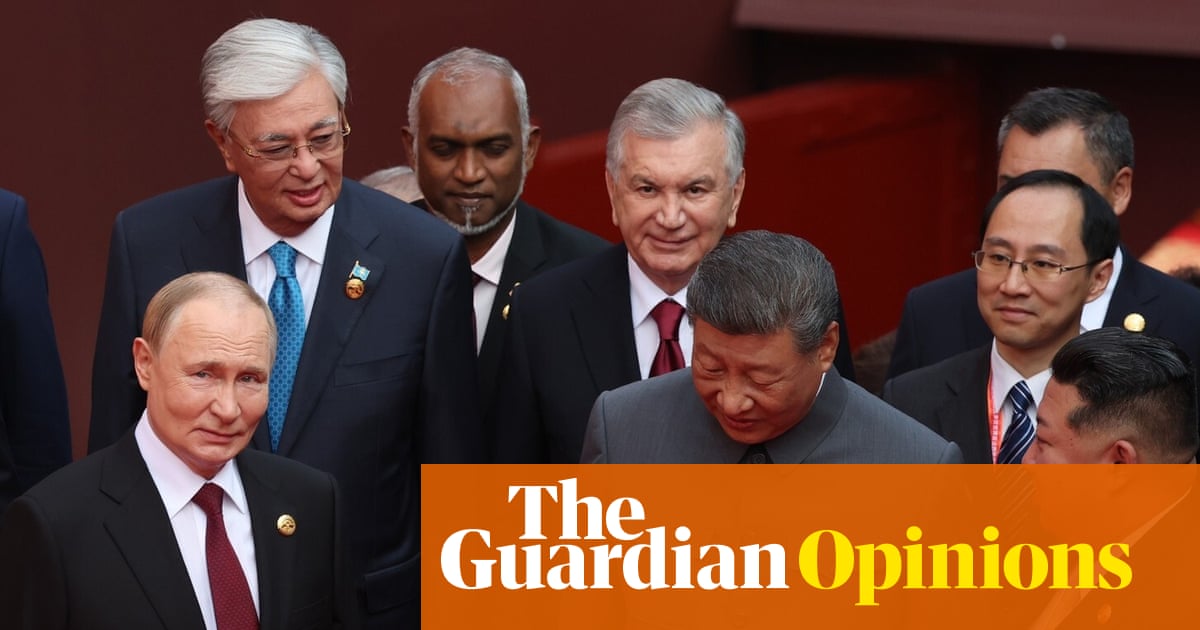
China recently showcased significant military advancements, including hypersonic missiles, and diplomatic solidarity with Russia and North Korea at a major parade, asserting its vision for a new global order challenging US dominance. This display, following the Shanghai Cooperation Organisation conference, underscores Beijing's growing influence and a potential geopolitical realignment, implicitly aided by current US foreign policy. While formidable, the alliance's long-term cohesion is questionable, being rooted in opposition to Western hegemony rather than shared constructive goals.
The recent military display in Beijing, featuring China, Russia, and North Korea, represents a significant and deliberate projection of a new geopolitical axis aimed at challenging the post-1945, US-led global order. China's unveiling of advanced military capabilities, including hypersonic nuclear-capable missiles and underwater drones, underscores a strategic push for military parity with Washington, posing a direct threat to US dominance in the Western Pacific. This military posturing is reinforced by a diplomatic realignment, highlighted by the growing influence of the Shanghai Cooperation Organisation (SCO), which is attracting key emerging powers. The article posits that disruptive US foreign policy, particularly punitive trade tariffs, has inadvertently accelerated this shift by pushing nations towards Beijing's orbit. However, the long-term stability of this new alliance is questionable, as it is characterized as a 'partnership of expediency' rooted in mutual opposition to US hegemony rather than a cohesive, constructive vision. The highly personalized rule of leaders in both China and Russia introduces significant succession risk, suggesting the bloc's foundation may be fragile.
AI-powered research, real-time alerts, and portfolio analytics for institutional investors.
Overall Sentiment
extremely negative
Sentiment Score
-0.90
Ticker Sentiment
