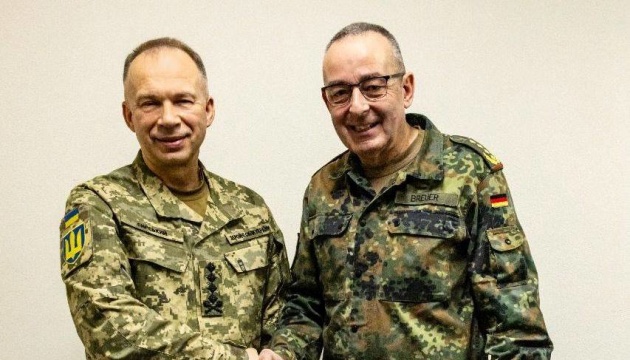
Ukraine's Commander-in-Chief Valerii Syrskyi briefed Germany's Inspector General of the Bundeswehr, Gen. Breuer, praising Germany's steady military, financial and humanitarian support and singling out German air-defense systems as effective against Russian ballistic missiles and protective of civilians and critical infrastructure. He warned that Russia is intensifying strikes on energy infrastructure ahead of winter, making a strengthened air shield a priority, and said in a separate meeting with a U.S. Army delegation led by Secretary Daniel Driscoll he discussed bolstering air defense, deep-strike and unmanned capabilities and training—underscoring continued Western military cooperation and likely further requests for advanced air-defense and strike systems.
Ukraine Commander-in-Chief Valerii Syrskyi told Germany’s Inspector General Gen. Breuer that German military, financial and humanitarian support — specifically German air-defense systems — are materially strengthening Ukraine’s defenses and are effective against Russian ballistic missiles, which he said "save lives" and protect critical civilian infrastructure. Syrskyi warned that ahead of winter Russia is intensifying strikes on energy infrastructure to deprive Ukraine of light and heat, and he emphasized that strengthening the country’s air shield remains a priority for national resilience.
Syrskyi’s separate briefing to a U.S. Army delegation led by Secretary Daniel Driscoll flagged near-term capability requests including enhanced air defense, deep-strike systems, unmanned systems and training for personnel, underscoring coordinated Western military cooperation and ongoing demand for advanced systems. The public remarks and the article’s mildly positive sentiment and modest market-impact score imply continued political and operational momentum for additional Western assistance, but no new procurement contracts or timelines were announced.
For investors, this implies an incremental demand signal for producers of air-defense and long-range strike systems and for firms supporting unmanned systems and training, while execution risk remains tied to political approvals, production capacity and supply chains; concurrently, increased Russian attacks on energy infrastructure raise operational and macro risk for Ukraine and regional energy markets, so monitor procurement announcements and winter outage indicators as near-term catalysts.
AI-powered research, real-time alerts, and portfolio analytics for institutional investors.
Request DemoOverall Sentiment
mildly positive
Sentiment Score
0.25
