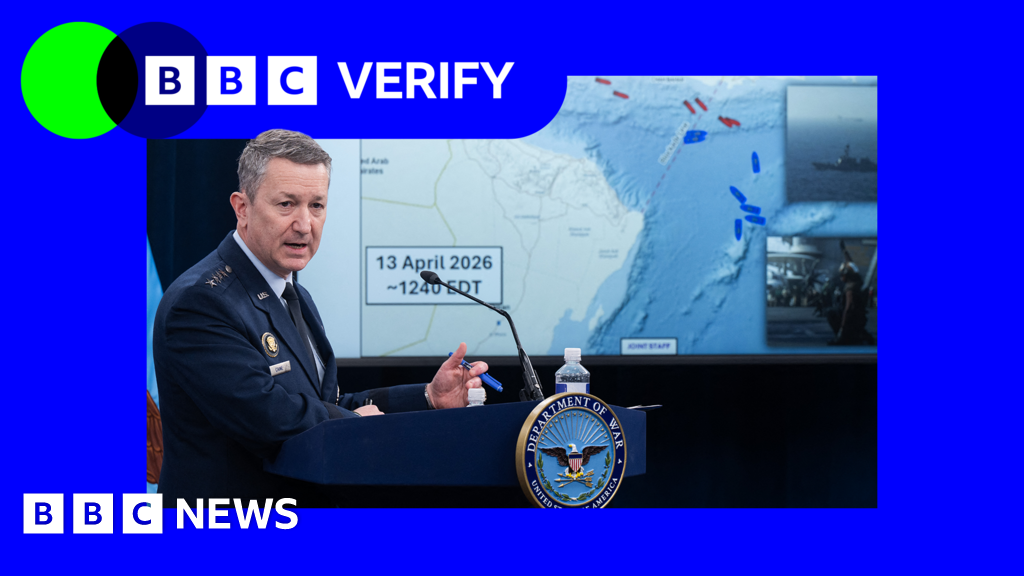
At least four vessels tracked from Iranian ports appear to have crossed the US blockade line in the Gulf of Oman, while three additional US-sanctioned tankers also crossed after Monday's blockade began. The disruption centers on the Strait of Hormuz, where an average of 138 ships passed daily before the conflict, and raises the risk of further supply-chain and energy-market disruption. The US says the blockade remains in force for ships headed to or from Iranian ports, and has already turned back 14 vessels in the first 72 hours.
The market should treat this less like a one-off maritime headline and more like a live test of enforceability. If the blockade is only partially effective, the first-order impact is not a full supply shock but a widening of the “compliance tax”: higher war-risk premia, slower voyages, more transshipment, and more opacity in the shadow fleet. That tends to lift freight, insurance, and regional security spending before it reliably moves headline energy supply.
The bigger second-order effect is that even limited enforcement can distort trade flows well beyond Iran. Tanker owners, insurers, and charterers will reroute to avoid classification risk, which can tighten effective vessel supply in the Gulf and raise spot rates across crude and product routes. Over a multi-week horizon, the more important variable is not whether a few sanctioned cargoes get through, but whether buyers begin preemptively avoiding any Iranian-touching tonnage, which would amplify bottlenecks without requiring a single dramatic interception.
Contrarianly, this may be less bullish for crude than the headline suggests if the market concludes the line is porous and the US is prioritizing signaling over interdiction. In that case, the immediate response should fade after the first burst of risk premium, especially if no broader export disruption emerges and non-Iranian Gulf flows remain open. The real tail risk is a move from selective enforcement to collateral interference with regional shipping, which would matter more for refined products, LNG, and industrials than for Brent alone.
AI-powered research, real-time alerts, and portfolio analytics for institutional investors.
Overall Sentiment
strongly negative
Sentiment Score
-0.55
