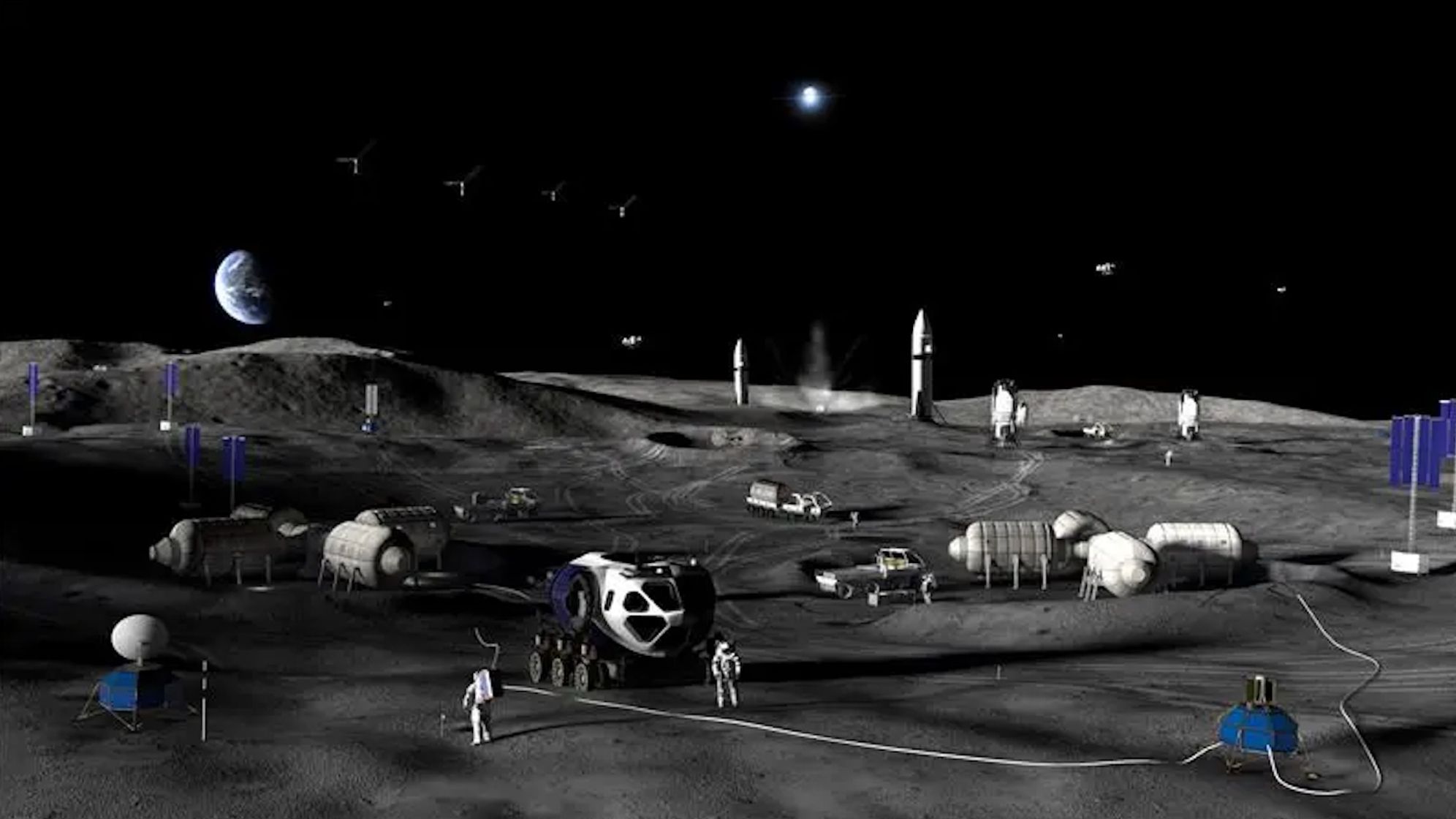
NASA says Artemis 2 splashed down safely after a 10-day lunar flyby, and the agency is now targeting Artemis 3 for mid-2027 with a revised plan that keeps the mission in Earth orbit to test Orion docking with crewed lunar landers. Artemis 4 is slated for late 2028 to land astronauts near the moon's south pole, with a lunar base targeted for 2032. The article highlights progress, but also notes key risks including unproven landers, Starship's lack of orbital flight and refueling, and Orion hardware issues that may require redesign.
The investable takeaway is not a generic “space is bullish,” but that NASA is effectively converting the program from a science milestone into a procurement bottleneck with multiple gates. That shifts economic value toward firms with the most credible path to flight qualification, integration, and redundancy, while penalizing any single-vendor narrative built on schedule optimism. In this setup, the market should care less about headline launch dates and more about which contractors can absorb design churn without blowing margins or ceding interface control.
The biggest second-order effect is that delaying the surface landing does not destroy the theme; it expands the addressable spend across Earth-orbit rendezvous, docking, propulsion reliability, and life-support hardening. That benefits subsystem suppliers, testing, and simulation vendors more than pure launch-exposure names because every architecture change tends to increase non-recurring engineering and qualification work. Conversely, prime contractors exposed to fixed-price milestones face rising execution risk: the more NASA flexes mission profile, the more schedule slippage can turn into cash burn rather than revenue recognition.
The key contrarian point is that the equity market may be overpricing a near-term “moon landing trade” while underpricing the probability of a multi-quarter reset in contract economics. If the agency is still deciding orbit profile and lander sequencing this close to the next mission phase, the right conclusion is not acceleration but rework. That implies higher variance in award timing and greater dispersion between winners with hardware already de-risked and those whose valuation depends on unproven orbital refueling or crew systems.
Risk is asymmetric over the next 6-18 months: any clean hardware milestone could re-rate the theme sharply, but any subsystem failure should compress multiples quickly because it would confirm that schedule targets are aspirational. The most attractive entry is on pullbacks after enthusiasm spikes, when names tied to qualification and mission assurance are sold with the broader space basket. The broader setup remains positive over years, but near-term alpha should come from underwriting execution quality, not the long-duration Mars narrative.
AI-powered research, real-time alerts, and portfolio analytics for institutional investors.
Request DemoOverall Sentiment
mildly positive
Sentiment Score
0.20
