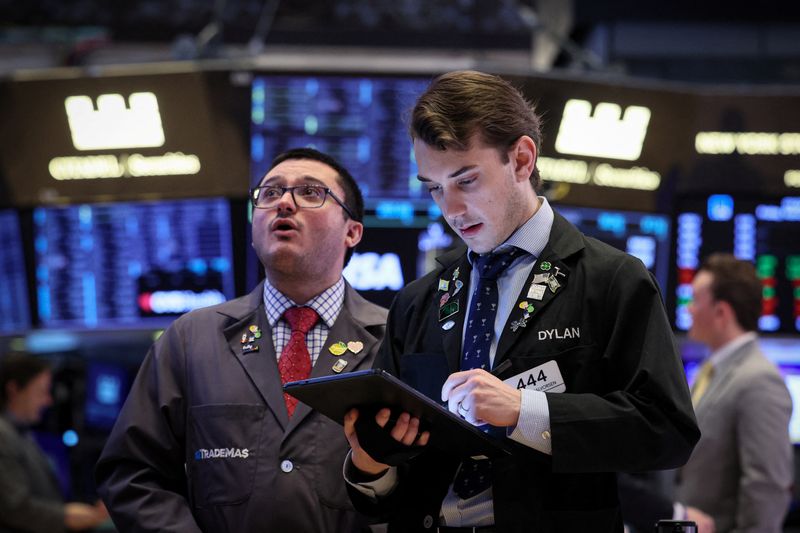
U.S. stock index futures rose 0.5%-0.6% after Trump said he would indefinitely extend the Iran ceasefire, easing near-term escalation fears. The regular session had ended lower, with the Dow, S&P 500 and Nasdaq Composite each down 0.6%, while oil stayed elevated near recent highs on Strait of Hormuz supply concerns. March retail sales also surprised to the upside, rising 1.7% month-on-month, and several major earnings reports are due Wednesday, including AT&T, Boeing, GE Vernova, CME Group and Moody’s.
The immediate market response is really about vol compression, not a clean risk-on regime shift. Extending the ceasefire deadline lowers the left-tail probability of an energy shock, which should mechanically pressure near-dated implied volatility in equities and oil-sensitive names, but the bigger second-order effect is that investors can keep carrying higher risk exposure without fully de-grossing. That tends to support megacap growth more than cyclicals because it reduces macro hedging demand while leaving real-economy inflation uncertainty unresolved.
Energy is the key transmission channel: even without a fresh escalation, crude can stay bid because traders will now price a slower, more negotiated path rather than an immediate supply resolution. That matters for airlines, transport, chemicals, and rate-sensitive duration assets; the market often underestimates how long “headline peace” can still leave Brent elevated if shipping-risk premia remain embedded. If crude holds up for another 2-4 weeks, the more important move may be in inflation breakevens and rate-vol rather than in outright equity direction.
The earnings setup is cleaner than the geopolitics. Into AT&T, Boeing, GE Vernova, CME, and Moody’s, the asymmetry is around guidance and margin language rather than the quarter itself: companies with pricing power or recurring transactional revenue should be relatively insulated, while industrial names with long-cycle order books are vulnerable to any hint of delayed customer capex. The contrarian read is that the market may be overpricing a rapid unwind in risk aversion; if talks stall, we likely get a second wave of volatility, but if they progress, the bigger winner is not oil beta but short-vol and quality-growth exposure.
Bottom line: this is a better setup for tactical options than outright directionality. The cleanest trade is to fade the fear premium in near-term downside protection while staying selective on sectors exposed to persistent fuel costs and inflation persistence.
AI-powered research, real-time alerts, and portfolio analytics for institutional investors.
Request TrialOverall Sentiment
mildly positive
Sentiment Score
0.15
Ticker Sentiment
