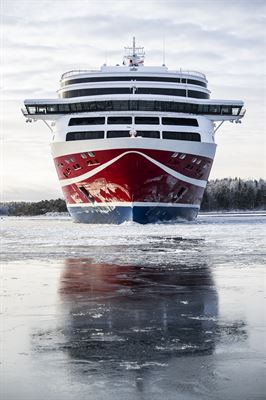
Viking Line reported 4,608,573 passengers in 2025 (down 0.8% year-on-year) while setting a cargo record of 139,484 units (+~4%), and carried 509,634 passenger cars. The company strengthened its Helsinki–Stockholm position (market share 47%), saw a 30% rise on Birka Gotland to 570,513 passengers, and recorded route volumes of 1.82m (Helsinki–Tallinn) and 1.94m (Turku–Stockholm). Operationally and strategically notable, Viking increased biogas use tenfold to ~6,000 tonnes—cutting GHG emissions by >60,000 tonnes—and unveiled the Helios electric ferry concept that could enable a fossil-free Gulf of Finland corridor in the early 2030s, signaling potential ESG-driven capital deployment and revenue resilience in cargo.
Market structure: Viking Line’s cargo record (+~4% YoY to 139,484 units) and route share gains (Helsinki–Stockholm share ~47%) imply tighter capacity among Baltic ferry operators and improved pricing power on core routes. Increased biogas use (x10 to ~6,000 t) reduces operating carbon costs and creates a two-tier market between decarbonized carriers (pricing premium, lower fuel volatility) and legacy operators exposed to fossil fuel price swings. Expect near-term route-level yield improvement of mid-single-digits if competitors cannot match service/green credentials within 6–18 months.
Risk assessment: Tail risks include regulatory shifts (EU methane/ETS penalties or fast-tracked green corridors) that could force capex-heavy retrofits within 12–36 months, and operational shocks (ice, strikes) given high route concentration; a single major technical delay on Helios could blow out capex timelines and investor sentiment. Hidden dependency: access to biogas and battery supply chains; if biogas feedstock or battery cells tighten, cost inflation >15% could erode margin gains. Key catalysts: Helios partner announcements and EU corridor designation (probable catalyst within 12–30 months).
Trade implications: Favor long exposures to transport equities/ETFs and industrials supplying electrification (e.g., ABB) and underweight pure-play cruise names that lack short-sea freight leverage. Use pair trades: long electrification suppliers vs short legacy ferry/shipping names to capture spread as green premium materializes over 6–24 months. Options: buy 9–18 month call spreads on ABB to lever a high-probability adoption story while selling premium via short call against slow-moving shipping names.
Contrarian: Consensus will view this as niche regional news; the missed angle is cargo uplift — freight volumes are stickier than passenger demand and will drive earnings stability. Reaction may be underdone for suppliers of shore-side charging and battery systems; conversely, decarbonization claims can be overhyped if lifecycle emissions/accounting are challenged, creating short opportunities in green-promise names with weak supply contracts.
AI-powered research, real-time alerts, and portfolio analytics for institutional investors.
Request DemoOverall Sentiment
moderately positive
Sentiment Score
0.45
