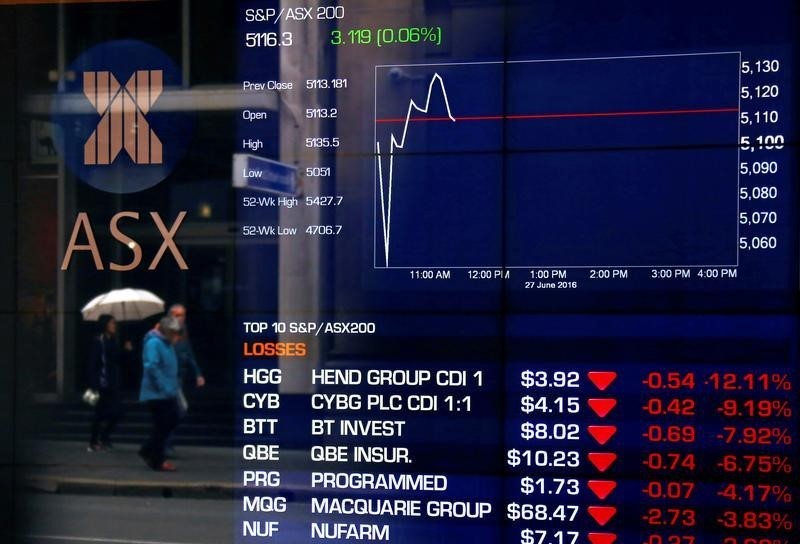
Guzman Y Gomez jumped as much as 21% after announcing it will exit the U.S. market and refocus capital on Australia, where it expects segment underlying EBITDA of about A$85 million in fiscal 2026, up 29% year over year. The company expects a one-off fiscal 2026 hit of $30 million-$40 million from the exit, with cash costs capped near $15 million, but investors focused on stronger domestic growth and its plan to open 32 Australian restaurants this year.
This is less a consumer-growth story than a capital-allocation reset. Exiting a low-return geography should improve the market’s confidence that management will defend hurdle rates, and that tends to compress the discount rate applied to the whole chain rather than just the domestic segment. The immediate equity reaction likely reflects a cleaner sum-of-the-parts: investors are now underwriting Australia, Singapore, and Japan on their own merits instead of paying for an option on a capital-intensive U.S. expansion with uncertain payback.
The second-order effect is competitive, not just financial. Pulling capital out of the U.S. frees management attention and development dollars to accelerate site openings where unit economics are already proven, which can widen the gap versus local quick-service peers competing for the same new-store real estate and labor. But there is a hidden risk: if the domestic growth runway proves more finite than the 1,000-store narrative implies, the market may eventually re-rate this as a one-time cleanup rather than a durable compounding story.
The key catalyst over the next 1-2 quarters is whether the company translates this move into faster domestic EBITDA conversion and incremental store openings without margin erosion. The bear case is that the exit charge and closure costs are a forward signal of more execution noise, especially if investors start to model U.S. abandonment as evidence that management overestimated transferable brand power. In that case, the move becomes a sentiment pop that fades once the market shifts back to normalized store-level returns and valuation discipline.
Contrarian takeaway: the market may be over-optimizing the headline capital return while underpricing the operational discipline signal. If management truly reallocates scarce capital to higher-ROIC markets, this can be a favorable inflection point for the equity despite the near-term accounting hit. The right question is not whether the U.S. was a mistake, but whether the remaining portfolio can sustain mid-20s% segment growth for multiple years; if not, the current rally is probably ahead of fundamentals.
AI-powered research, real-time alerts, and portfolio analytics for institutional investors.
Request DemoOverall Sentiment
moderately positive
Sentiment Score
0.35
Ticker Sentiment
